
Ranking Optimization
Fix how AI frames your brand
Monitoring tells you where you stand. This is the next step: which sources AI cites, what you should publish, and whether the change actually landed in AI answers.
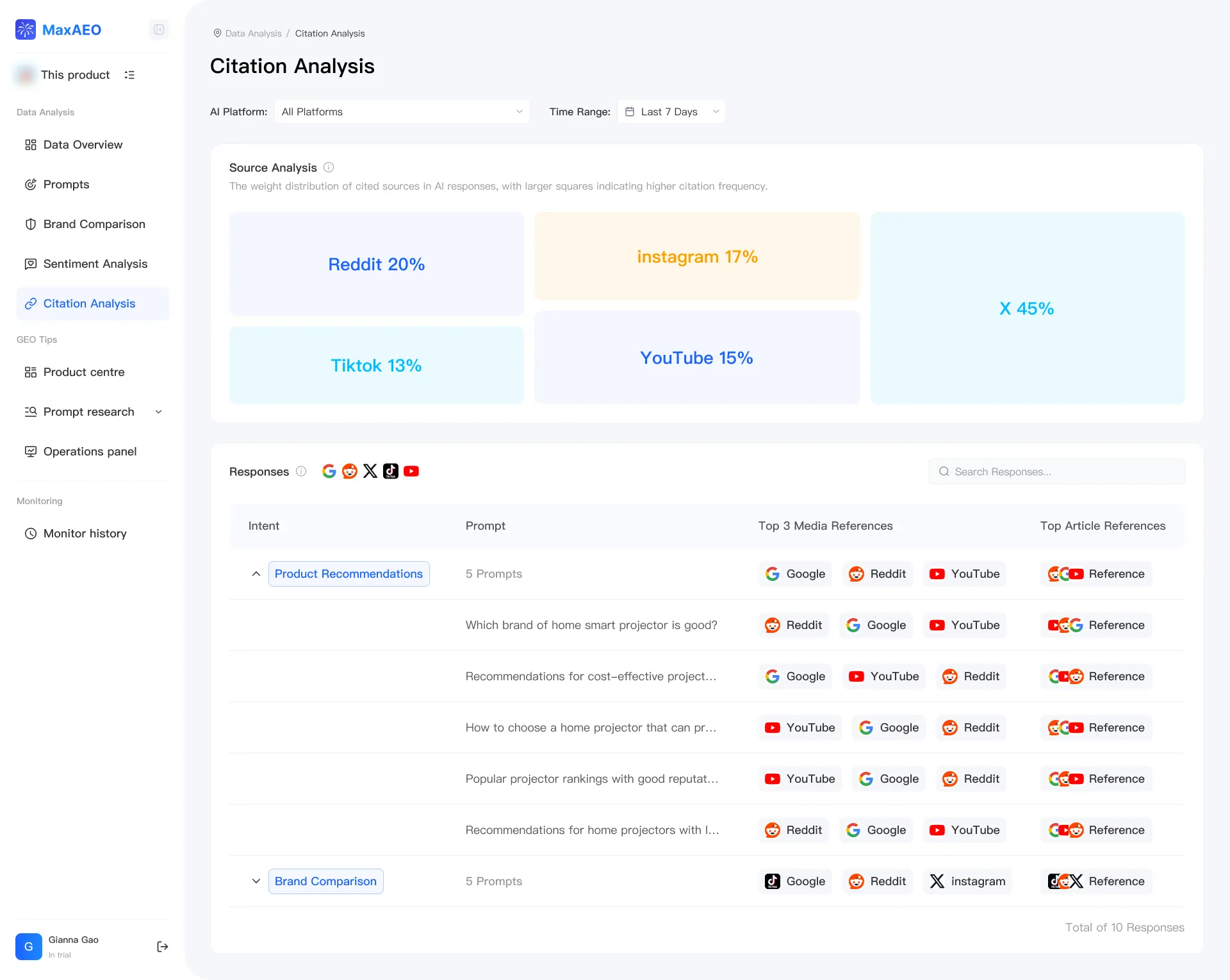
Start by finding out who AI is citing
AI answers are not generated out of thin air — they cite sources. Citation tracing lists the domains, articles and platforms behind each answer, so you can see which channels are speaking for your competitors.
- Citation counts by domain, so you can prioritise the channels worth investing in
- Citation mix broken down: community content vs competitor-owned vs your own site
- Drill down to the exact URL and the AI answer that cited it
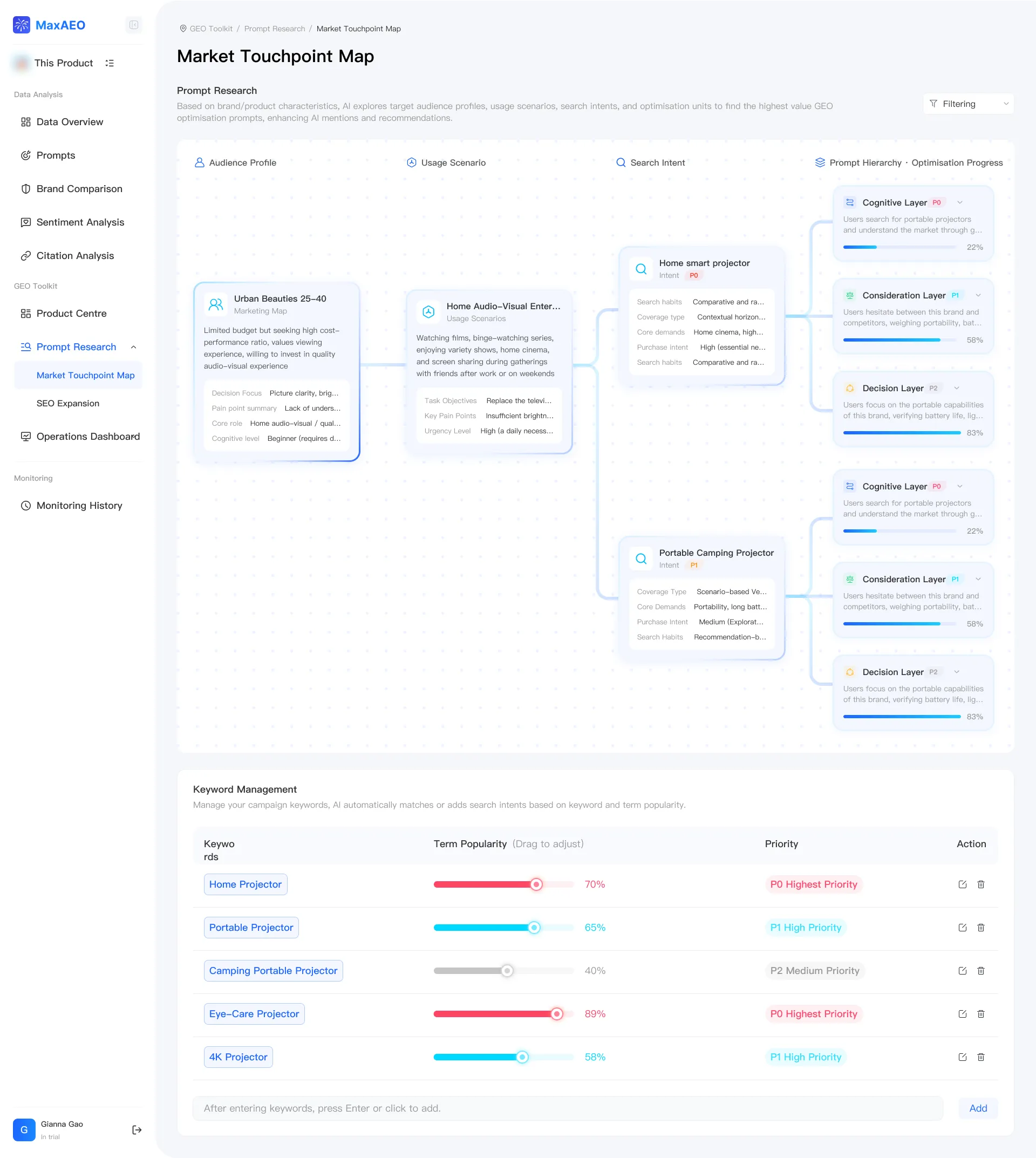
Turn monitored prompts into a content plan
Prompts organised across audience, scenario and intent. The intents where you're absent — and the questions your competitors monopolise — map directly onto what you should publish next.
- Layered by intent, so blind spots surface instead of hiding in an average
- One-click conversion from existing SEO keywords to AI-search prompts
- Per-prompt competitor coverage, so the highest-priority topics are obvious
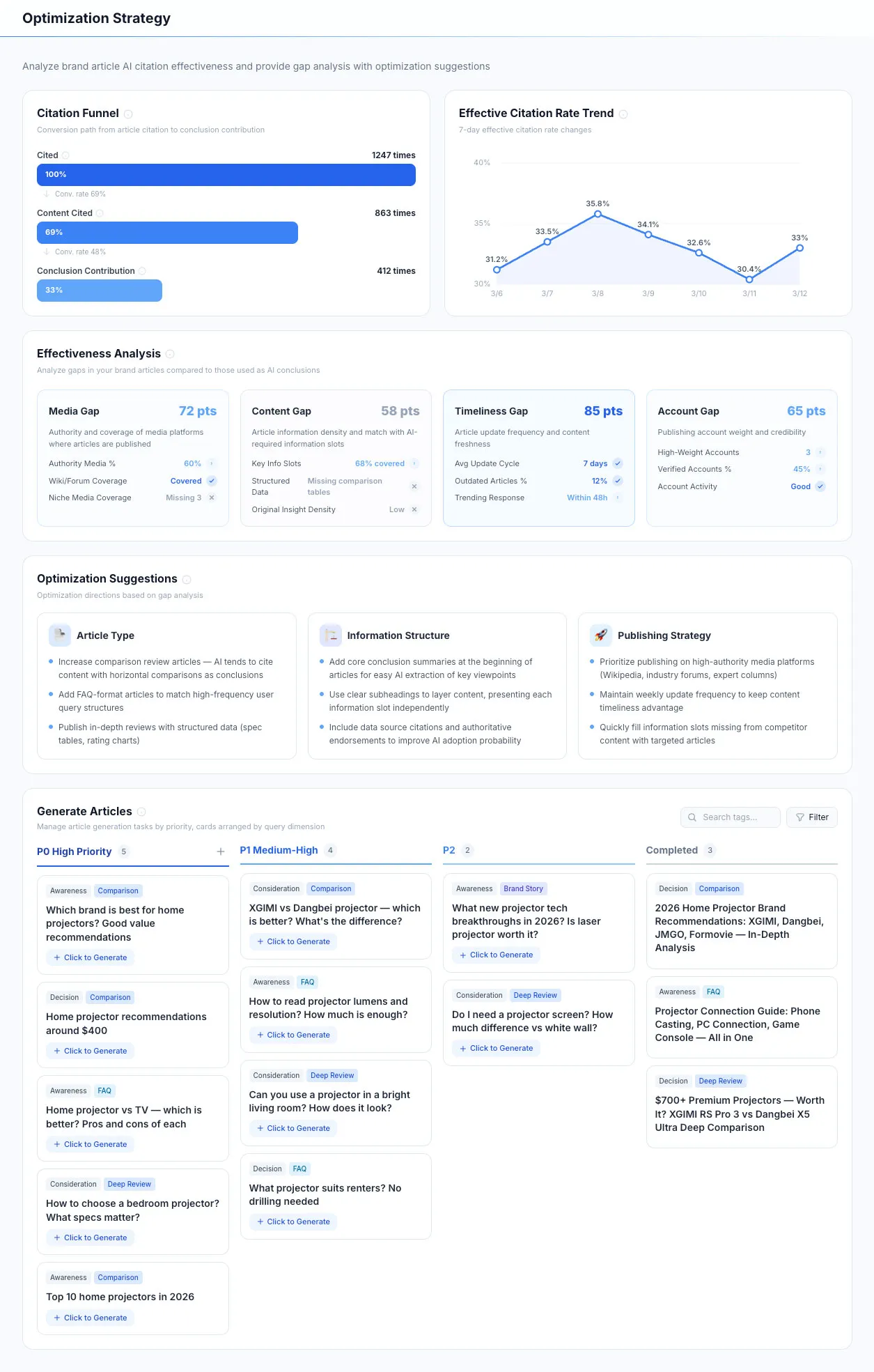
Publish content AI can parse — then verify it landed
Recommendations come from the citation funnel and performance data, alongside structured, AI-ready content. After it ships, go back to monitoring and watch the trend — that's what closes the loop.
- Recommendations grounded in your own citation data, not a generic checklist
- Structured, quotable passages designed to be lifted into AI answers
- Ship, then watch the monitoring trend to confirm it actually landed
How it works
- 1
Start from the findings
Use the free audit or ongoing monitoring to confirm which prompts and engines you're missing from.
- 2
Prioritise by citation source
See which channels AI actually cites, and fill the gaps most likely to get picked up.
- 3
Ship, then re-measure
Keep running daily across 8 engines and let the trend confirm whether it worked.
Frequently asked questions
- How long before optimization shows up in AI answers?
- It depends on how fast the content is crawled and picked up by the models — typically days to weeks. That's why we judge results on trend lines rather than a single day's number; day-to-day noise proves nothing.
- Is this just SEO?
- It overlaps but isn't the same. SEO optimises where your page sits in a list of links. AI search has no list — the model either cites you or it doesn't. The emphasis shifts from keyword density and backlinks toward whether your content is structured, directly quotable, and backed by sources the model already trusts. Existing SEO assets are a good starting point, but they need rework.
- Does it publish content for us automatically?
- No. It produces recommendations and AI-ready material. What gets published, and where, stays your decision.
- How do I confirm a change actually worked?
- Go back to brand monitoring and read three metrics together: mention rate on the target prompts, recommendation position, and your own domain's share of the cited sources.
See what AI says about you today
Enter your domain and get your first AI visibility report in about 60 seconds.
Get your free report