
By maxaeo.ai. Published August 4, 2026. Updated August 4, 2026.
SE Ranking pricing currently centers on two public paid plans—Core and Growth—plus custom Enterprise terms. The right choice depends less on the headline monthly fee and more on project count, tracked keywords, AI prompt tracking, audit pages, API credits, user seats, and whether your team needs SEO-only workflows or combined SEO and GEO visibility.
This guide explains what each tier really buys, where costs can rise, and how to calculate whether SE Ranking is economical for your use case.
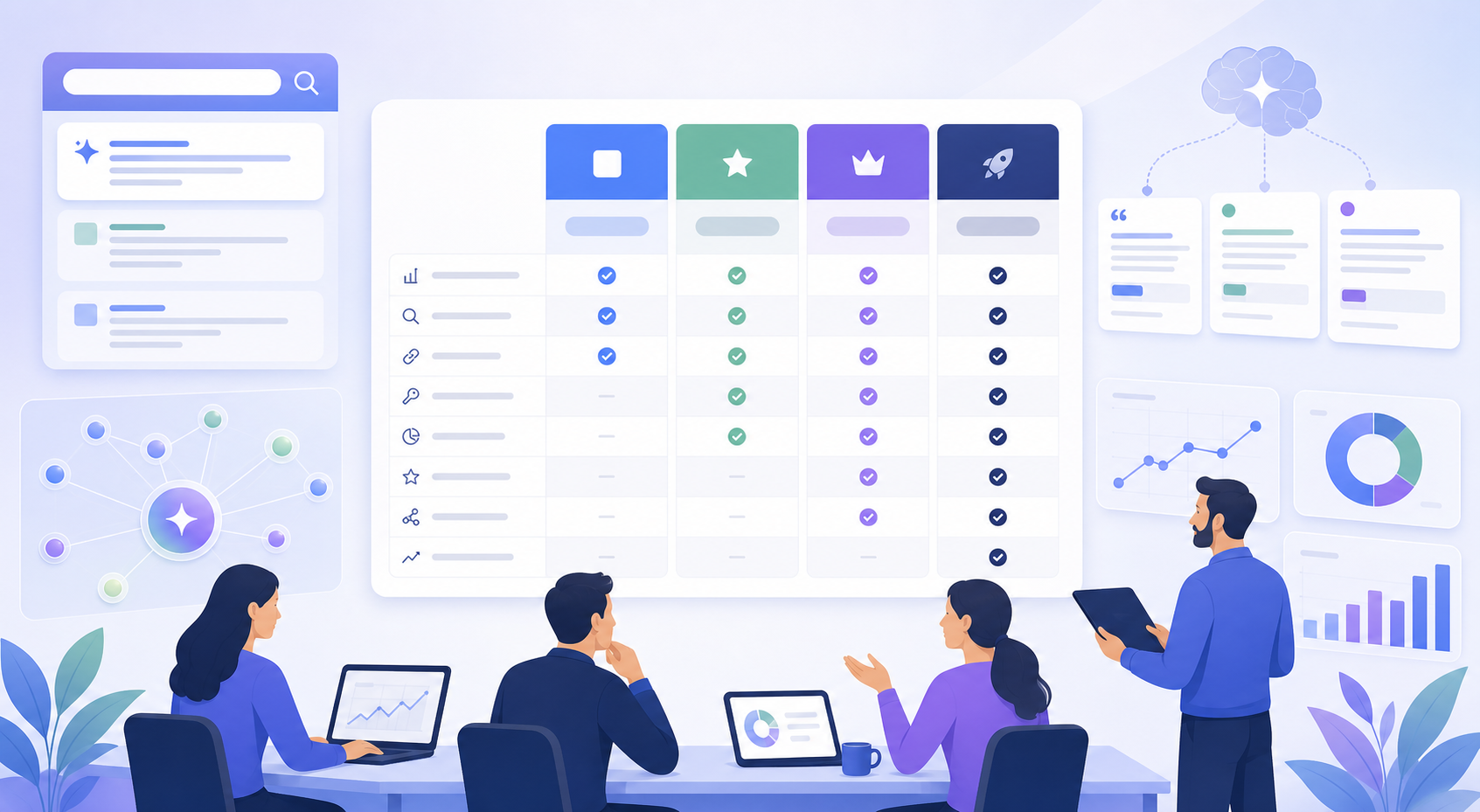
What Is SE Ranking Pricing in 2026?
SE Ranking pricing is a subscription model for an SEO and GEO platform that bundles rank tracking, audits, keyword research, competitor analysis, backlink tools, AI visibility tracking, reporting, and integrations. As of August 4, 2026, SE Ranking lists Core, Growth, and Enterprise options on its official pricing plans page.
The public monthly list prices are:
| Plan | Monthly price | Annual equivalent with listed 20% discount | Best-fit buyer |
|---|---|---|---|
| Core | $129/month | $103.20/month when billed annually | Small marketing teams, lean in-house SEO, focused client portfolios |
| Growth | $279/month | $223.20/month when billed annually | Agencies, multi-client teams, higher-volume SEO and GEO workflows |
| Enterprise | Custom | Custom | Large teams, advanced integrations, custom limits |
The 14-day free trial is useful because the real question is not “Can the platform do SEO?” It can. The better question is: Will your usage fit inside the limits without pushing you into a higher tier or add-ons?
What Do You Get in the Core Plan?
Core is the entry paid tier for teams that need daily rank tracking, site audits, research tools, limited AI visibility monitoring, and API access without agency-scale limits. It is most economical when one manager controls a modest set of sites.
According to SE Ranking’s current plan table, Core includes 10 projects, 1 manager seat, 2,000 daily tracked keywords, 100 daily prompts for GEO tracking, 5 domains in AI competitive research, 250,000 audit pages per month, 25,000 API credits, and MCP access.
That combination makes Core stronger than a simple rank tracker. For a small team, the inclusion of SEO and GEO data in one plan can reduce tool sprawl. If your workflow now includes tracking brand visibility in AI answers, compare your metrics against a dedicated framework such as AI Visibility Metrics: 6 KPIs, Formulas & Benchmarks before judging Core only by keyword limits.
Core becomes tight when you need more seats, more than 10 active projects, or heavy automated research exports. In that case, the “cheap” plan may create operational friction.
What Changes in the Growth Plan?
Growth is the practical agency tier because it raises project, seat, keyword, prompt, audit, historical data, and reporting limits. The price is more than double Core, but several limits scale by 2.5x to 8x.
Growth includes 30 projects, 3 manager seats, 5,000 daily tracked keywords, 250 daily AI prompts, 15 domains in AI competitive research, 2 million audit pages per month, 100,000 API credits, 50 content marketing articles, and broader historical data.
This plan is the cleaner fit when an agency manages multiple recurring retainers. The important upgrade is not just more keywords. It is coordination: more users, more reports, more export rows, more audit capacity, and more room to monitor AI answer visibility across several clients.
If your team sells AEO or GEO retainers, Growth also avoids the awkward situation where SEO rankings are tracked in one system and AI brand mentions are tracked elsewhere. For a deeper category view, see AI brand mention tracking tools.
When Does Enterprise Make Sense?
Enterprise makes sense when the limiting factor is not price but governance, integrations, custom data volume, procurement, security, or multi-team reporting. It is not simply “Growth with a bigger invoice.”
Choose Enterprise when you need custom limits, full API access, advanced integrations, flexible terms, or a named support arrangement. Large companies often outgrow public plans because their workflows require reliable data access across departments, not because they need one more keyword slot.
Enterprise is also worth considering if your organization must standardize SEO and AI visibility reporting across business units. In that environment, reporting consistency, access control, and data export rights may matter more than the visible platform fee.
A useful test: if three or more teams are building their own spreadsheets from the same SEO data, the hidden labor cost may already exceed the Enterprise premium.
The Hidden Cost Drivers Most Pricing Pages Understate
The headline subscription is only one part of SE Ranking’s total cost. Buyers should model seats, keyword volume, audit usage, local locations, content articles, API credits, and AI prompt tracking before committing.
Here is the cost checklist most teams should complete during the trial:
| Cost driver | Why it matters | Trial question |
|---|---|---|
| Projects | Each client, domain, or market can consume one | How many active sites need separate reporting? |
| Keywords | Daily tracking scales quickly across devices and locations | Are you tracking revenue keywords or every vanity phrase? |
| Manager seats | Collaboration may require paid extra seats | Who must log in versus receive reports? |
| Audit pages | Large ecommerce and programmatic sites can burn limits fast | How many crawlable URLs exist across projects? |
| AI prompts | GEO monitoring depends on question sets, markets, and personas | Which prompts actually influence pipeline? |
| API credits | Automation can turn “included” credits into a constraint | Which workflows run daily or weekly? |
| Local locations | Multi-location businesses can exceed default local limits | How many GBP profiles or service areas need tracking? |
| Content articles | Content optimization volume varies by publishing cadence | How many briefs and refreshes are produced monthly? |
This is where SEO software pricing often becomes confusing. A $129 plan is affordable if it replaces three tools. It is expensive if you only need 200 keyword checks and no audits, reports, API, or GEO monitoring.

Original TCO Model: How to Calculate Your Real Monthly Cost
A better way to compare SE Ranking pricing is to calculate cost per managed revenue unit, not cost per feature. The following model is a practical worksheet for agencies and in-house teams.
Use this formula:
Real monthly cost = subscription + add-ons + migration labor + reporting labor − replaced tool costs
Then calculate:
Cost per client = real monthly cost ÷ active paying clients
Cost per tracked keyword = real monthly cost ÷ daily tracked keywords used
Cost per decision = real monthly cost ÷ monthly SEO decisions supported
The last metric is the most important. A tool is rarely valuable because it stores data. It is valuable when it changes decisions: which pages to refresh, which competitors to investigate, which AI prompts to optimize, which backlinks to audit, and which technical problems to fix.
Example 1: Solo Consultant
A consultant manages 6 clients, tracks 1,200 keywords, sends monthly reports, and audits each site once per month. Core likely fits.
If Core is billed monthly at $129, the base software cost is:
- $21.50 per client per month
- $0.1075 per tracked keyword per month
That is economical if each client pays even a modest retainer. The risk is seat limitation: if clients need dashboard access, reports may be better than logins.
Example 2: Small Agency
An agency manages 22 clients, tracks 4,500 keywords, uses 3 internal SEO managers, and monitors AI answer visibility for priority prompts. Growth likely fits better.
At $279 monthly, the base software cost is:
- $12.68 per client per month
- $0.062 per tracked keyword per month
Even though Growth costs more, it can be cheaper per client because the plan spreads across more accounts. This is the pricing pattern many agencies miss when comparing only monthly fees.
Example 3: B2B SaaS In-House Team
A SaaS team tracks fewer domains but cares about AI visibility, competitor comparisons, product category prompts, and source citations. Core may be enough if one manager owns the workflow, but Growth can be justified if product marketing, demand generation, and SEO all need access.
For this team, the key metric is not cost per keyword. It is cost per pipeline-relevant insight. If the platform helps identify answer-engine gaps that affect consideration-stage searches, the value may come from visibility strategy rather than rank tracking alone. A practical starting point is AI Share of Voice: How to Calculate It and What a Good Score Looks Like.
Core vs Growth: Which Plan Should You Choose?
Choose Core when your usage is narrow and centralized; choose Growth when your usage is distributed across clients, teammates, markets, or AI prompt sets. The upgrade decision should be triggered by bottlenecks, not fear of missing features.
| Scenario | Better plan | Reason |
|---|---|---|
| 1–10 projects, one SEO owner | Core | Fits project and seat limits |
| 11–30 projects | Growth | Core project cap becomes restrictive |
| 2,000 or fewer daily keywords | Core | Keyword allowance is sufficient |
| 2,001–5,000 daily keywords | Growth | Avoids keyword add-on complexity |
| Heavy technical audits | Growth | Much higher monthly audit page allowance |
| Agency reporting across clients | Growth | More reports, seats, and exports |
| Large company with procurement needs | Enterprise | Custom terms and integrations |
| SEO-only, low volume | Core or another lean tool | Do not overbuy GEO capacity |
| AI visibility is a core deliverable | Growth or Enterprise | More prompts and competitive research room |
A simple rule: if one person can run the account cleanly, start with Core. If multiple people must collaborate weekly, price Growth from the beginning.
How SE Ranking Pricing Compares to Premium SEO Suites
SE Ranking is usually positioned as a value-oriented all-in-one SEO platform rather than the deepest specialist in every category. Independent reviews commonly praise its breadth, usability, and affordability while noting that premium tools may still lead in certain data depth areas.
For example, TechRadar’s 2026 review describes SE Ranking as a broad toolkit covering rank tracking, audits, competitor research, backlinks, content optimization, and AI search visibility, while noting that backlink analysis may be less granular than some specialist competitors. G2’s pricing and review pages similarly emphasize the platform’s perceived value among verified users.
That pattern matters. SE Ranking is attractive when you want one operating system for SEO execution. It is less compelling if your entire workflow depends on the largest possible backlink index, highly specialized enterprise crawling, or custom data science pipelines.
A strong buying question is: Which 20% of features drive 80% of your SEO decisions? If those features are rank tracking, audits, competitor research, reports, and AI visibility checks, SE Ranking’s bundled pricing can make sense.
Where AI Visibility Changes the Pricing Decision
SEO tool pricing changed because search visibility is no longer limited to blue links. Teams now need to know whether they appear in AI Overviews, answer engines, chat assistants, and AI-generated buying shortlists.
This is the overlooked part of many SE Ranking pricing discussions. Traditional comparisons ask, “How many keywords do I get?” A better 2026 question is, “Can the plan connect search rankings, AI citations, brand mentions, and competitive answer visibility?”
If your audience uses ChatGPT, Perplexity, Gemini, or other answer engines during research, a pure rank tracker may underreport real visibility. That is why teams increasingly pair SEO metrics with AEO analysis. For broader platform selection criteria, compare SE Ranking against the landscape in AI search optimization platforms.
The pricing implication is direct: a plan that looks expensive beside a basic rank tracker may be cheap if it replaces separate tools for audits, reporting, local SEO, API access, and AI visibility monitoring.
A 14-Day Trial Plan That Actually Tests Value
Use the free trial to test limits, workflows, and decision quality—not to click through every feature. A disciplined trial prevents overbuying and reveals whether Core, Growth, or Enterprise is the right fit.
Run this sequence:
- Create real projects. Add every domain or client you expect to manage in the next 90 days.
- Import actual keyword sets. Include device, location, and market variations.
- Run one technical audit per site type. Test your largest site, not only your smallest.
- Build one client-ready report. Measure how much manual editing remains.
- Track a small GEO prompt set. Use commercial, comparison, and problem-aware questions.
- Test integrations. Connect GA4, Google Search Console, Looker Studio, or other reporting flows you use.
- Estimate add-ons. Note any limit you hit before the trial ends.
- Calculate decision output. Count the number of actions the platform helped prioritize.
The best trial result is not “we liked the dashboard.” It is a short list of decisions the platform made faster, clearer, or more defensible.

Buying Recommendation by Team Type
Most small teams should start with Core, most agencies should model Growth, and enterprise teams should negotiate around data access and governance. The correct plan is the one that matches your operating model.
For bloggers and solo site owners, SE Ranking may be more platform than necessary unless you actively use audits, reports, and competitive research. For freelance SEO consultants, Core can be a strong fit because the cost per client becomes low with only a handful of retainers.
For agencies, Growth is often the more realistic default. The extra projects, users, audit pages, API credits, and AI prompt capacity reduce workflow constraints. For large in-house teams, Enterprise should be evaluated if multiple departments need controlled access to the same SEO and GEO data.
The biggest mistake is choosing a plan based only on today’s keyword count. Choose based on the next six months of workflow: more clients, more AI visibility reporting, more stakeholders, and more automation.
Common Questions
Does SE Ranking have a free plan?
No permanent free plan is listed on SE Ranking’s current pricing page. The platform advertises a 14-day free trial with no credit card required.
Is Core enough for an agency?
Core can work for a very small agency with 10 or fewer projects and one main account owner. Growth is usually better once multiple managers, more client reports, or more than 2,000 tracked keywords are needed.
Is Growth worth more than twice the Core price?
Growth can be worth it if you use the higher limits. It offers 30 projects instead of 10, 5,000 daily keywords instead of 2,000, 3 manager seats instead of 1, and much higher audit and API capacity.
What is the most overlooked SE Ranking cost?
The most overlooked cost is workflow expansion. Teams often start with rank tracking, then add audits, reports, local locations, API workflows, content briefs, and AI prompt monitoring. Those uses can change the best-fit plan.
Should AI visibility affect the plan decision?
Yes. If AI answer visibility is part of your reporting or revenue strategy, compare plans by prompt capacity, AI competitive research, and source tracking—not only by traditional keyword rank limits.