
Are there reliable platforms for monitoring AEO performance? Yes, as long as they show their evidence. Dedicated platforms such as MaxAEO (our own product — this guide is published by MaxAEO), Peec AI, Otterly.AI and Profound, plus the AI visibility modules in Semrush and Ahrefs, all track whether AI answers mention or cite a brand. The reliable ones rerun the same prompts on a schedule, keep the full answer behind every number, and report mentions and citations separately. Use the checklist below to test any of them, including ours.
AEO performance monitoring tools measure how often answer engines mention, cite, summarize, and recommend a brand across prompts, topics, and AI search surfaces. The best tools do more than report visibility: they explain why answers changed and what to fix next.
Traditional SEO tracking answers one question: “Where do we rank?” AEO monitoring asks several harder questions: “Are we named?”, “Are we cited?”, “Are we framed correctly?”, “Which source influenced the answer?”, and “Can AI crawlers even access the page?”
That difference matters because answer engines are probabilistic. A single prompt result can look decisive while hiding a noisy underlying pattern. A useful AEO monitoring system treats visibility as a repeatable measurement program, not a one-off screenshot.
What are AEO performance monitoring tools?
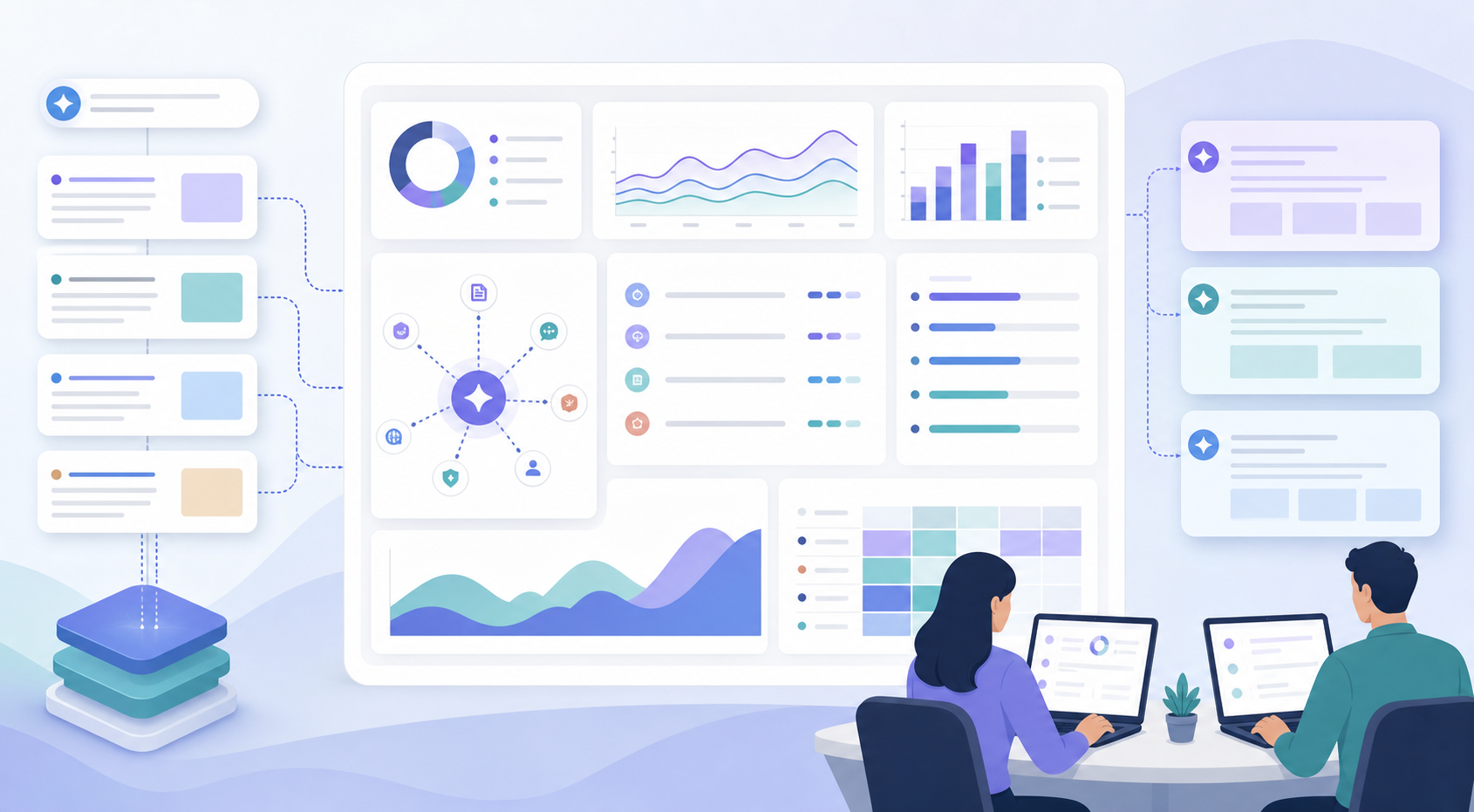
AEO performance monitoring tools are platforms that track brand visibility inside AI-generated answers. They monitor prompts, citations, mentions, sentiment, competitor inclusion, answer wording, and source access across systems such as ChatGPT, Perplexity, Gemini, Claude, Google AI Overviews, and other answer engines.
The category overlaps with AI search visibility monitoring, GEO tracking, LLM visibility analytics, AI citation tracking, and answer engine optimization software. The label varies, but the job is consistent: turn AI answer appearances into measurable signals.
A strong platform should capture four layers:
- Prompt layer: Which questions trigger your brand, competitors, or sources.
- Answer layer: How the model describes, compares, or omits you.
- Citation layer: Which URLs are cited or used as evidence.
- Access layer: Whether crawlers, agents, or retrieval systems can reach your pages.
For a broader baseline, maxaeo.ai’s guide to AI search optimization platforms explains how monitoring fits into the larger optimization stack.
Why AEO monitoring is not just SEO rank tracking
SEO rank tracking measures ordered results on search engine results pages. AEO monitoring measures inclusion, attribution, wording, and recommendation behavior inside synthesized answers. There may be no stable “position one” in an AI answer, so the metric system must change.
In SEO, a page can rank third. In AEO, a brand may be mentioned first, cited indirectly, compared negatively, excluded from the shortlist, or named without a link. Each outcome has a different commercial meaning.
Research published in 2026 argues that AI search visibility should be measured repeatedly because answers vary across runs, prompts, and time. The paper “Don’t Measure Once: Measuring Visibility in AI Search” describes visibility as a distribution rather than a single-point result.
That insight changes tool selection. A dashboard that checks one prompt once per week may be useful for anecdotes, but it is weak for decisions. A practical monitoring setup needs repeat sampling, prompt grouping, confidence-aware interpretation, and change history.
The seven metrics every AEO monitoring tool should report
AEO performance should be measured with a balanced scorecard. No single metric captures visibility, trust, and commercial influence at the same time.
| Metric | What it measures | Why it matters |
|---|---|---|
| Mention rate | % of answers that name the brand | Basic presence in answer engines |
| Citation share | % of citations pointing to your domain | Evidence and attribution strength |
| Prompt coverage | % of target prompts where you appear | Topic-level reach |
| Recommendation rate | % of answers that actively recommend you | Commercial influence |
| Sentiment or framing | Positive, neutral, or negative description | Brand risk and positioning |
| Competitor co-mentions | Which alternatives appear beside you | Shortlist competitiveness |
| Answer stability | Variance across repeated runs | Confidence in the signal |
The most overlooked metric is answer stability. If a brand appears in 6 of 10 repeated runs, that is a different reality from appearing in 1 of 1 test. Both can look like “visible” in a simplistic dashboard.
The arXiv paper “Quantifying Uncertainty in AI Visibility” found that citation visibility can vary substantially across repeated samples. It also notes that raw citation counts are not comparable across platforms because engines return different citation volumes.
That means teams should favor normalized metrics such as citation share, prompt-level prevalence, and trend direction over raw counts alone. For formulas and benchmark logic, use the maxaeo.ai guide to AI visibility metrics as a companion framework.
A practical “Answer Stability Matrix” for tool evaluation
The Answer Stability Matrix is a simple way to judge whether an AEO tool is measuring signal or noise. It compares visibility frequency against answer consistency so teams can decide whether to optimize, investigate, or keep sampling.
Use this matrix for each prompt cluster, not just for individual prompts:
| Visibility frequency | Answer consistency | Interpretation | Action |
|---|---|---|---|
| High | High | Strong AEO asset | Protect sources and monitor competitors |
| High | Low | Present but unstable | Improve entity clarity and supporting citations |
| Low | High | Consistently absent or misframed | Create or revise authoritative content |
| Low | Low | Not enough signal | Expand sampling before acting |
This framework adds a decision layer that many monitoring dashboards miss. A low score is not always a content problem. It may be a sampling problem, a crawler access issue, a weak entity graph, or a mismatch between prompt intent and your content.
For example, if your brand is cited in Perplexity for “best enterprise workflow automation platform” but absent in ChatGPT for “workflow automation tools for regulated teams,” the fix may not be a generic blog post. It may be a comparison page, a public documentation page, or a clearer proof point that agents can retrieve.
How to choose the right AEO monitoring tool
Choose AEO performance monitoring tools by matching engine coverage, sampling rigor, citation analysis, crawler diagnostics, and workflow integration to your business risk. A cheap tracker is enough for early awareness; enterprise teams need repeatable measurement and fix prioritization.
A useful buying checklist looks like this:
- Engine coverage: Does it monitor the answer engines your buyers actually use?
- Prompt management: Can prompts be grouped by funnel stage, persona, market, and topic?
- Repeat sampling: Can it run the same prompt multiple times and show variance?
- Citation extraction: Does it separate brand mentions from linked citations?
- Competitor tracking: Can it show who replaces you when you disappear?
- Crawler diagnostics: Can it detect blocked bots, consent walls, and access failures?
- Workflow support: Does it recommend page-level fixes rather than only charts?
- Export and alerts: Can teams push changes into Slack, tickets, reports, or BI tools?
- Source transparency: Does it preserve answer text, timestamp, platform, and prompt version?
- Governance: Can teams avoid overreacting to one unstable answer?
The strongest tools connect monitoring to action. If a dashboard reports that citation share dropped but cannot tell whether the cause was a competitor content update, robots.txt block, WAF challenge, or source freshness issue, the team still has to investigate manually.
The hidden technical layer: crawlers, WAFs, and access
AEO monitoring is incomplete without access diagnostics. If answer engines cannot fetch, parse, or revisit your content, visibility can decline even when the content itself is excellent.
Google’s documentation on Google crawlers and fetchers shows that different Google systems use different crawlers. AI search systems and assistants also use distinct user agents, retrieval methods, and browsing behaviors.
Common access problems include:
- Overly broad bot blocking rules.
- WAF challenges that return 403 responses.
- Consent banners that hide primary content.
- Login walls on documentation or pricing pages.
- JavaScript-rendered content without accessible HTML.
- Robots.txt rules that block AI-related user agents.
- Rate limits that trigger during repeated retrieval.
This is why maxaeo.ai treats technical accessibility as part of AEO performance, not as a separate engineering issue. The guide to Cloudflare and AI crawler blocking explains how WAF rules can unintentionally prevent answer engines from reaching the pages you expect them to cite.
What an AEO monitoring workflow should look like
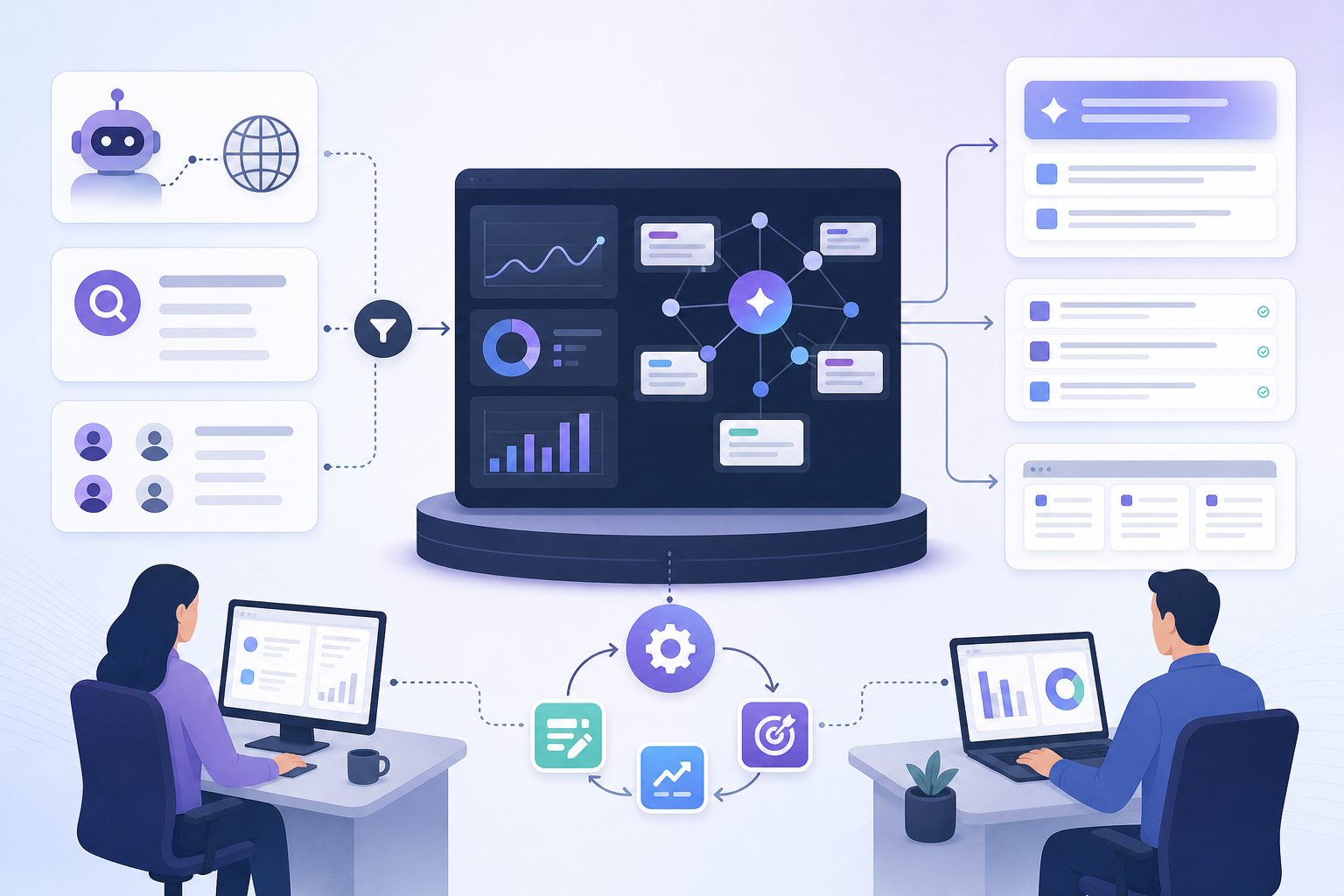
A reliable AEO workflow runs in cycles: define prompts, sample answers, score visibility, diagnose causes, ship fixes, and retest. The goal is not to “game” answers but to make accurate, useful, accessible information easier for answer engines to retrieve.
A practical 30-day workflow:
- Build prompt clusters. Group 50–200 prompts by buyer intent, not just keywords.
- Set competitor sets. Track direct competitors, marketplaces, review sites, and publishers.
- Run repeated samples. Avoid acting on a single answer unless the issue is urgent.
- Classify outcomes. Separate mention, citation, recommendation, and sentiment.
- Audit source paths. Identify which pages, feeds, reviews, or third-party sources influence answers.
- Fix the highest-leverage gaps. Start with pages that should be cited but are inaccessible, outdated, or unclear.
- Retest after indexing and retrieval windows. Measure directional change over time.
- Report with uncertainty. Show ranges, not false precision.
This workflow aligns with Google’s general advice to create helpful, reliable, people-first content. The Google Search Central helpful content guidance emphasizes content made for people, with clear expertise and usefulness, rather than search-engine-first shortcuts.
AEO does not replace that principle. It raises the standard because AI answers often compress many sources into a few sentences. If your proof points are vague, buried, inaccessible, or unsupported, they are less likely to survive that compression.
Tool categories: which type fits your team?
Different AEO monitoring tools serve different maturity levels. The best choice depends on whether you need awareness, diagnosis, or operational optimization.
| Tool type | Best for | Limitation |
|---|---|---|
| Lightweight mention trackers | Small teams testing AI visibility | Often weak on sampling and diagnostics |
| AI citation platforms | Content and SEO teams measuring source influence | May miss technical access issues |
| Enterprise AEO platforms | Brands needing governance, alerts, and workflows | Higher setup effort |
| SEO suites with AI modules | Teams extending existing SEO reporting | AI metrics may be less specialized |
| Custom monitoring pipelines | Data teams with strict methodology needs | Requires maintenance and prompt governance |
For most brands, the right path is not “buy the biggest tool.” It is to define the decisions the tool must support.
If the decision is “which article should we update?”, you need URL-level citation and prompt data. If the decision is “are we losing category share?”, you need AI share of voice. If the decision is “why did visibility drop?”, you need access logs, answer history, and competitor source comparison.
The maxaeo.ai article on AI Share of Voice is useful when stakeholders need a single executive metric, but the operating team should still inspect the underlying prompts and citations.
Examples in each category (not a ranking)
| Tool type | Examples |
|---|---|
| Lightweight mention trackers | Otterly.AI, LLMrefs |
| AI citation platforms | MaxAEO, Peec AI |
| Enterprise AEO platforms | Profound, Scrunch AI |
| SEO suites with AI modules | Semrush AI Visibility Toolkit, Ahrefs Brand Radar, SE Ranking |
| Custom monitoring pipelines | Built in-house on AI engine APIs |
MaxAEO, the product behind this blog, checks every tracked prompt daily across up to eight AI engines (ChatGPT, Gemini, Perplexity, Claude, Copilot, Grok, Google AI Mode and Google AI Overviews), keeps the full answer for each run, and reports mention rate, position in the answer, competitors named and cited sources for each prompt. Plans start at $19/month for one brand, 10 prompts and any four engines. It is not an SEO suite: it does not track search rankings, backlinks or organic traffic.
Red flags in AEO monitoring dashboards
The biggest red flag is false precision. Any tool that reports AI visibility as a single clean score without showing prompt sets, engines, sampling frequency, and variance is simplifying away the hard part.
Watch for these warning signs:
- No timestamped answer archive.
- No distinction between mentions and citations.
- No repeated sampling option.
- No competitor replacement analysis.
- No visibility by prompt intent.
- No crawler or accessibility checks.
- No explanation of how scores are calculated.
- No way to export raw observations.
- No separation of owned, earned, and third-party sources.
AEO scores can be useful, but only when they are explainable. A score of 85 is meaningless unless the team can see which prompt clusters are strong, which answer engines are weak, and which pages or sources caused the movement.
The same applies to “AI visibility index” style metrics. They are helpful for board-level trend reporting, but operational teams need the raw evidence behind the index.
How MaxAEO approaches AEO performance monitoring
MaxAEO approaches AEO monitoring at the property level: prompts, citations, crawler access, brand mentions, and answer quality are evaluated together. That prevents teams from optimizing content while ignoring the technical or source-level reasons answer engines fail to cite it.
The operating philosophy is simple:
- Measure repeatedly because AI answers fluctuate.
- Separate presence from proof because mentions and citations are different.
- Diagnose access first because blocked content cannot become reliable evidence.
- Map prompts to intent because AI answers vary by buyer context.
- Prioritize fixes by influence because not every missing mention deserves action.
This is the practical gap many generic tool lists miss. Selecting software is only one part of AEO performance. The larger challenge is building a measurement system that can survive unstable answers, mixed citation sources, and fast-changing AI search interfaces.
Common questions about AEO performance monitoring tools
How often should AEO visibility be monitored?
AEO visibility should be monitored at least weekly for stable evergreen topics and more often for competitive, seasonal, or high-revenue prompts. Critical prompts should be sampled repeatedly because one AI answer is not a reliable performance baseline.
Are brand mentions or citations more important?
Citations are usually stronger evidence than mentions because they show that an answer engine used or surfaced a source. Mentions still matter, especially for recommendation and shortlist prompts, but a mention without attribution is harder to diagnose and improve.
Can Google Search Console measure AEO performance?
Google Search Console is useful for traditional search performance and some Google search surfaces, but it does not provide a complete view of ChatGPT, Perplexity, Claude, Gemini, or other answer engines. AEO monitoring tools fill that cross-platform gap.
What is the minimum prompt set for AEO tracking?
A small brand can start with 30–50 prompts across awareness, comparison, and purchase intent. Larger brands should monitor hundreds of prompts grouped by product, audience, region, competitor set, and funnel stage.
Do AEO tools improve rankings automatically?
No. AEO tools measure visibility and identify opportunities. Improvement comes from clearer content, stronger evidence, accessible pages, better entity signals, third-party source development, and repeated testing after changes are published.
Final takeaway
AEO performance monitoring tools are becoming essential because AI answers are now a measurable discovery channel. The winning setup is not the prettiest dashboard; it is the tool and workflow that reveal where your brand appears, why it appears, when it disappears, and what to fix next.
The best monitoring programs combine prompt sampling, citation analysis, competitor tracking, crawler diagnostics, and confidence-aware reporting. That is how teams move from “we saw ourselves in ChatGPT once” to a reliable AEO performance system.