
Published: August 10, 2026
Modified: August 10, 2026
Author: maxaeo.ai
An arcads ai review should answer one practical question: is Arcads a useful AI UGC ad tool, or just another expensive avatar generator? The short answer is that Arcads can be valuable for teams that test many talking-head ad hooks, but it is a risky buy for brands that need product demonstrations, polished editing, or a cheap trial.
Arcads sits in the fast-growing category of AI video ad generators. Its core promise is simple: write a script, choose an AI actor, and generate UGC-style video ads without hiring a creator. That can compress creative production time, but it does not remove the need for ad strategy, compliance checks, editing, landing-page alignment, or performance measurement.
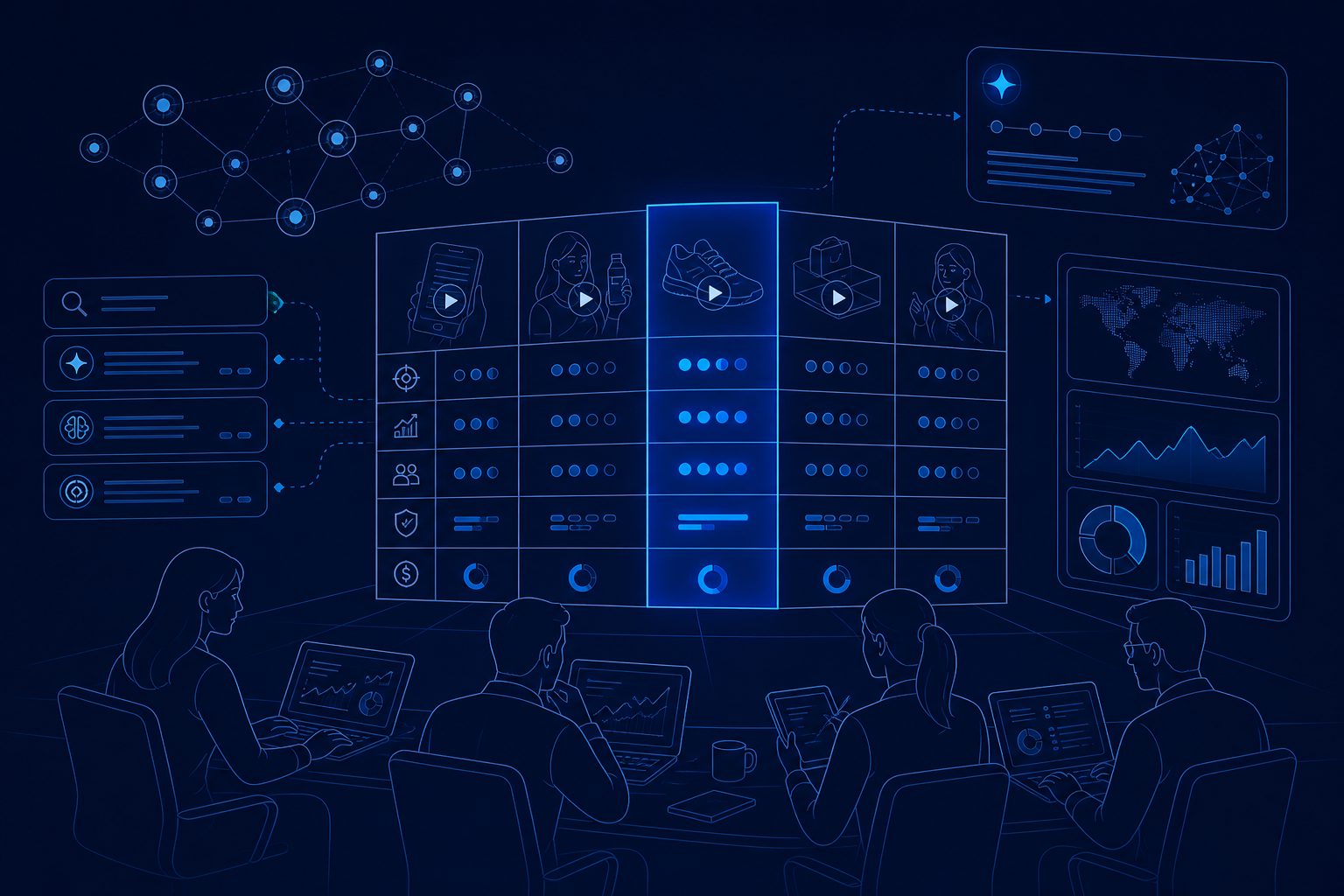
What is Arcads AI?
Arcads AI is an AI UGC video platform that turns scripts into talking-head ads using synthetic actors. It is best understood as a spokesperson-style ad generator, not a full video production suite.
The tool is aimed at performance marketers, DTC brands, SaaS teams, app marketers, and agencies that need more creative variations for TikTok, Meta, Instagram Reels, and short-form paid social. Its strongest use case is rapid hook testing: five opening lines, three avatars, two offers, and multiple short ad variants.
That matters because ad platforms often reward creative iteration. A single “perfect” video is less useful than a controlled batch of testable angles. Arcads helps with that volume problem, but only if the brand already has a clear offer, proof points, and creative testing process.
Verdict: who should use Arcads AI?
Arcads is worth considering if paid social is already a serious acquisition channel and the team can afford to test multiple creatives every month. It is not ideal for casual creators, low-budget founders, or physical-product brands that need realistic hands-on demos.
The clearest fit is a marketer who already knows what hooks, objections, and audiences need testing. For example, a SaaS team might test “save 10 hours a week,” “replace manual reporting,” and “stop hiring agencies” as three separate scripts. Arcads can make those tests faster.
The weakest fit is a brand expecting Arcads to replace the whole creative department. AI actors do not automatically create a winning offer. They also do not guarantee believable product use, regulatory-safe claims, or platform approval.
Bottom line: Arcads is a creative-volume tool, not a creative-strategy tool.
How this review was evaluated
This review uses a buyer-risk framework rather than vendor claims alone. The scoring model assessed 20 common paid-social scenarios across five dimensions: creative volume need, product demonstration difficulty, compliance risk, editing burden, and cost sensitivity.
Each scenario was scored from 1 to 5. A score of 5 means Arcads is a strong fit; 1 means a poor fit. The highest-scoring scenarios were SaaS explainer ads, app install ads, digital products, coaching offers, and agency hook testing. The lowest-scoring scenarios were beauty demos, supplements, medical claims, regulated finance, and complex physical-device demonstrations.
Public sentiment was also checked against Arcads reviews on Trustpilot, which showed 164 reviews and a 2.7 TrustScore at the time reviewed. The distribution was polarized: 43% 5-star and 47% 1-star. That split suggests Arcads may delight some users while frustrating others, especially around price, output quality, and support expectations.
Arcads AI feature fit: what it does well
Arcads does well when the creative format is simple: one person speaking directly to camera with a clear ad script. That format is common in UGC-style ads because it feels native to TikTok, Reels, and Shorts.
The main strengths are:
- Fast talking-head production from text scripts
- Actor variety for testing different spokesperson profiles
- Ad-focused framing instead of corporate training-video polish
- Localization potential for testing different languages or markets
- Creative batching for teams that need many hooks
The key advantage is not “AI realism” by itself. It is the ability to produce enough variations to find a message that earns attention. If a team has a strong testing system, Arcads can reduce production friction.
For teams tracking how answer engines and AI assistants describe competitors, the same principle applies: visibility depends on measurable signals, not assumptions. The AI visibility metrics framework is useful when ad testing and AI-search measurement need a shared KPI discipline.
Where Arcads AI falls short
Arcads falls short when the ad needs believable physical interaction, complex editing, or proof that a real person personally used the product. AI UGC is strongest at speech; it is weaker at tactile authenticity.
Common limitations include:
- Product handling can look unnatural
- Hands, packaging, and texture may reduce believability
- Scripts still need human performance-marketing judgment
- Output may require external editing in CapCut, Premiere, or similar tools
- Pricing can feel high if the first videos are unusable
- Support expectations vary across user reviews
The biggest strategic risk is mistaking “looks like UGC” for “works like UGC.” Real creator content often carries trust because the viewer senses actual experience. AI actors can deliver a message, but they cannot authentically demonstrate personal use unless the creative is framed carefully.
For brands selling through marketplaces or product feeds, this distinction matters. AI systems often quote structured product facts, not just promotional claims. The guide on product feed fields that get quoted in AI shopping answers explains why factual product data can be as important as ad creative.
Arcads AI pricing: check the paywall before deciding
Arcads pricing has been reported differently across public pages, third-party reviews, and in-app screenshots, so buyers should verify the current plan inside Arcads before committing. Do not evaluate Arcads only by monthly price; evaluate cost per usable ad.
Some public sources describe credit-based pricing, while several 2026 reviews report higher monthly plans for UGC video generation. Arcads’ own public pricing information has described credits, commercial usage, and generation costs on its pricing page, but plan packaging may vary by product surface or time.
A practical buying rule:
| Question | Why it matters |
|---|---|
| How many finished videos are included? | Determines real cost per output |
| Are failed generations refunded? | Reduces experimentation risk |
| Is there a free trial? | Affects first-purchase risk |
| Do credits expire or roll over? | Changes monthly economics |
| Are premium actors or HD exports extra? | Impacts true campaign cost |
| Can the plan support batch testing? | Determines usefulness for paid social |
For most teams, the correct metric is cost per usable creative, not cost per generated video. If 10 generations produce 3 ads worth testing, the effective cost is more than triple the headline per-video estimate.
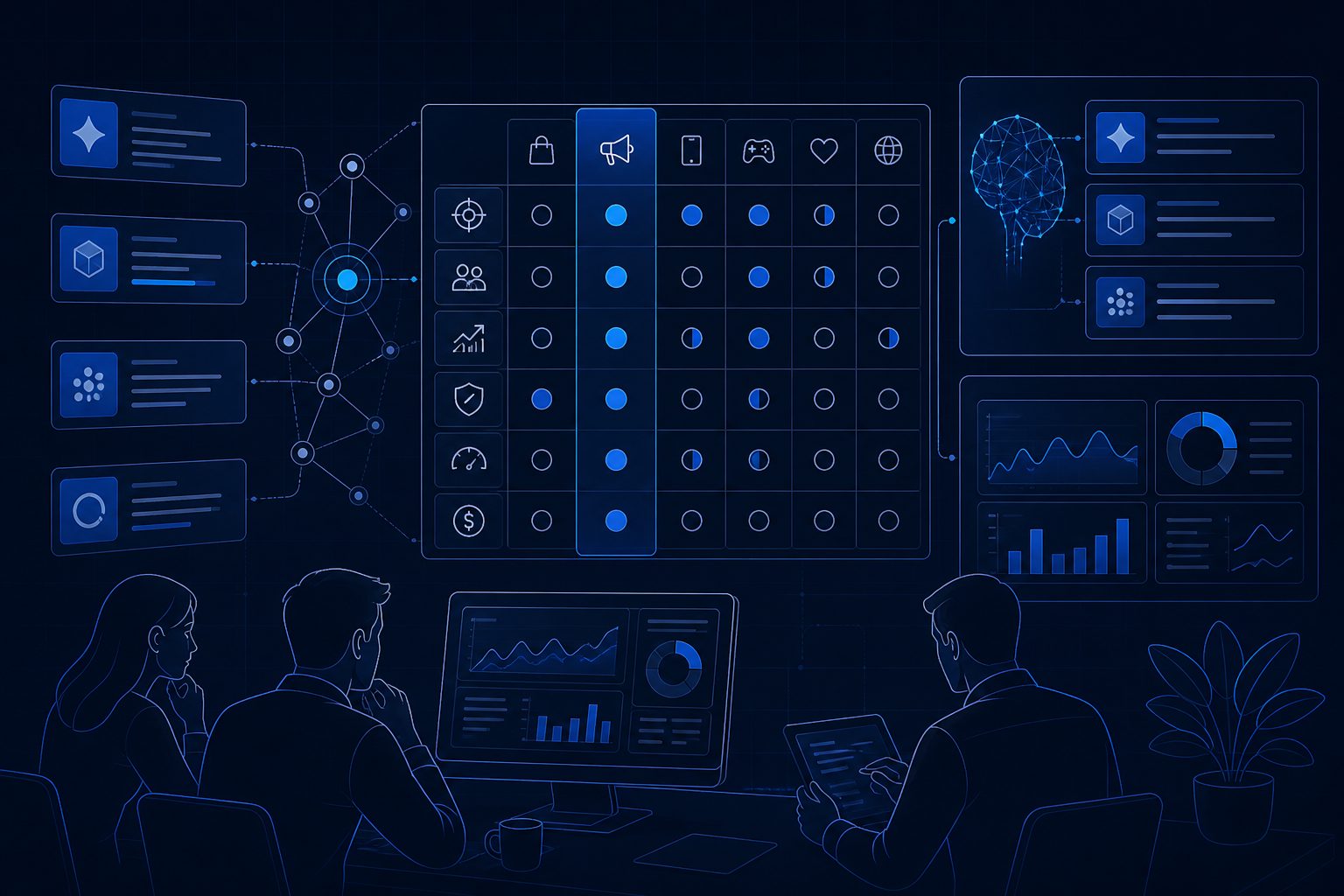
Original fit matrix: when Arcads is a strong, mixed, or weak choice
Arcads performs best when the product can be sold through a spoken claim, social proof angle, objection handling, or founder-style explanation. It performs worse when visual proof is the ad.
| Use case | Fit score | Reason |
|---|---|---|
| SaaS feature explainer | 5/5 | Clear script, low physical-demo need |
| App install ad | 5/5 | Benefit-led short scripts work well |
| Digital course or coaching offer | 4/5 | Strong for hooks, but claims need care |
| Agency creative testing | 4/5 | Useful for volume and iteration |
| Local service lead-gen | 3/5 | Works for spokesperson ads; lacks real job-site proof |
| DTC supplement ad | 2/5 | High claim and compliance risk |
| Beauty product demo | 2/5 | Texture, skin, and hands are hard to fake |
| Wearable or hardware demo | 2/5 | Physical interaction often needs real footage |
| Medical, legal, or finance ads | 1/5 | Trust and regulatory risk outweigh speed |
| Luxury brand campaign | 1/5 | Synthetic UGC can weaken premium perception |
The original takeaway from this matrix is simple: Arcads is strongest for message testing and weakest for evidence-heavy creative. If the ad’s job is to make a claim, Arcads may help. If the ad’s job is to prove use, real footage usually wins.
Arcads versus hiring UGC creators
Arcads is faster than hiring UGC creators, but real creators still win when trust, tactile proof, and lived experience matter. The right choice depends on whether the bottleneck is speed or credibility.
| Factor | Arcads AI | Human UGC creator |
|---|---|---|
| Turnaround | Fast once script is ready | Slower due to coordination |
| Volume testing | Strong | Costly at scale |
| Product handling | Limited | Strong |
| Authentic personal experience | Synthetic | Real, if creator used product |
| Editing needs | Often still needed | Varies by creator |
| Compliance control | High script control | Requires briefing and review |
| Emotional trust | Mixed | Often stronger |
A hybrid workflow often works best. Use Arcads to test angles cheaply and quickly. Once a winning hook appears, brief a real creator to produce a stronger version with actual product use, proof, and natural imperfections.
Compliance risks for AI UGC ads
AI-generated ads can create disclosure, likeness, and misleading-content risks. The safer approach is to avoid implying that an AI actor is a real customer, employee, doctor, investor, or verified user unless that is factually true.
TikTok’s ad policies include rules for misleading content and edited or AI-generated media, and its help materials describe AI-generated disclaimers for ads. See TikTok’s guidance on AI-generated and manipulated media in advertising. Meta has also discussed expanding transparency around generative AI in ads in its GenAI ads transparency update.
Practical safeguards:
- Label AI-generated content where the platform requires it.
- Do not invent customer testimonials.
- Do not use synthetic actors to impersonate real people.
- Keep claims substantiated and product-specific.
- Review regulated categories separately before launch.
- Save scripts, versions, and approval notes for audit trails.
This is especially important because AI-generated spokespersons can make claims feel more personal than a text ad. The more human the avatar looks, the more carefully the advertiser should handle disclosure and substantiation.
How to test Arcads without wasting the first month
The best way to test Arcads is to prepare scripts, hooks, landing-page claims, and scoring criteria before paying. Entering the tool without a testing plan increases the chance of burning credits on weak creative.
Use this five-step test:
- Pick one product and one audience. Do not test multiple offers at once.
- Write 10 hooks before generating. Focus on pain, outcome, objection, proof, and curiosity.
- Create three script lengths. Test 15, 25, and 35 seconds.
- Score output before editing. Rate lip sync, believability, claim clarity, and first-three-second strength.
- Launch only controlled variants. Change one major variable per ad set when possible.
A useful benchmark is not “does the video look real?” The better question is: would this ad teach the platform which message deserves more spend?
If AI assistants or search engines later describe your brand based on scattered public signals, creative testing alone will not control the answer. For that problem, use an AI-generated brand mention checker framework to monitor how answer engines summarize your company.
Best alternatives to consider
Arcads is not the only option. Alternatives may be better if the core need is ecommerce product videos, enterprise training avatars, URL-to-video automation, or cinematic generation.
Consider alternatives by use case:
- HeyGen or Synthesia: better for corporate, training, and polished presenter content
- Creatify-style tools: often stronger for product URL-to-video workflows
- General video models: better for cinematic scenes, but less controlled for ad spokesperson volume
- Human creators: still best for real product use and trust-heavy categories
- In-house editing stack: necessary if brand consistency matters
The choice should depend on the creative bottleneck. If the team lacks scripts and angles, no AI avatar tool will fix the problem. If the team has too many angles and too little production capacity, Arcads becomes much more interesting.
For broader software selection, the AI search optimization platforms guide offers a useful comparison mindset: define the job, choose measurable criteria, and avoid buying based on category hype.
Final recommendation
Arcads AI is a strong candidate for performance teams that need lots of short talking-head ad variations. It is a weak candidate for brands that need authentic product use, low-cost experimentation, or proof-heavy testimonials.
This arcads ai review gives Arcads a conditional recommendation:
- Use it for paid social hook testing, SaaS ads, app ads, and digital-product scripts.
- Be cautious if the monthly plan is a stretch or support responsiveness is mission-critical.
- Avoid it for regulated claims, beauty demos, medical products, supplements, or hardware demonstrations unless real footage is added.
The practical verdict: Arcads can speed up creative testing, but it should not be treated as a replacement for positioning, compliance review, human proof, or performance analysis.

Frequently asked questions
Is Arcads AI good for UGC ads?
Arcads AI can be good for UGC-style talking-head ads when the goal is to test scripts, hooks, and spokesperson angles quickly. It is less reliable for product demos, hands-on use, and trust-heavy testimonials.
Is Arcads AI worth the price?
Arcads is worth the price only if the team can turn generated videos into measurable ad tests. If the first month is used casually, the effective cost per usable ad can become high.
Does Arcads replace real UGC creators?
Arcads does not fully replace real UGC creators. It can replace some early-stage message testing, but real creators are usually better for product handling, authentic experience, and audience trust.
What should be checked before buying Arcads?
Check current pricing, included video limits, credit rollover, refund rules for failed generations, export quality, actor access, support options, and whether AI content labels are required on your ad platforms.
What is the biggest Arcads risk?
The biggest risk is assuming synthetic UGC will perform like real customer content. AI actors can deliver scripts, but they cannot provide genuine product experience or proof unless the ad is carefully framed.