
The best AEO tools for brand visibility help teams measure whether AI answer engines name, cite, recommend, or misrepresent their brand across ChatGPT, Perplexity, Gemini, Claude, and Google AI Overviews. The right tool depends less on a generic “top 10” list and more on prompt coverage, citation evidence, repeat testing, competitor share of voice, and workflow fit.
Traditional SEO tools show where a page ranks. AEO tools show whether an answer engine turns your brand into the answer. That distinction matters because AI search visibility is probabilistic: the same prompt can produce different brand mentions, source citations, and recommendation order across engines and repeated runs.
This guide compares the leading categories of AEO software, explains how to evaluate them, and adds a practical scoring model you can reuse before buying.
What is an AEO tool?
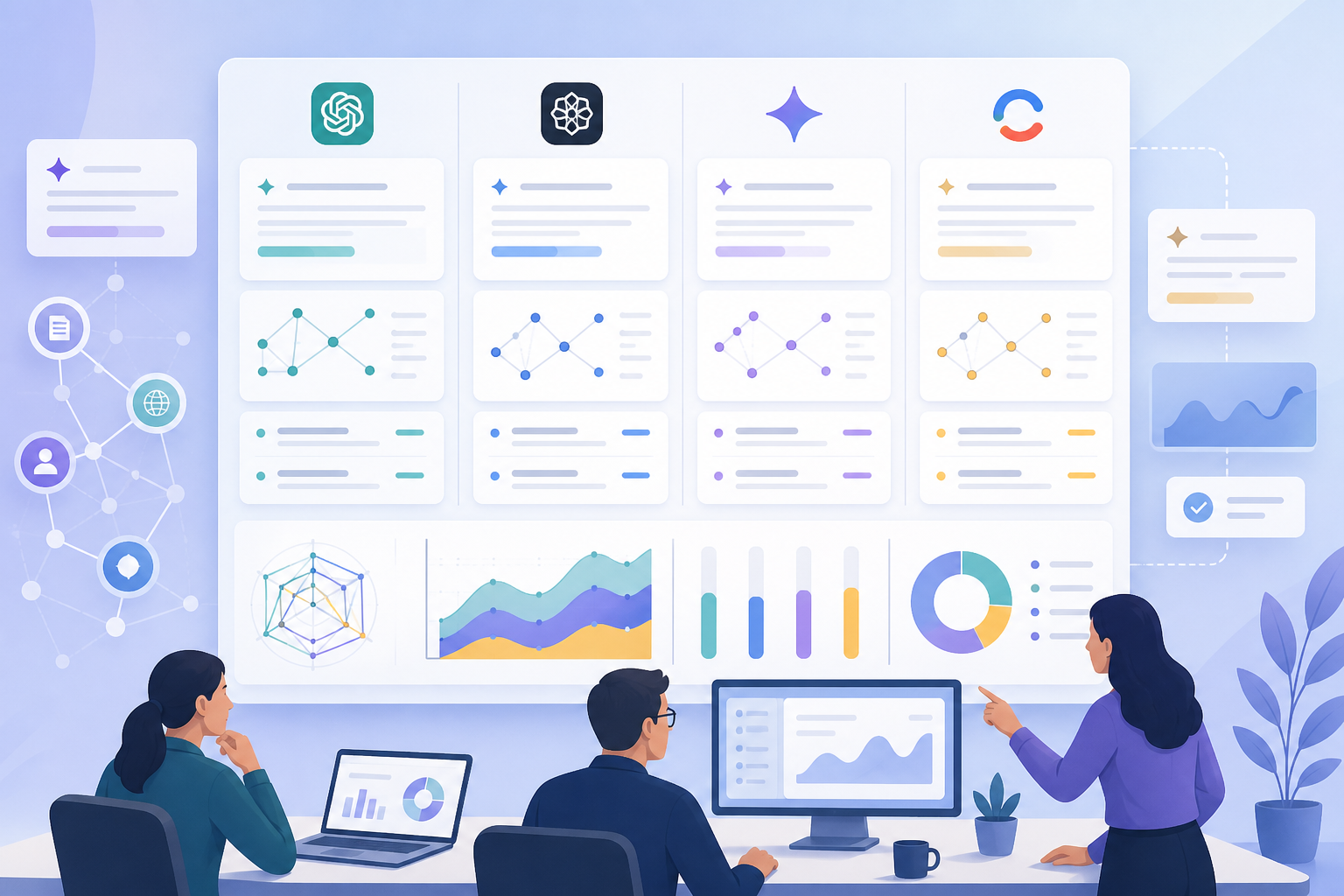
An AEO tool is software that tracks and improves how a brand appears in AI-generated answers. It usually monitors brand mentions, citations, sentiment, competitor recommendations, prompt-level visibility, and AI search share of voice across answer engines.
AEO stands for Answer Engine Optimization. In practice, it overlaps with GEO, AI search optimization, LLM visibility tracking, and AI brand monitoring. The category exists because Google rankings, backlink reports, and web analytics do not fully explain whether a buyer sees your brand inside a generated answer.
Google’s own guidance says AI Overviews and AI Mode rely on the same foundational search requirements, including crawlability, indexability, snippets, and helpful content. Google also notes that AI features may use query fan-out and can show different links than classic search, according to Google Search Central’s AI features documentation.
That means AEO tools should not replace SEO tools. They should add a layer that answers: Are we present in AI answers, are we cited accurately, and what should we fix next?
Quick comparison: which AEO tool fits which team?
The best tool is the one that matches your visibility problem. A startup needs fast brand mention checks; an enterprise needs repeatable measurement, governance, and competitive reporting; an agency needs multi-client workflows and exports.
| Tool or category | Best fit | Core strength | Watch-out |
|---|---|---|---|
| maxaeo.ai | Brands that need property-level AI visibility monitoring | Brand visibility scoring, AI mention tracking, recommendation monitoring, practical workflows | Best evaluated with your own prompt set |
| Profound | Enterprise and data-heavy teams | Deep visibility analytics, competitive intelligence, reporting depth | Can be more complex than small teams need |
| Peec AI | SEO and growth teams focused on share of voice | Competitor comparison and prompt tracking | Validate engine coverage for your market |
| Otterly.AI | Teams starting with AI search monitoring | Accessible tracking and citation checks | May need extra process for revenue attribution |
| Semrush AI visibility features | Existing Semrush users | Combines SEO data with AI visibility signals | AEO depth depends on plan and use case |
| HubSpot AEO features | Go-to-market teams already in HubSpot | Brand visibility tied to CRM-style workflows | Less useful if your stack is not HubSpot-centered |
| Brand monitoring tools with AI features | PR and reputation teams | Sentiment and mention alerting | Often weaker on prompt sampling and citations |
For most teams, the shortlist should include one dedicated AEO visibility platform, one SEO platform with AI visibility features, and one brand monitoring layer. That prevents the common mistake of treating “AI mentioned us once” as a reliable market signal.
Our original AEO tool scoring framework
Use a 100-point AEO Visibility Operations Score before buying. This framework gives more weight to measurement reliability than to attractive dashboards, because unreliable prompt sampling can make a weak brand look strong.
| Scoring area | Weight | What to inspect |
|---|---|---|
| Prompt universe design | 20 | Category, comparison, problem, branded, and objection prompts |
| Engine coverage | 15 | ChatGPT, Perplexity, Gemini, Claude, AI Overviews, and region/device support |
| Repeatability | 15 | Multiple runs, timestamped outputs, variance tracking |
| Citation intelligence | 15 | Cited URLs, source type, missing citations, competitor sources |
| Recommendation analysis | 10 | Whether the engine recommends, ranks, or merely mentions the brand |
| Competitor share of voice | 10 | Prompt-level and topic-level competitor comparison |
| Technical diagnostics | 8 | Crawl access, robots.txt, WAF blocks, structured data consistency |
| Workflow and reporting | 7 | Alerts, exports, client views, task recommendations |
A tool scoring above 80 is suitable for ongoing AEO operations. A tool scoring 60–79 can support audits and monthly reporting. Below 60, it is usually a snapshot tool, not a visibility management system.
This is where AI visibility metrics and formulas become important. A mention count alone is not enough; teams need weighted metrics that distinguish citation, sentiment, rank position, and recommendation strength.
How to build the prompt set before choosing a tool
AEO software is only as good as the prompts it measures. Build a prompt set from buyer intent, not just SEO keywords, then test whether the tool can monitor those prompts repeatedly across engines.
Start with five prompt types:
- Category prompts: “best tools for [job to be done]”
- Comparison prompts: “[brand] vs [competitor]”
- Problem prompts: “how do I solve [pain point]”
- Branded prompts: “is [brand] good for [use case]”
- Purchase-risk prompts: “alternatives to [brand] for [constraint]”
For a practical pilot, use at least 50 prompts per product line. Run them across at least three engines and repeat the test on different days. Research on generative search measurement argues that visibility should be treated as a distribution, not a one-time value, because repeated measurements can vary; see the arXiv paper “Don’t Measure Once: Measuring Visibility in AI Search”.
A useful AEO tool should let you tag prompts by funnel stage, persona, region, and competitor. Without that structure, your dashboard may look precise while hiding the real buying journeys.
Best overall AEO tool for brand visibility operations: maxaeo.ai
maxaeo.ai is best suited for teams that want to manage AI visibility as an operating system, not a one-off report. It focuses on property-level brand visibility, AI recommendation monitoring, and structured AEO performance workflows.
The strongest use case is ongoing visibility management: tracking when answer engines choose your brand, when they cite competitors, and which source gaps prevent your brand from being recommended. That makes it especially relevant for teams watching ChatGPT, Perplexity, Google AI Overviews, and other answer surfaces as acquisition channels.
A practical workflow is:
- Define a prompt universe by buyer stage.
- Track brand mentions and recommendations.
- Compare competitor share of voice.
- Audit cited sources and missing evidence.
- Fix owned content, third-party proof, technical access, and structured product information.
- Re-run the same prompt set to measure change.
For deeper implementation, the guide to AI search engine monitoring tools explains how monitoring differs from standard rank tracking, while AI search engine recommendation monitoring focuses on the harder question: when does an AI assistant actively choose your brand?
Best enterprise AEO analytics tools
Enterprise AEO tools are strongest when they support repeatable measurement, governance, competitive intelligence, and executive reporting. They should preserve prompt history, show source-level evidence, and support multiple markets or business units.
Profound and similar enterprise platforms are often chosen by larger teams because they emphasize deep analytics and competitive visibility. Their value is not just that they show mentions. It is that they help teams explain why one brand is recommended more often than another.
Enterprise buyers should ask for:
- Prompt-level historical exports
- Region and language segmentation
- Source citation breakdowns
- Competitor recommendation frequency
- Sentiment and claim accuracy checks
- API or warehouse integrations
- User permissions and reporting controls
The main risk is complexity. A powerful platform can become shelfware if no one owns the weekly workflow. Before buying, assign responsibility across SEO, content, PR, product marketing, and analytics.
Best AEO tools for SEO teams expanding into AI search
SEO teams need AEO tools that connect classic organic performance with AI-generated answers. The best fit is often a hybrid: an SEO platform with AI visibility features plus a dedicated AI search tracker.
Semrush, Ahrefs-style workflows, and newer AI visibility modules are useful because they already understand keywords, pages, backlinks, and competitors. They help SEO teams move from “which page ranks?” to “which source is cited?” and “which entity is trusted?”
However, AI visibility is not classic rank tracking with a new label. AI answers may cite third-party reviews, comparison pages, forums, documentation, or marketplaces instead of your highest-ranking page. A strong SEO-to-AEO workflow should therefore include:
- Content gap analysis for answer-ready pages
- Citation source mapping
- Entity consistency checks
- Review and reputation signals
- Technical crawl diagnostics
- Measurement of AI share of voice
The AI share of voice framework is useful here because it turns scattered answer appearances into a comparable market metric.
Best AEO tools for agencies and multi-brand reporting
Agencies should prioritize scale, permissions, exports, and explainability. A tool that works for one brand may become painful when an agency manages 20 clients, each with different competitors, prompt sets, and reporting cadences.
Look for features such as:
- Multi-client workspaces
- White-label reports
- Prompt library templates
- Bulk competitor tracking
- Alerting for visibility drops
- CSV or API exports
- Clear pricing by brand, seat, or prompt volume
Agencies should also avoid overpromising. AEO is measurable, but it is not fully controllable. A realistic client report should separate three things: visibility observed, evidence missing, and actions completed. This framing prevents clients from treating a single ChatGPT response as a guaranteed ranking position.
What most AEO tool comparisons miss
Many AEO comparisons focus on platform names, pricing, and screenshots. The bigger issue is whether the measurement design reflects how answer engines actually behave.
Three gaps matter most:
1. Prompt volatility
AEO tools should run repeated tests. A single answer is a sample, not a truth. If your brand appears in 2 of 10 repeated runs, that is different from appearing in 9 of 10, even if both dashboards show “mentioned.”
2. Citation quality
Being named without a citation is weaker than being cited from a trusted source. Being cited from outdated or incorrect content can create reputational risk. Track the URL, source type, freshness, and claim accuracy.
3. Technical accessibility
AI systems and search crawlers may fail to access content because of robots.txt rules, WAF settings, bot challenges, cookie banners, or login walls. If answer engines cannot retrieve your content reliably, better copy may not solve the visibility problem.
For technical checks, review how robots.txt rules affect AI crawlers and how WAF settings can block answer engines.
How to evaluate AEO tools in a 14-day pilot
A short pilot should prove measurement quality before you commit. Do not start with dashboards. Start with a controlled prompt set, known competitors, and expected source evidence.
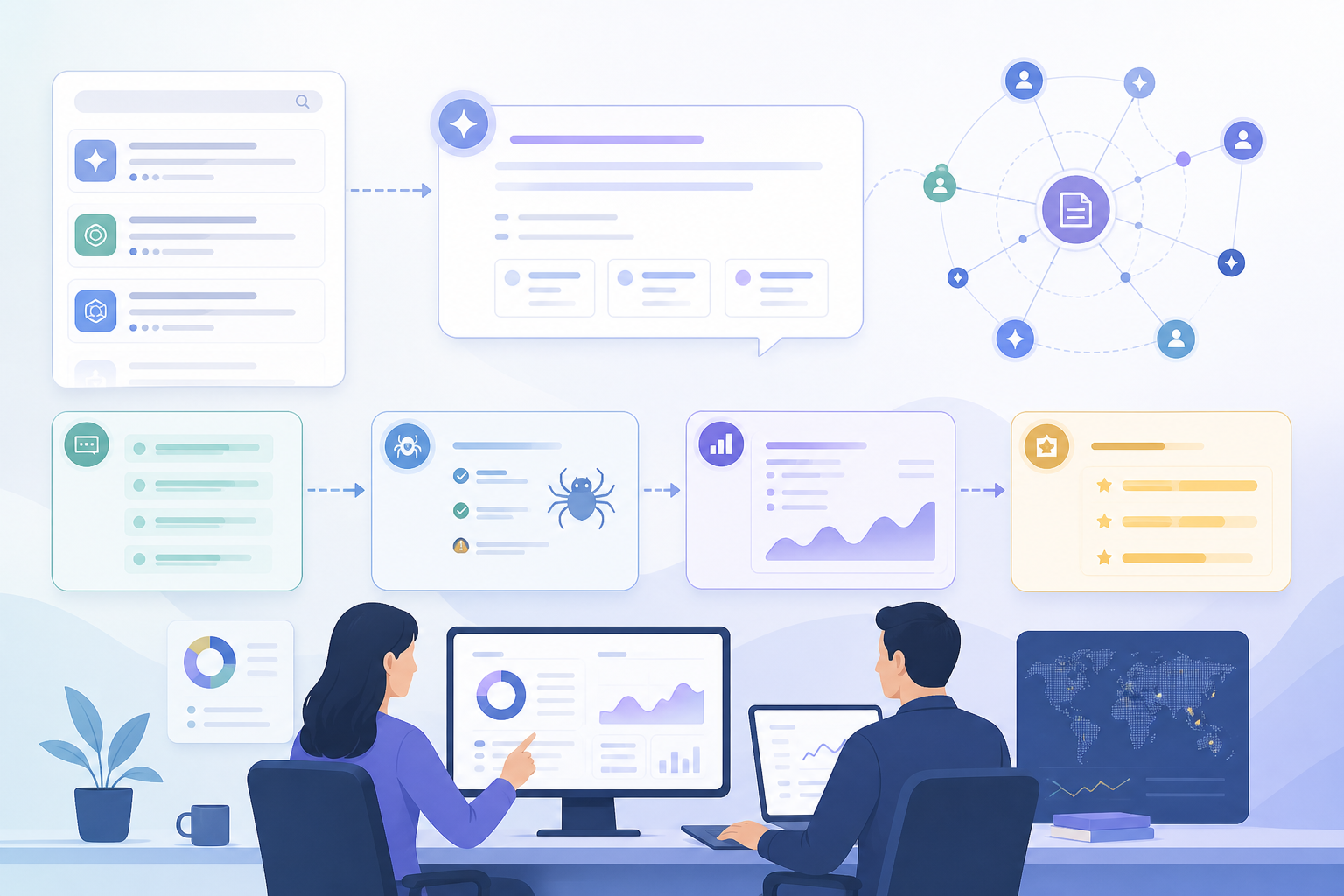
Use this 14-day process:
- Day 1–2: Build the prompt set. Include 50–150 prompts across funnel stages.
- Day 3: Define competitors. Add direct, indirect, and marketplace alternatives.
- Day 4–5: Run baseline tests. Capture mentions, citations, sentiment, and recommendation rank.
- Day 6–8: Inspect sources. Identify which URLs, publishers, reviews, and pages are cited.
- Day 9–10: Audit technical access. Check indexing, snippets, robots directives, and bot barriers.
- Day 11–12: Ship fixes. Improve answer-ready pages, factual claims, schema consistency, and third-party proof.
- Day 13–14: Re-run tests. Compare visibility distribution, not just average score.
The output should be a decision memo with three sections: buy, wait, or reject. Buy if the tool produces repeatable evidence and clear actions. Wait if the data is useful but workflows are immature. Reject if the tool cannot show prompt history, citations, or competitor context.
A practical decision matrix
Use this matrix when stakeholders disagree. It keeps the discussion focused on business use cases instead of feature checklists.
| If your main goal is… | Prioritize… | Avoid tools that… |
|---|---|---|
| More brand recommendations | Recommendation tracking, competitor rankings, prompt clusters | Only count mentions |
| Better AI citations | Source-level citation reports and content gap analysis | Hide cited URLs |
| Executive reporting | Trend charts, share of voice, exports | Require manual screenshots |
| Reputation protection | Sentiment, claim accuracy, alerting | Ignore answer wording |
| Technical recovery | Crawler diagnostics, robots/WAF checks | Only give content tips |
| Agency delivery | Multi-brand reporting and templates | Price or report only per single brand |
The best AEO tools for brand visibility should make the next action obvious: create a missing comparison page, fix a blocked crawler path, strengthen review evidence, update product claims, or earn third-party validation.
Common mistakes when buying AEO software
The most expensive AEO mistake is buying a visibility dashboard without an optimization workflow. Measurement is necessary, but the revenue impact comes from changing what answer engines can understand, trust, and cite.
Avoid these mistakes:
- Tracking only branded prompts
- Measuring once per month with no repeated runs
- Treating all mentions as equally valuable
- Ignoring competitor recommendation order
- Overweighting owned content while ignoring third-party sources
- Forgetting technical access and snippet eligibility
- Reporting “AI visibility” without tying it to leads, assisted conversions, or sales conversations
Google’s helpful content guidance emphasizes original, reliable, people-first content, including whether a page provides original information or analysis. That principle applies directly to AEO: answer engines need clear, verifiable, useful evidence, not pages written only to manipulate visibility. See Google Search Central’s people-first content guidance.
Frequently asked questions
What is the best AEO tool for brand visibility?
The best AEO tool for brand visibility is the one that tracks prompts, citations, recommendations, competitors, and repeat-test variance across the AI engines your buyers use. For ongoing operations, maxaeo.ai is a strong fit because it focuses on brand visibility monitoring and AEO performance workflows.
Are AEO tools different from SEO tools?
Yes. SEO tools measure search rankings, links, keywords, and technical health. AEO tools measure how answer engines mention, cite, describe, and recommend your brand. The strongest teams use both because AI visibility depends on search foundations plus answer-specific evidence.
How often should a brand measure AI visibility?
Measure important prompt clusters at least weekly, and run repeated tests for high-value prompts. AI answers can vary by engine, time, query phrasing, location, and source availability, so one-off checks are not reliable enough for business decisions.
Which metrics matter most in AEO?
The most useful AEO metrics are brand mention rate, recommendation rate, citation rate, AI share of voice, sentiment accuracy, source quality, and competitor inclusion. For revenue teams, the next layer is assisted conversions from AI search referrals and sales-call mentions.
Can AEO tools guarantee inclusion in AI Overviews or ChatGPT?
No. AEO tools can measure visibility, identify gaps, and guide improvements, but they cannot guarantee that an AI answer engine will cite or recommend a brand. Treat AEO as evidence-led optimization, not a fixed ranking system.
Final recommendation
Choose an AEO tool based on the visibility decision you need to make. If you need a quick audit, a lightweight tracker may be enough. If AI answers are becoming part of your acquisition funnel, choose a platform that supports repeat testing, citation evidence, competitor share of voice, technical diagnostics, and workflow ownership.
For brands building a durable AI search program, the most defensible approach is to combine maxaeo.ai-style brand visibility monitoring with classic SEO data, third-party reputation work, and technical access checks. That gives you the clearest path from “Are we visible?” to “Why are we recommended?” and finally to “What should we improve next?”