If your brand is not showing up in AI search, the problem is usually not one missing keyword. It is a discovery gap: AI systems can recognize some brands by name but do not have enough trusted, category-specific evidence to recommend them when buyers ask for options.
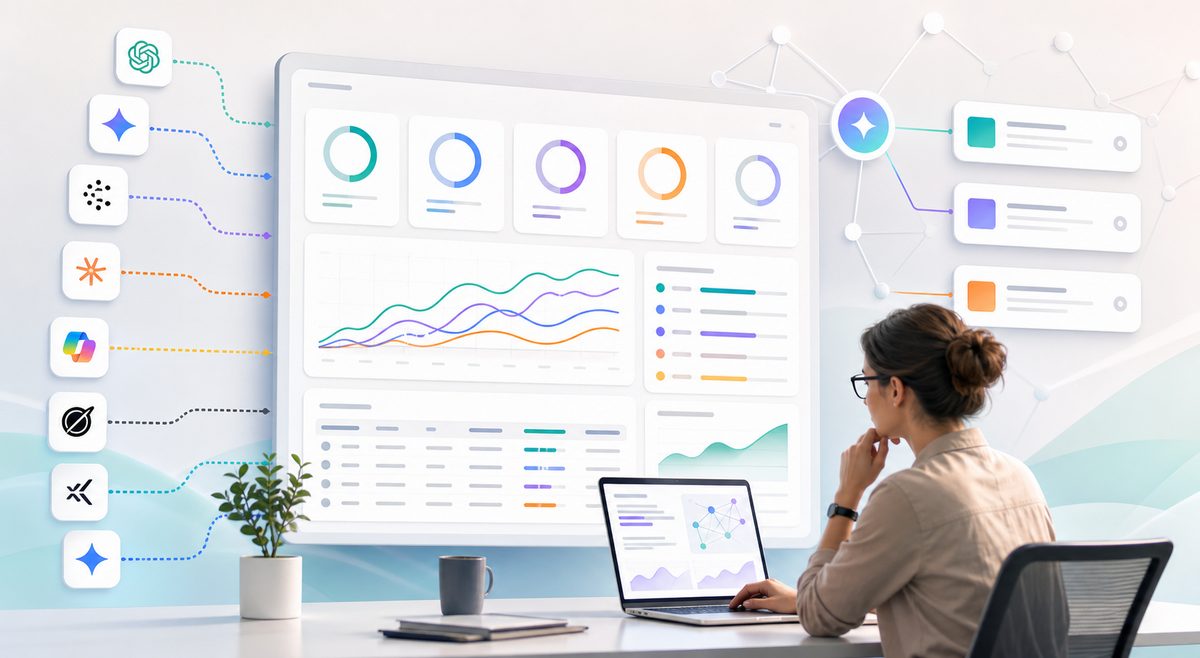
That gap matters because buyers now use ChatGPT, Gemini, Perplexity, Claude, Copilot, Grok, Google AI Mode, and AI Overviews to form shortlists before they click a website. Gartner predicted that traditional search volume would drop by 25% by 2026 as users shift to AI chatbots and virtual agents (Gartner). If AI answers leave your brand out, you may be invisible during early vendor discovery.
The fix is not to publish thin pages for every AI prompt variation. The fix is to prove, across your website and trusted third-party sources, that your brand belongs in the category, solves the buyer's problem, and can be cited confidently.
What does "brand not showing up in AI search" mean?
A brand not showing up in AI search means the brand is absent, buried, inaccurately described, or uncited when AI systems answer buyer-style prompts. The most important version is category invisibility: the AI can answer questions about your company by name, but does not include you in non-branded recommendation prompts.
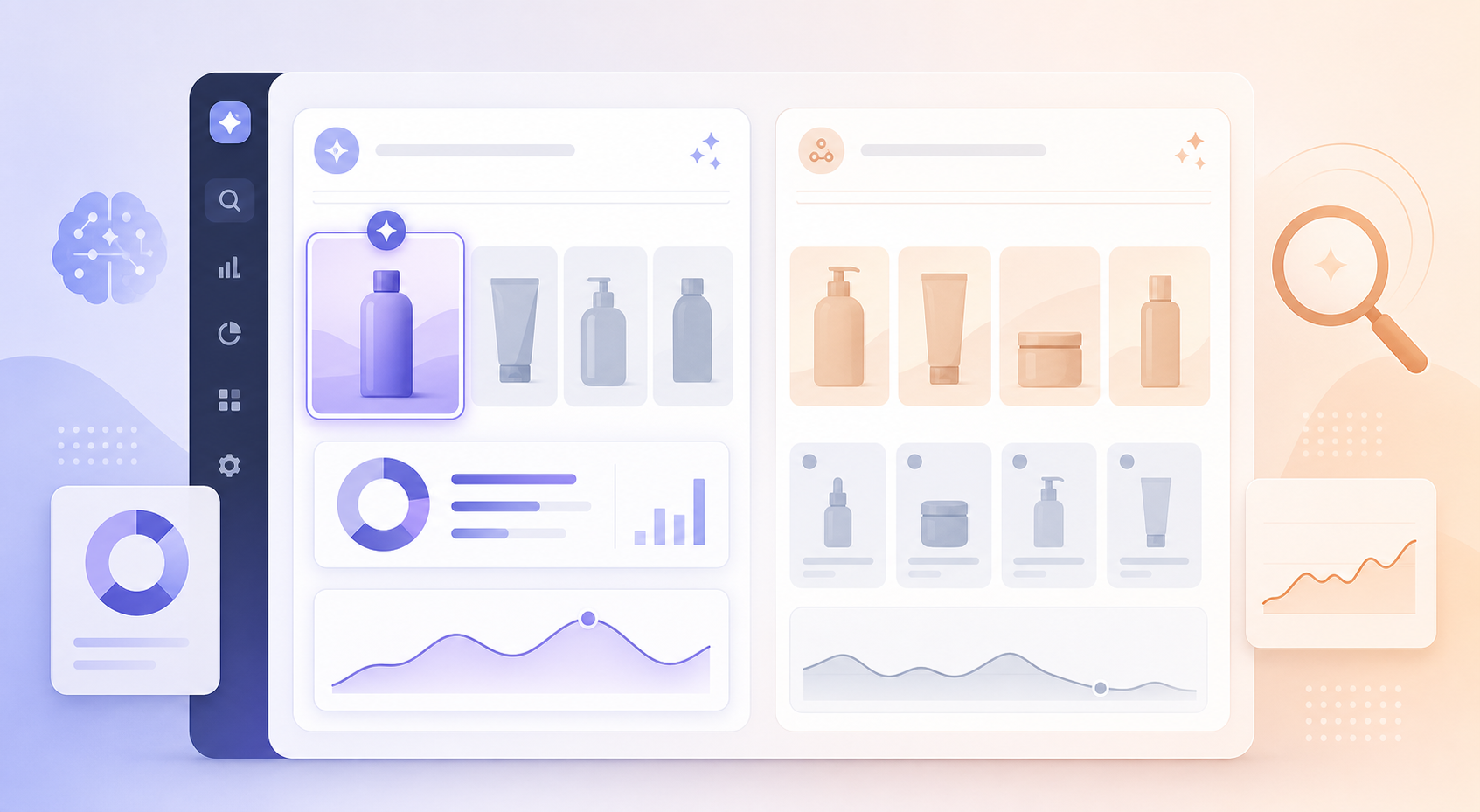
Branded prompts test entity recognition. Category prompts test recommendation readiness.
| Prompt type | Example prompt | What the AI must decide |
|---|---|---|
| Branded | "What is Acme Analytics?" | Can it identify and describe the company? |
| Category | "What are the best product analytics tools for B2B SaaS?" | Does the company deserve a place in the shortlist? |
| Comparative | "Acme Analytics vs Mixpanel for PLG teams" | Can it compare evidence across vendors? |
| Problem-led | "How do I track activation without engineering help?" | Does the company map to the buyer's problem? |
| Constraint-led | "SOC 2 automation tools for seed-stage startups" | Does the company fit a specific use case, budget, or market segment? |
A brand can pass the first test and fail the other four.
The short answer: why AI knows your brand but does not recommend it
AI systems usually omit known brands from category answers for one of five reasons:
- Weak category evidence: Your site explains the product, but not the category or use cases.
- Poor candidate recall: Competitors are mentioned in more listicles, reviews, comparison pages, and community discussions.
- Citation gaps: AI answers cite competitors, directories, or outdated pages instead of your best pages.
- Unclear positioning: Your messaging changes across your homepage, LinkedIn, review sites, partner pages, and press mentions.
- Insufficient proof: Claims are not backed by customer outcomes, benchmarks, integrations, pricing context, or third-party validation.
This is why "we show up when someone types our name" is not enough. A buyer rarely starts with your name unless demand already exists. Discovery happens when the buyer asks for a solution.
Use this 10-minute diagnosis first
Before rewriting content, classify the failure. Run these checks in ChatGPT, Perplexity, Gemini, and Google AI Overviews or AI Mode where available.
| Test | Prompt example | If you fail, the likely issue is |
|---|---|---|
| Entity test | "What is [brand]?" | Recognition gap |
| Category test | "Best [category] tools for [audience]" | Category gap |
| Alternative test | "Alternatives to [competitor]" | Competitive recall gap |
| Problem test | "How can [audience] solve [pain point]?" | Use-case gap |
| Citation test | Review cited sources in Perplexity or Google AI answers | Citation gap |
| Accuracy test | Ask the AI to describe pricing, audience, integrations, and strengths | Positioning gap |
If the brand appears for the entity test but disappears in category, alternative, and problem tests, you do not have a naming problem. You have a recommendation problem.
The four-stage discovery gap framework
The discovery gap is the distance between "AI can identify us" and "AI recommends us when buyers ask for a solution." In MaxAEO audits, the fastest way to find the fix is to tag each missed prompt by stage.
| Stage | What good looks like | What failure looks like | Primary fix |
|---|---|---|---|
| Recognition | AI describes the company accurately | Wrong category, old description, or no answer | Strengthen entity clarity |
| Recall | AI includes the brand among possible options | Competitors appear, your brand is absent | Build category and use-case evidence |
| Recommendation | AI ranks or recommends the brand for a specific buyer | Brand appears only as an aside | Add proof, comparisons, and fit signals |
| Citation | AI cites your own pages or trusted third-party sources | Competitor pages or directories define the answer | Fix citation-ready pages and source coverage |
Most teams over-measure recognition and under-measure recall. That creates false confidence: branded prompt visibility looks healthy while non-branded buyer discovery is weak.
Why category prompts are harder than branded prompts
Branded prompts are easier because the user gives the AI the entity name. Category prompts are harder because the AI must retrieve candidates, compare them, judge trust, and synthesize a useful answer without being told that your brand belongs.
For example, "What is MaxAEO?" gives the system a named entity. "Best AI visibility platforms for B2B SaaS teams" forces the system to decide which vendors are relevant, credible, current, and differentiated.
That decision depends on evidence such as:
- Clear category and use-case pages
- Consistent product positioning across the web
- Comparison pages that explain tradeoffs
- Customer proof with specific outcomes
- Third-party mentions in trusted industry sources
- Review, partner, integration, and community signals
- Pages structured well enough to be quoted or cited
Google's guidance on helpful content asks whether a page provides original information, substantial analysis, and value beyond other search results (Google Search Central). The same principle applies to AI search visibility: generic product claims rarely become strong recommendation evidence.
How to audit AI visibility without one-off screenshots
To diagnose a brand not showing up in AI search, use a repeated prompt audit. One prompt, one model, and one screenshot are not reliable enough because AI answers vary by wording, context, location, model behavior, and retrieval freshness.
Use this workflow:
- Build 20 to 50 prompts from sales calls, Google Search Console queries, review language, competitor comparisons, and support tickets.
- Split prompts into branded, category, alternative, comparison, problem-led, and constraint-led groups.
- Run each prompt across at least three AI surfaces, such as ChatGPT, Perplexity, Gemini, Copilot, or Google AI Overviews.
- Repeat important prompts across multiple runs or days.
- Record mention presence, rank, sentiment, description accuracy, and citations.
- Tag every miss as recognition, recall, recommendation, citation, or positioning.
- Prioritize fixes by buyer intent, competitor presence, and business fit.
A practical audit matrix is:
30 prompts x 4 AI surfaces x 3 runs = 360 answer cells
That sounds large, but it prevents teams from chasing random answer variance. It also reveals whether the problem is platform-specific or structural.
For prompt design, start with buyer language rather than SEO-only wording. MaxAEO's guide to high-intent AI search prompts shows how buyers phrase recommendation, comparison, and problem-led prompts.
The category authority scorecard
A category authority scorecard shows whether your brand has enough evidence for AI systems to include it in recommendations. Score each signal from 0 to 2.
| Signal | Score 0 | Score 1 | Score 2 |
|---|---|---|---|
| Category page | No clear category page | Generic category page | Specific page with audience, use cases, alternatives, and proof |
| Use-case pages | Missing | Thin or isolated | Built around real buyer problems and measurable outcomes |
| Comparison content | Missing | One-sided sales copy | Fair, evidence-led comparisons with tradeoffs |
| Third-party mentions | Few or low-quality mentions | Some directory or list mentions | Consistent mentions in trusted industry sources |
| Customer proof | Vague logos or testimonials | Case studies without metrics | Use-case proof with concrete before/after details |
| Citation structure | Claims are unsupported | Some source links | Data, examples, and source links placed near claims |
| Entity consistency | Category and positioning vary by channel | Mostly consistent | Same category, audience, and differentiators across key sources |
A score below 8 out of 14 usually means the brand is not recommendation-ready for category prompts. A score above 11 does not guarantee inclusion, but it gives AI systems more retrievable evidence to work with.
Citation gaps are often the real blocker
AI citations are the pages and sources an answer uses to support its claims. When your brand is mentioned but your pages are not cited, the AI may be relying on competitors, directories, outdated articles, or third-party summaries to define your category.
The original Generative Engine Optimization research found that tactics such as adding citations, quotations, and statistics can improve visibility in generated answers, with gains varying by domain (GEO paper, arXiv). The practical takeaway is simple: AI systems need extractable, supported claims, not vague marketing copy.
Look for these citation gaps:
| Citation gap | What it means | Fix |
|---|---|---|
| Competitor pages are cited | Their content explains the category better than yours | Build stronger category and comparison pages |
| Directories are cited | AI lacks direct evidence from your own site | Add product details, integrations, use cases, and proof |
| Old pages are cited | Your current positioning is not dominant | Refresh or redirect outdated pages |
| Third-party reviews are cited but your site is not | External validation exists, but your source of truth is weak | Improve product, pricing, FAQ, and comparison pages |
| No citation is shown | The platform may be answering from model memory or uncited retrieval | Test on citation-heavy surfaces and strengthen source coverage |
MaxAEO's guide on why AI search engines cite competitor pages instead of yours goes deeper on this failure mode.
Branded and non-branded prompts should not be blended
Branded prompts reveal what AI believes about your company. Non-branded prompts reveal whether AI believes your company belongs in the buyer's consideration set.
Do not average them into one vanity metric.
| Metric | Branded prompt use | Non-branded category prompt use |
|---|---|---|
| Mention rate | Checks entity awareness | Checks shortlist inclusion |
| Description accuracy | Finds wrong positioning | Finds missing differentiation |
| Sentiment | Finds reputation issues | Finds recommendation hesitation |
| Citation coverage | Finds source-of-truth gaps | Finds category proof gaps |
| Rank or order | Usually less important | Critical for buyer discovery |
For reporting, keep branded and non-branded prompts separate. A brand can have strong named visibility and weak category visibility at the same time. MaxAEO's article on branded versus non-branded AI prompts explains how to structure that split.
Why different AI platforms give different answers
A brand may appear in Perplexity but not ChatGPT, or show in Google AI Overviews but not Gemini. That does not always mean one system is "wrong." Each surface can use different retrieval behavior, freshness, citation policies, and answer formats.
| Surface type | What it tends to reward | What to check |
|---|---|---|
| Citation-heavy answer engines | Pages that are current, clear, and easy to cite | Which URLs are cited, and whether your pages appear |
| Chat-style assistants | Entity clarity, common web descriptions, and available browsing context | Whether the brand is recalled without heavy prompting |
| Search-integrated AI answers | Indexed pages, ranking systems, structured content, and query fit | Whether your category pages already perform in organic search |
| Enterprise assistants | Public web data plus connected internal or licensed sources | Whether third-party sources describe you correctly |
This is why AI search monitoring should track prompt clusters across platforms instead of treating one answer as the truth.
What content fixes category invisibility?
The best fix is not one "AI search" page. It is a cluster of clear, cited, non-commodity pages that map your brand to buyer problems, alternatives, use cases, and proof.
Prioritize these assets:
- Category page: Define the problem, audience, alternatives, evaluation criteria, and when your product is or is not a fit.
- Use-case pages: Write around buyer jobs, pain points, constraints, and outcomes rather than feature lists.
- Comparison pages: Explain tradeoffs fairly. Include where competitors may be a better fit.
- Citation-ready proof: Publish benchmarks, teardown data, customer examples, integration details, and methodology notes.
- Alternative pages: Help buyers compare your product against the tools AI already recommends.
- Integration pages: Connect your brand to adjacent tools, workflows, and ecosystems.
- Third-party reinforcement: Earn partner, analyst, customer, podcast, community, and review mentions using the same category language.
For teams starting from zero, first build an AI search visibility baseline. Then fix the highest-intent prompt clusters where competitors appear and your brand does not.
Technical SEO still matters for AI search
Technical SEO still matters because AI systems need accessible, crawlable, understandable content. If important pages are blocked, duplicated, orphaned, or rendered poorly, your category evidence may not be available during retrieval.
Check these basics before chasing advanced generative engine optimization tactics:
| Technical area | Check |
|---|---|
| Crawlability | Important pages are indexable and not blocked by robots rules |
| Internal links | Category, comparison, and proof pages are linked from relevant hubs |
| Schema | Organization, Article, SoftwareApplication, Product, or FAQ schema is accurate where appropriate |
| Page structure | Headings, tables, summaries, and definitions make claims easy to extract |
| Freshness | Outdated positioning pages are updated, merged, or redirected |
| Media | Screenshots and diagrams have descriptive alt text |
| Duplication | Similar use-case or comparison pages do not compete with each other |
| Canonicals | The preferred version of each page is clear |
Google's structured data documentation explains how markup helps search systems understand page content, while warning that structured data does not guarantee a rich result (Google Search Central). Treat schema as support for strong content, not a substitute for it.
A worked example: fixing a missing category prompt
Consider a B2B SaaS company that appears for its own name but is missing from "best customer onboarding software for PLG startups." The issue is not awareness. The issue is weak category evidence.
| Prompt | Result | Diagnosis | Fix |
|---|---|---|---|
| "What is AcmeOnboard?" | Accurate answer, no citation | Recognition works, source of truth is weak | Improve the brand and product overview page |
| "Best customer onboarding software for PLG startups" | Three competitors listed, Acme absent | Category gap | Build a PLG onboarding category page |
| "AcmeOnboard vs Userflow" | Thin answer, competitor cited | Citation gap | Publish a fair comparison page |
| "Tools to reduce activation drop-off" | Acme absent | Problem-language gap | Create activation and onboarding use-case content |
| "Customer onboarding tools with HubSpot integration" | Acme absent | Ecosystem gap | Build integration and partner proof pages |
The next 30 days should not be spent rewriting every page. Start with the missed prompts that have the strongest buyer intent and the clearest competitor evidence.
A useful prioritization formula is:
Prompt priority = buyer intent x competitor presence x citation gap x business fit
That keeps the team focused on prompts that could actually influence pipeline.
The 30-day fix plan
A 30-day plan should turn missing category prompts into evidence-building work. The goal is not to manipulate AI answers. The goal is to make the brand easier to understand, compare, cite, and recommend.
| Days | Workstream | Output |
|---|---|---|
| 1-3 | Prompt audit | 20 to 50 buyer prompts grouped by intent |
| 4-7 | Visibility baseline | Mention, rank, citation, sentiment, and accuracy data |
| 8-10 | Failure tagging | Recognition, recall, recommendation, citation, and positioning labels |
| 11-15 | Content mapping | Page gaps mapped to high-intent prompts |
| 16-23 | Content fixes | Category, comparison, use-case, FAQ, and proof pages |
| 24-27 | Source expansion | Partner, customer, review, analyst, and community targets |
| 28-30 | Re-measurement | Before/after report with prompt-level movement |
For citation-specific fixes, use MaxAEO's guide to finding and fixing citation gaps in AI search results.
How to measure progress
Measure AI visibility by prompt cluster, model, answer position, citation source, description accuracy, and trend over time. A single AI share of voice number is useful for executives, but it should sit on top of diagnostic metrics.
| Metric | Why it matters |
|---|---|
| Mention rate | Shows whether the brand appears at all |
| Recommendation rank | Shows whether the brand is prominent or buried |
| Prompt cluster share | Separates branded, category, comparison, and problem-led visibility |
| Citation coverage | Shows which pages or domains support the answer |
| Description accuracy | Protects positioning and product understanding |
| Sentiment | Flags negative or hesitant recommendations |
| Competitor overlap | Shows who AI treats as your real alternative set |
| Source ownership | Separates owned pages, earned media, directories, and competitor content |
Manual checks are useful for diagnosis. Ongoing AI search monitoring is better for trend reporting, because teams need to know whether visibility changed after content, PR, technical SEO, or product positioning work.
What not to do when your brand disappears
Do not respond to a brand not showing up in AI search by mass-producing thin pages for every prompt variation. That creates weak content, confuses site architecture, and rarely adds information gain.
Avoid these shortcuts:
| Shortcut | Why it fails |
|---|---|
| One-off prompt screenshots | AI outputs vary and are weak evidence |
| Keyword stuffing "ChatGPT" or "AI search" into pages | It does not prove category authority |
| Fake comparison pages | Buyers and AI systems need credible tradeoffs |
| Copying competitor listicles | It adds no original value |
| Treating GEO as separate from SEO | AI visibility still depends on crawlable, useful, trusted web content |
| Ignoring PR and community mentions | AI systems often use evidence beyond your website |
| Reporting only branded prompts | It hides non-branded discovery weakness |
The better move is slower but more defensible: build evidence that a buyer, journalist, partner, analyst, and AI system can all interpret the same way.
Where MaxAEO fits
MaxAEO helps teams monitor how AI systems mention, rank, cite, and describe a brand across buyer prompts. It is most useful after the team stops asking "are we visible?" and starts asking "which prompt cluster, competitor, citation, or page should we fix next?"
| Team | Question MaxAEO helps answer |
|---|---|
| SEO | Which pages and citations are missing from AI answers? |
| Content | Which buyer prompts need stronger proof? |
| PR | Which third-party sources shape how AI describes us? |
| Brand | Is our positioning accurate across models? |
| Founders | Are we appearing in the shortlists that matter? |
| Agencies | Which clients gained or lost AI share of voice this week? |
If AI search invisibility affects revenue, the workflow needs repeatable monitoring, not occasional screenshots.
FAQ
Why does AI know my brand but not recommend it?
AI may know your brand because the entity is documented online, but still not recommend it because your category evidence is weaker than competitors. Branded prompts test recognition. Category prompts test authority, citations, comparisons, proof, and buyer fit.
How long does it take to fix a brand not showing up in AI search?
Small fixes can show movement within weeks on retrieval-heavy surfaces, especially when the issue is page structure, outdated positioning, or missing citations. Broader category authority usually takes longer because third-party mentions, comparisons, customer proof, and reputation signals need time to compound.
Are branded prompts useful for AI visibility reporting?
Yes, but they should not be the main success metric. Branded prompts help validate entity accuracy and reputation. Non-branded category prompts are better for measuring discovery, recommendation rank, and competitive visibility.
Do AI citations matter if ChatGPT does not always show sources?
Yes. Citation behavior varies by platform, but citations reveal which pages and domains shape AI answers when sources are visible. They also expose why competitors are being recommended. Citation gaps are one of the fastest paths from diagnosis to action.
What is the first thing to fix?
Start with the highest-intent category prompt where your brand is missing but competitors appear. Identify the cited pages, compare their proof against yours, then improve the category, comparison, and use-case pages that directly support that prompt.
Is this the same as traditional SEO?
No, but it depends on the same foundation. Traditional SEO helps pages become crawlable, indexable, useful, and trusted. AI search visibility adds another layer: your content must also be easy for AI systems to retrieve, compare, summarize, and cite.