
AI search visibility benchmarking is the process of measuring how often, how prominently, and how accurately a brand appears in AI-generated answers compared with competitors. It is not a classic rank-tracking report. The unit of measurement is the answer surface: mentions, citations, recommendations, summaries, and source links across systems such as ChatGPT, Perplexity, Gemini, Claude, Copilot, Google AI Overviews, and voice assistants.
The mistake many teams make is treating one prompt, one engine, or one screenshot as a benchmark. AI answers vary by model, source retrieval, prompt wording, freshness, and user context. A useful benchmark must therefore measure repeatable patterns, not isolated wins.
This guide gives marketing, SEO, and analytics teams a practical framework for setting an AI visibility baseline, comparing competitors, and deciding what to improve first.
What Is AI Search Visibility Benchmarking?
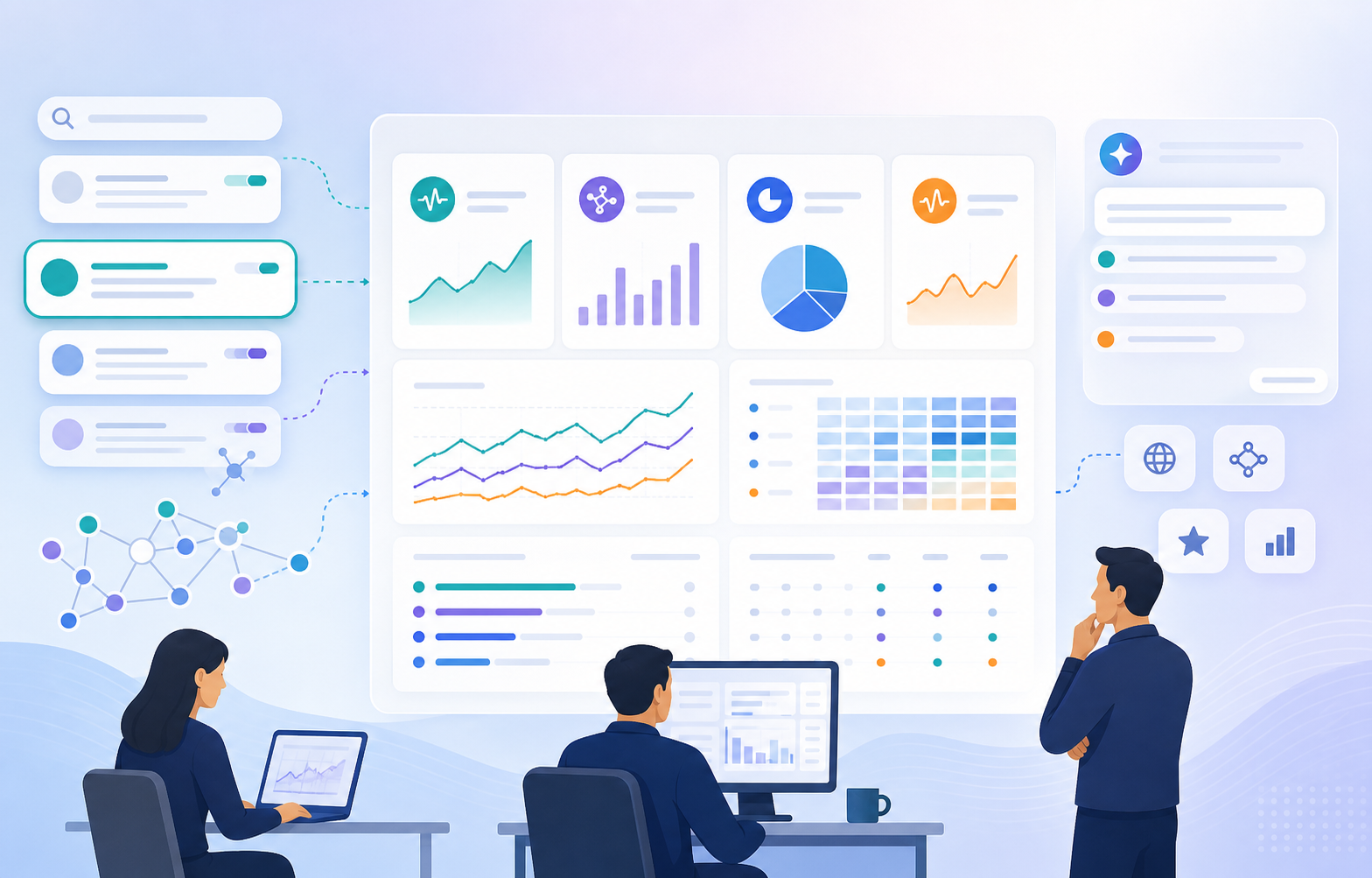
AI search visibility benchmarking is a structured comparison of how often your brand appears in AI answers, how often your owned assets are cited, and how your visibility compares with competitors across a fixed prompt set.
A complete benchmark answers five questions:
- Are we mentioned?
- Are we cited as a source?
- Are we recommended or merely described?
- Which competitors appear instead of us?
- How stable are those results over time?
This matters because AI search compresses the discovery journey. Instead of scanning ten blue links, a buyer may ask for “best platforms for X,” receive three recommended brands, and never visit a traditional results page.
For a deeper KPI breakdown, maxaeo.ai’s guide to AI visibility metrics, formulas, and benchmarks explains the core measurements behind mention rate, citation rate, and answer coverage.
Why Traditional SEO Benchmarks Are Not Enough
Traditional SEO benchmarks measure visibility in ranked search results. AI visibility benchmarks measure whether your brand becomes part of a synthesized answer.
That difference changes the reporting model. A page can rank well in Google and still be absent from an AI answer. Conversely, a brand can appear in an AI recommendation because it is repeatedly discussed in reviews, comparison pages, product feeds, forums, or authoritative third-party sources.
Google’s own guidance emphasizes creating helpful, reliable, people-first content rather than content made only to manipulate rankings, as described in Google Search Central’s people-first content guidance. The same principle applies to AI search: answer engines tend to reuse clear, corroborated, well-structured information.
The practical implication is simple: SEO rankings remain important, but they are no longer a complete proxy for discovery. AI search visibility benchmarking adds a second layer that measures brand inclusion inside answers.
The Five Metrics Every Benchmark Should Include
A reliable AI visibility benchmark should combine presence, attribution, competitiveness, quality, and stability. No single score is enough.
| Metric | What it measures | Formula | Why it matters |
|---|---|---|---|
| Mention rate | How often your brand appears | Prompts with brand mention ÷ total prompts | Shows basic answer inclusion |
| Citation rate | How often your domain is cited | Prompts citing owned URL ÷ total prompts | Shows whether your site is used as evidence |
| AI share of voice | Your share of category mentions | Your mentions ÷ all competitor mentions | Shows competitive position |
| Recommendation rate | How often you are suggested as a solution | Recommendation mentions ÷ total prompts | Separates neutral mentions from commercial visibility |
| Volatility index | How often answers change between runs | Changed outputs ÷ repeated outputs | Prevents false confidence from one-time checks |
These metrics should be segmented by engine, prompt type, market, and buyer stage. A blended average can hide important gaps. For example, a brand may have strong Perplexity citations but weak ChatGPT recommendations, or strong branded prompt coverage but poor category prompt coverage.
Teams that need a competitive reporting model can use the approach in AI Share of Voice: How to Calculate It and What a Good Score Looks Like to turn raw mentions into a board-ready benchmark.
A Practical Prompt Set for Benchmarking
The best prompt set mirrors how real buyers ask questions. It should include category, comparison, problem, use-case, and brand-specific prompts.
A balanced benchmark usually starts with 40–100 prompts per market. Smaller prompt sets are easier to manage but create noisy results. Larger prompt sets provide better signal but require stricter tagging.
Use this structure:
-
Category prompts
“What are the best tools for [job]?”
“Which platforms help with [business outcome]?” -
Comparison prompts
“Compare [brand] vs [competitor].”
“What are alternatives to [competitor]?” -
Problem prompts
“How do I solve [pain point]?”
“Why is [workflow] failing?” -
Use-case prompts
“Best software for [industry] teams that need [feature].” -
Brand prompts
“What does [brand] do?”
“Is [brand] good for [buyer type]?” -
Source-seeking prompts
“Find expert sources on [topic].”
“Which reports explain [category]?”
The prompt set should be frozen for baseline measurement, then expanded only after the first reporting cycle. If you change the prompts every week, you are measuring a moving target.
Original Benchmarking Model: The 85-Point MaxAEO Score
The most useful benchmark is not just “visible or invisible.” It should explain why visibility is happening. For maxaeo.ai property-level AEO work, we use an 85-point diagnostic model that separates visibility into five score bands.
| Dimension | Points | What is evaluated |
|---|---|---|
| Answer inclusion | 20 | Mentions, recommendations, competitor co-occurrence |
| Citation strength | 20 | Owned citations, third-party citations, source diversity |
| Entity clarity | 15 | Consistent brand descriptions, product names, category terms |
| Technical accessibility | 15 | Crawlability, robots rules, WAF behavior, consent barriers |
| Evidence depth | 15 | Reviews, comparisons, use cases, structured facts, freshness |
This framework creates information gain because it connects visibility outcomes to operational fixes. A low citation score may not mean the brand has weak authority. It may mean answer engines cannot access key pages, product documentation, or comparison content.
In property-level audits, the most common failure pattern is not missing content. It is blocked or ambiguous evidence: pages hidden behind cookie banners, rate limits, bot challenges, JavaScript-only content, or vague marketing copy that does not state what the product does.
If technical access is a suspected issue, the maxaeo.ai analysis of WAFs blocking answer engines explains how 403s, rate limits, and interstitials can remove useful pages from AI retrieval paths.
How Many Runs Are Needed for a Reliable Benchmark?
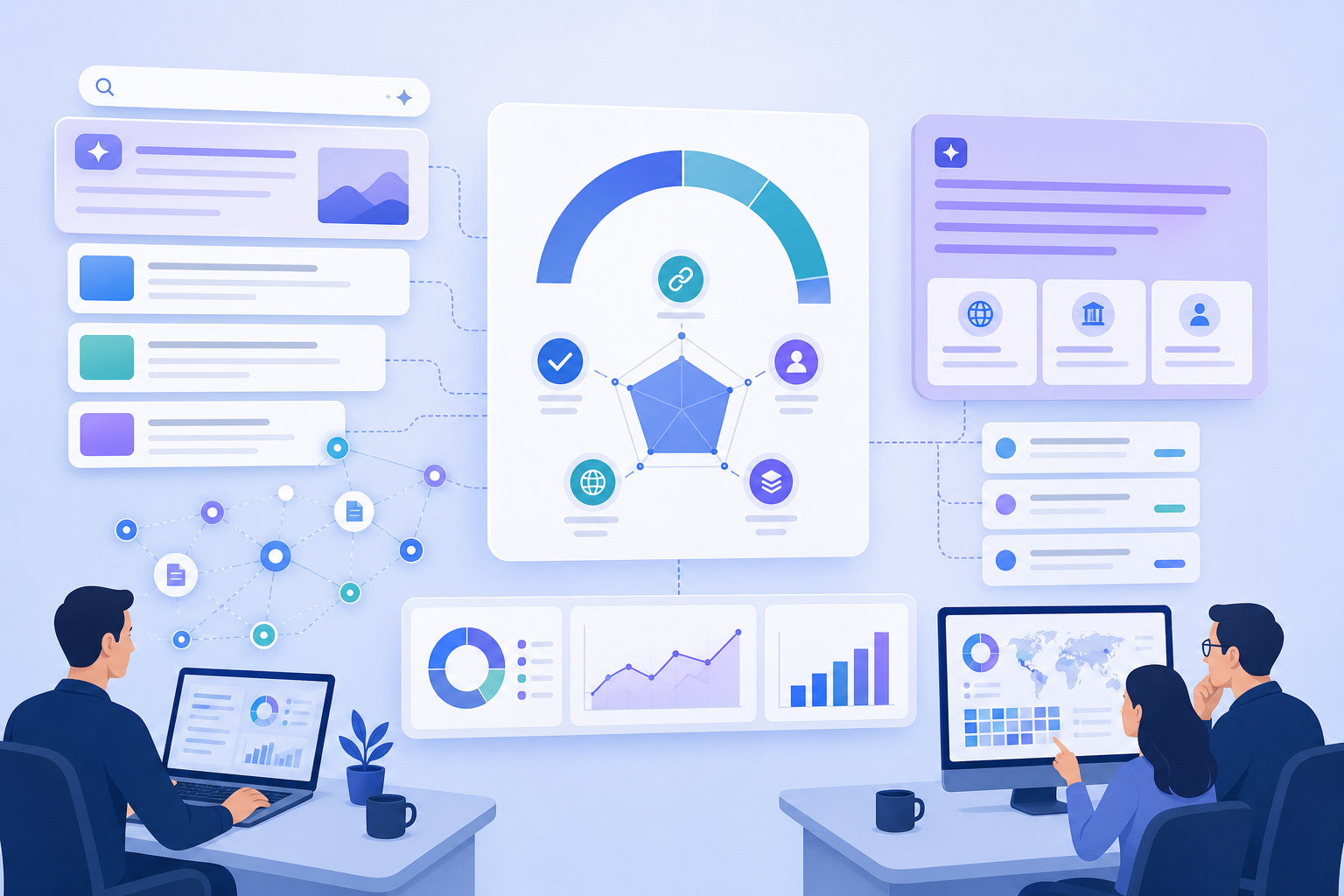
A reliable benchmark needs repeated measurements because AI-generated answers are probabilistic. A single run can create misleading precision.
Academic work on generative search measurement has raised the same concern. The 2026 paper “Quantifying Uncertainty in AI Visibility” argues that single-run visibility metrics can appear more precise than they really are. Another 2026 paper, “Don’t Measure Once”, highlights that AI search results are less stable than classical search results.
For most commercial benchmarks, use this cadence:
- Initial baseline: 3 runs per prompt per engine over 7–10 days
- Ongoing monitoring: weekly for high-priority prompts, monthly for the full set
- Volatile categories: 5 runs per prompt if news, pricing, regulation, or product data changes often
- Executive reporting: rolling 30-day averages plus volatility notes
Do not overreact to one lost mention. React when a pattern repeats across prompt clusters, engines, or multiple runs.
What Counts as a Good AI Visibility Benchmark?
A good benchmark is category-relative. A 20% mention rate may be weak in a mature SaaS category but strong in a niche industrial market.
Use these practical bands as a starting point:
| Benchmark band | Mention rate | Citation rate | AI share of voice | Interpretation |
|---|---|---|---|---|
| Low visibility | 0–15% | 0–5% | Under 10% | Brand rarely enters answers |
| Emerging visibility | 16–35% | 6–15% | 10–25% | Brand appears, but not reliably |
| Competitive visibility | 36–60% | 16–30% | 26–45% | Brand is a recurring answer candidate |
| Category leader | 61%+ | 31%+ | 46%+ | Brand is consistently named and cited |
These are not universal truth claims. They are operating thresholds for prioritization. A startup with low category awareness may first aim for emerging visibility. A market leader should expect competitive or category-leading visibility in core commercial prompts.
The most important signal is movement against relevant competitors, not vanity visibility across irrelevant prompts.
Benchmark by Prompt Type, Not Just by Engine
Prompt type often explains AI visibility gaps better than the model name. Category prompts, comparison prompts, and problem prompts pull from different evidence pools.
For example:
- Category prompts often favor listicles, review platforms, analyst pages, and comparison hubs.
- Comparison prompts often cite product pages, versus pages, review text, and third-party evaluations.
- Problem prompts often cite educational guides and troubleshooting content.
- Brand prompts often expose entity confusion, outdated descriptions, or inconsistent positioning.
- Shopping or product prompts may rely on feed fields, reviews, marketplace data, and availability signals.
This is why a benchmark should tag every prompt by intent. Without tags, the report may say “visibility is down” without explaining whether the issue is brand awareness, citation access, product evidence, or recommendation trust.
For ecommerce and agentic commerce teams, maxaeo.ai’s guide to how AI assistants build a shopping shortlist shows why product evidence and structured comparison data matter when AI systems narrow options for buyers.
The Evidence Layer: Why Brands Get Cited
AI systems cite sources when those sources help answer a question with specific, verifiable information. Thin positioning copy rarely performs well as citation material.
The strongest citation assets usually include:
- Clear definitions of the product or service
- Feature tables and comparison pages
- Pricing and plan explanations, when stable and accurate
- Use-case pages written for specific buyer problems
- Customer proof, reviews, and case examples
- Technical documentation and integration details
- Original research or proprietary benchmark data
- Freshly updated pages with visible publication dates
- Accessible HTML that does not require login or heavy client-side rendering
The weaker assets are generic homepages, slogan-heavy landing pages, gated PDFs, and pages that hide the answer behind forms.
AI search visibility benchmarking should therefore include a “source mix” view: owned site, third-party review site, marketplace, documentation, forum, news article, analyst source, and social/community source. That view tells you where the answer engine is learning about you.
Technical Readiness Can Make or Break the Benchmark
Technical accessibility is a benchmarking variable, not just an engineering detail. If AI crawlers or retrieval systems cannot access important pages, your visibility score may understate your real authority.
Check for:
- Robots.txt rules affecting AI-related crawlers
- WAF settings that trigger 403 responses
- Login walls on documentation or support pages
- Consent interstitials that block page content
- JavaScript rendering problems
- Canonical conflicts across regional pages
- Missing or inconsistent schema markup
- Slow pages that fail under repeated retrieval
Google’s SEO Starter Guide remains relevant here: make important content accessible, descriptive, and understandable. AI systems also benefit from pages that clearly expose the facts a user is asking for.
For a crawler-specific breakdown, maxaeo.ai’s guide to GPTBot, OAI-SearchBot, ChatGPT-User, and robots.txt rules explains what different access choices can cost.
How to Build an AI Visibility Benchmark in 7 Steps
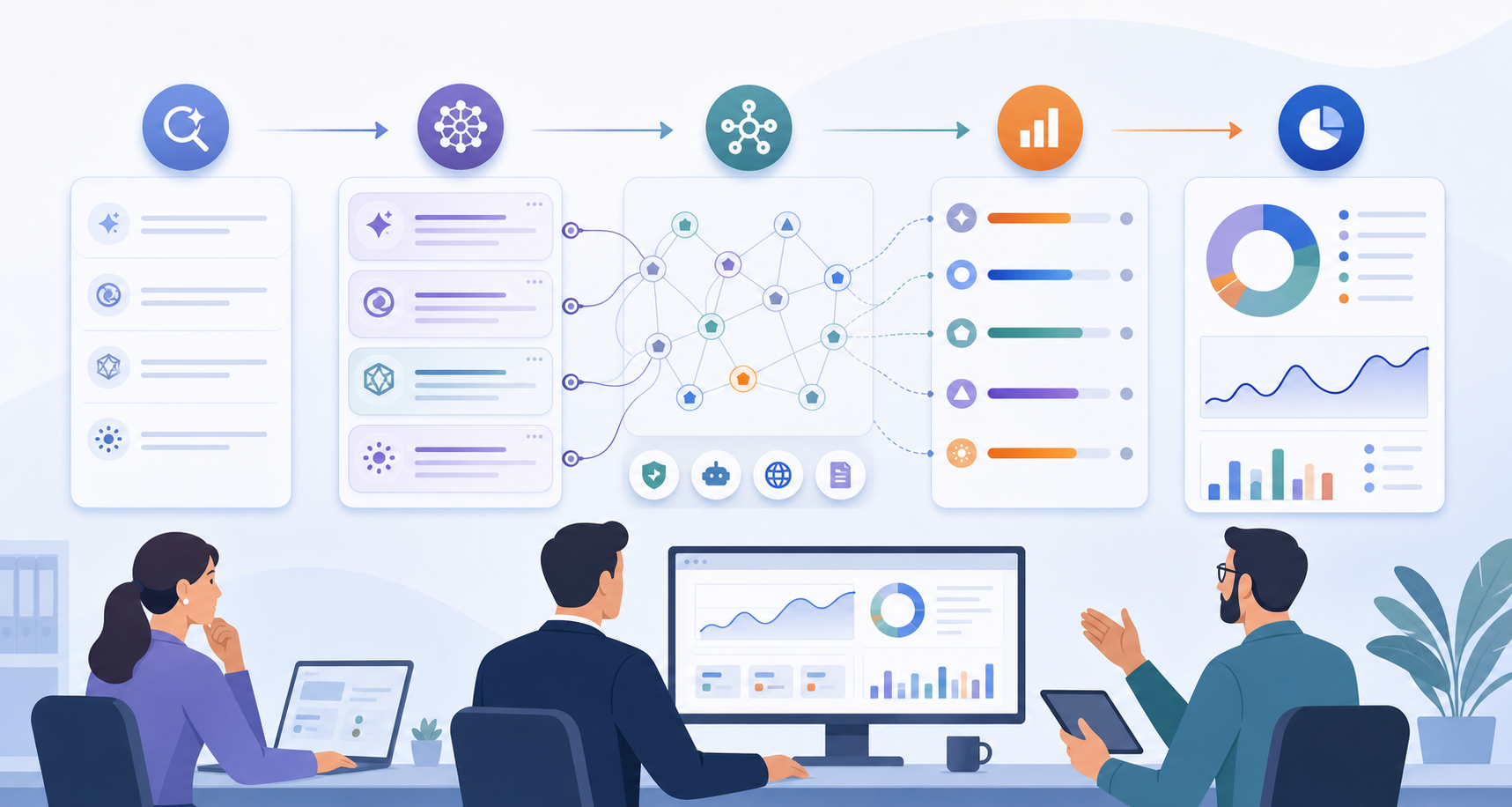
Build the benchmark once, then repeat it on a fixed cadence. Consistency matters more than dashboard complexity.
-
Define the category boundary.
List the products, services, markets, and buyer segments you want to measure. -
Select competitors.
Include direct competitors, marketplaces, review platforms, publishers, and substitute solutions. -
Create a tagged prompt set.
Use category, comparison, problem, use-case, brand, and source-seeking prompts. -
Run prompts across engines.
Measure at least ChatGPT, Perplexity, Gemini, Claude, Copilot, and Google AI surfaces where relevant. -
Score mentions and citations.
Record whether your brand appears, whether your domain is cited, and whether the mention is positive, neutral, or negative. -
Calculate share of voice and volatility.
Compare your mentions with competitor mentions and track whether answers change between runs. -
Translate findings into fixes.
Map weak scores to content, entity, technical, review, feed, or authority improvements.
The output should be a decision report, not a data dump. A useful benchmark tells teams where to invest next.
Common Benchmarking Mistakes to Avoid
The biggest mistake is confusing anecdotal prompt testing with benchmarking. Manual checks are useful for discovery, but they are not enough for trend reporting.
Avoid these errors:
- Using only branded prompts
- Averaging all engines into one score
- Ignoring whether citations come from owned or third-party sources
- Treating sentiment as optional
- Failing to capture answer position or recommendation wording
- Changing the prompt set before a baseline is established
- Reporting visibility without confidence or volatility notes
- Ignoring technical blocks that prevent retrieval
- Optimizing only homepage copy instead of the evidence layer
AI search visibility benchmarking is most valuable when it is boringly repeatable. The goal is not to find one flattering answer. The goal is to understand what answer engines consistently believe about your category.
FAQ
How is AI search visibility different from AI rank tracking?
AI rank tracking usually asks where a brand or page appears in an AI answer. AI search visibility benchmarking is broader: it measures mentions, citations, recommendations, share of voice, sentiment, source mix, and volatility across a repeatable prompt set.
How often should a brand benchmark AI visibility?
Most brands should run a full benchmark monthly and monitor critical prompts weekly. Fast-changing categories such as software, ecommerce, travel, finance, and news-sensitive markets may need more frequent runs because sources and answers change faster.
What is the most important AI visibility metric?
AI share of voice is often the best executive metric because it compares your brand with competitors. However, it should be paired with citation rate and sentiment. A brand can be mentioned often but cited rarely or described inaccurately.
Can strong Google rankings guarantee AI search visibility?
No. Strong rankings can help, but they do not guarantee inclusion in AI answers. AI systems may rely on third-party reviews, documentation, forums, structured product data, or sources that do not match the traditional top organic results.
What should teams improve first after a weak benchmark?
Start with the weakest score band. If mentions are low, improve category evidence and third-party validation. If citations are low, improve accessible owned content. If sentiment is weak, fix outdated positioning and review signals. If volatility is high, build more corroborated sources.
Final Takeaway
AI search visibility benchmarking gives teams a repeatable way to measure whether they are being included, cited, and recommended inside answer engines. The benchmark should combine prompt design, competitive scoring, source analysis, technical access checks, and repeated runs.
The brands that win will not be the ones that chase every prompt manually. They will be the ones that build a measurable evidence layer: clear entity information, accessible pages, corroborated claims, useful comparisons, current data, and content that answer engines can confidently reuse.
Published by maxaeo.ai on August 4, 2026. Modified on August 4, 2026.