By maxaeo.ai | Published 2026-11-14 | Updated 2026-11-14
Track unlinked brand mentions in AI chatbot responses by recording the full answer text, identifying the exact sentence where your brand appears, and separating a brand mention from a citation or recommendation. This matters because an AI assistant can name your company without linking to your website, sending referral traffic, or identifying your domain as a source.
AI visibility tools commonly measure mentions, citations, sentiment, competitor presence, and position within the answer. The difficult part is not finding the brand name. It is determining whether the mention is useful, accurate, prominent, and connected to a source that can be improved.
What is an unlinked brand mention in an AI response?
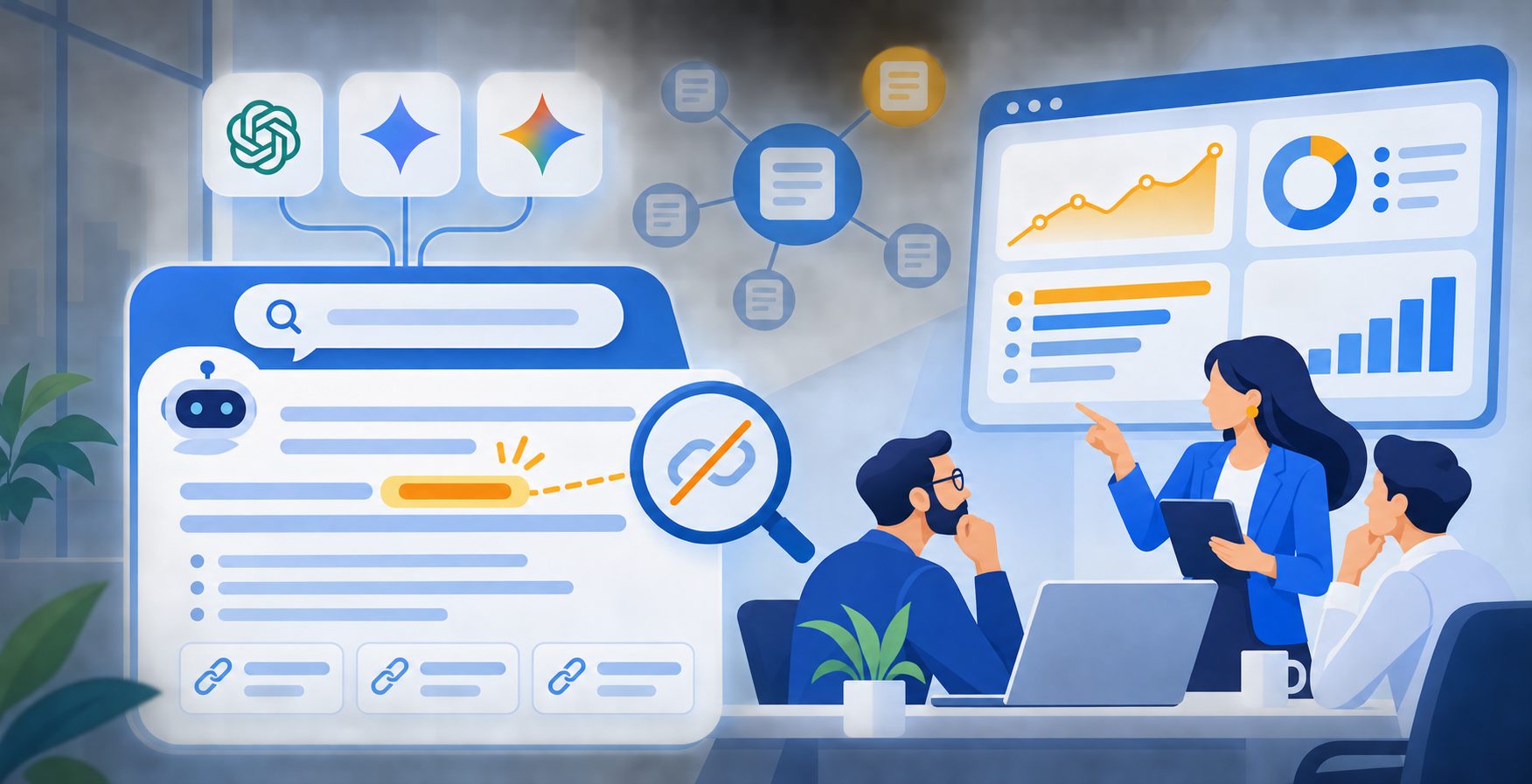
An unlinked brand mention is a reference to a company, product, or domain in an AI-generated answer where the response does not provide a clickable link to that brand’s website.
For example:
“For distributed product teams, tools such as AcmeFlow and other workflow platforms may be worth considering.”
If “AcmeFlow” appears without a URL, it is an unlinked mention. It may still influence a buyer, even though standard analytics will not record a click from the chatbot.
A mention is not automatically a recommendation. It can be:
- A direct recommendation
- A neutral example
- A comparison entry
- A warning or negative reference
- A description of a product category
- An incidental name drop
This is why raw mention counts are incomplete. A useful tracking system records what was said, where the brand appeared, how the brand was described, and whether the answer cited a source. Industry guidance also distinguishes brand mentions from citations and links because these signals represent different stages of AI visibility. (geo.wiki)
Why unlinked mentions are easy to miss
Traditional marketing analytics usually depend on a measurable referral path: a URL, referrer, campaign tag, or click. An AI response can create awareness without exposing any of those signals.
Three measurement gaps are especially common:
-
The brand is named but not linked.
Referral reports show no visit, even though a buyer may later search for the brand independently. -
The brand is linked but not recommended.
An AI engine may cite a page as background evidence while recommending a competitor. -
The brand is mentioned inconsistently.
The same prompt can produce different answers across engines, locations, sessions, and model versions.
Recent AI visibility research and practitioner testing emphasize that answer text should be preserved, not reduced to a single score. Some monitoring systems therefore store the complete response, citation data, brand context, and competing brands together. (mentionchecker.com)
A practical framework for tracking unlinked mentions
A reliable workflow should classify every AI answer across four layers:
| Layer | Question to answer | Example output |
|---|---|---|
| Mention | Is the brand named? | Yes |
| Context | How is it described? | “Best for enterprise teams” |
| Citation | Is the brand or its site linked? | No |
| Action | What should the marketing team fix? | Improve comparison-page coverage |
This Mention–Context–Citation–Action framework adds an important step that many basic mention checkers omit: connecting an observed answer to a specific next action.
1. Build an unbranded prompt set
Start with questions a buyer might ask without naming your company:
- What are the best tools for managing remote SaaS teams?
- Which platforms compare with [category]?
- What should a mid-market company look for in [solution]?
- Which vendors are easiest to integrate with [system]?
- What are the alternatives to [competitor]?
Include branded prompts separately. Branded questions measure recognition; unbranded questions measure discovery.
A useful initial set can contain 20–30 prompts, divided across category, use case, comparison, integration, pricing, and implementation intent. The important principle is consistency: keep the prompt wording stable so that changes in results are easier to interpret.
2. Capture the full answer, not only the score
For every prompt and AI engine, record:
- The complete answer
- The first position where your brand appears
- The exact mention sentence
- Whether the mention is positive, neutral, or negative
- Competitors named in the same answer
- Cited domains and URLs
- Whether your own domain was cited
- Date, market, language, and platform
A spreadsheet can support a small baseline. A monitoring platform becomes more useful when it repeats the prompts daily and preserves historical answers.
3. Separate mention rate from citation rate
Mention rate answers:
How often does the AI engine name the brand?
Citation rate answers:
How often does the AI engine cite the brand’s website or content?
These metrics can move in opposite directions. A brand may be frequently named because it is well known, while third-party sources are cited instead. Conversely, a technical document may be cited without the brand receiving a clear recommendation.
For a broader measurement system, see this guide to AI brand mention tracking software, which explains how mention monitoring fits alongside citations, sentiment, and competitor visibility.
How to interpret an unlinked mention
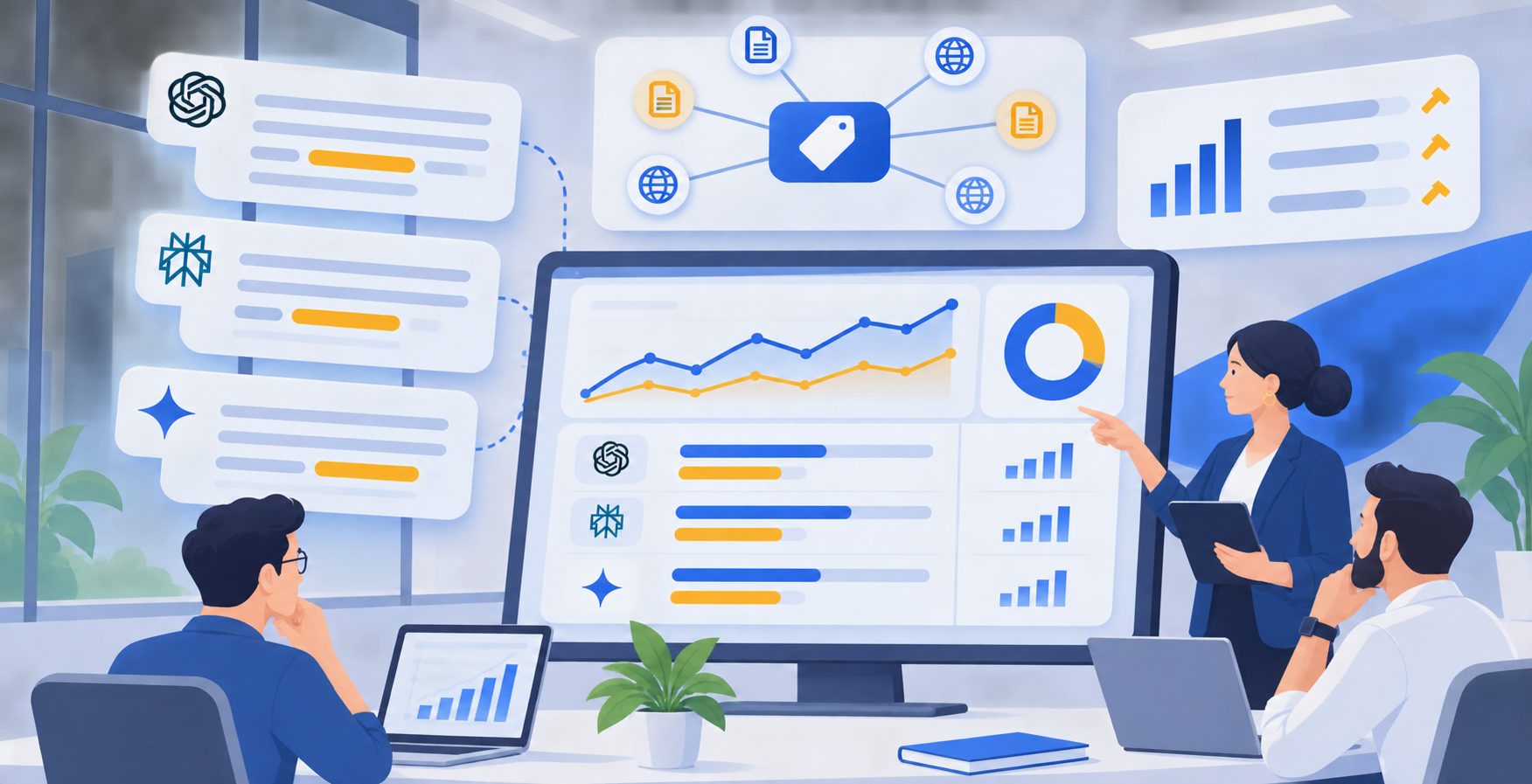
Not every unlinked mention requires the same response. Classify it using three diagnostic questions.
Is the mention commercially meaningful?
A name in a generic historical example has less value than a brand listed among the “best options for enterprise buyers.” Give higher priority to prompts with strong purchase intent.
Is the description accurate?
An unlinked mention with outdated pricing, incorrect integrations, or the wrong audience can damage consideration. The first corrective action may be factual clarification, not more content.
Which source influenced the answer?
Review the domains cited alongside the response. If review sites, comparison pages, Reddit discussions, or partner documentation repeatedly appear, those sources may be shaping the model’s understanding of the category.
MaxAEO’s citation tracking can show the domains, pages, and platforms cited in AI answers, while its competitor comparison helps identify where competing brands appear more often or receive stronger positioning. The platform monitors brand visibility, recommendation position, sentiment, and citations across eight AI engines, with daily updates and coverage for English and Chinese markets.
What to do when your brand is mentioned but not linked
Use the answer context to choose an action:
-
Accurate, positive, and high-position mention:
Track it as an awareness signal. Do not assume it will produce attributable traffic. -
Accurate but weak-position mention:
Improve category pages, comparison content, product explanations, and third-party evidence around the buyer intent. -
Positive mention with competitor citations:
Strengthen the pages and sources that explain your product clearly and make important claims easy to verify. -
Incorrect or outdated mention:
Publish authoritative corrections in accessible documentation, pricing pages, integration pages, or support content. -
Negative mention:
Check whether the criticism is accurate, recurring, and connected to a specific source before responding.
For a more structured operating model, use the AI search visibility gap analysis framework to connect missing mentions, weak citations, and competitor advantages to content priorities.
How MaxAEO helps monitor unlinked AI mentions
MaxAEO monitors brand mentions, competitive position, recommendation placement, sentiment, and cited sources across ChatGPT, Perplexity, Gemini, Claude, Copilot, Grok, Google AI Mode, and Google AI Overviews.
Its monitoring prompts run daily. Reports preserve AI answer data for analysis and provide competitor comparisons, citation-source tracking, and optimization recommendations. A free diagnostic report can be generated by entering a brand name, website, and competitor information.
The practical benefit is not simply knowing whether a chatbot mentioned your brand. It is being able to answer:
- Which buyer prompts produce an unlinked mention?
- Which competitors appear instead?
- What wording does the AI use?
- Which sources does it trust?
- Is the problem visibility, positioning, accuracy, or citation coverage?
Generate a free AI visibility diagnosis with MaxAEO.

Frequently asked questions
Can Google Analytics detect an unlinked AI mention?
Usually not directly. Without a link or identifiable referral path, the mention will not appear as a chatbot referral. It may contribute to later branded searches or direct visits, but those paths are difficult to attribute precisely.
Is an unlinked mention still valuable?
Yes, especially when it appears in a high-intent recommendation or comparison answer. However, value depends on context, accuracy, position, sentiment, and whether the user can easily identify the brand.
Should mention rate and citation rate be combined?
No. Track them separately first. A mention measures answer inclusion; a citation measures source attribution. Combining them too early can hide whether the real problem is recognition or evidence.
How often should AI brand mentions be checked?
Daily monitoring is useful for teams managing active GEO or AEO programs because AI answers can vary. For a small baseline, run the same prompt set across multiple engines and repeat it consistently before drawing conclusions.
What is the fastest way to find unlinked mentions?
Use a free AI visibility scan to establish a baseline, then inspect the raw answers and cited sources. A monitoring workflow is more reliable than manually asking one chatbot once because it preserves prompt, engine, position, sentiment, and competitor context.