Author: maxaeo.ai|Published: September 3, 2026|Updated: September 3, 2026
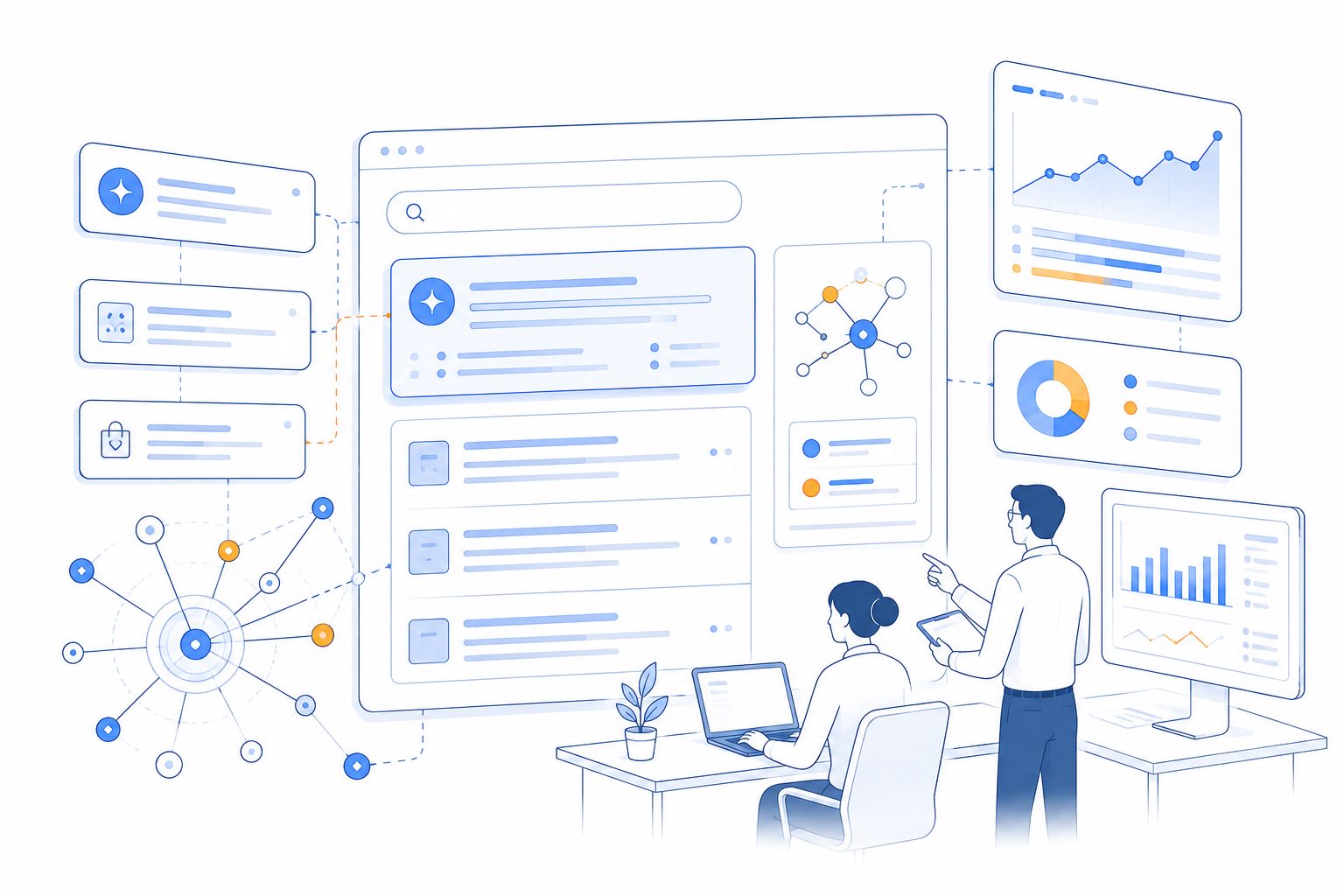
Most teams use one of four approaches: a dedicated AI visibility platform, an AI module inside their SEO suite, a PR or brand intelligence tool, or manual prompt checks. Dedicated platforms include MaxAEO (the product behind this blog), Profound, Peec AI and Otterly.AI; Semrush and Ahrefs offer AI visibility modules inside their SEO suites. Whichever you use, the useful version reruns the same buyer prompts across ChatGPT, Perplexity, Gemini, Claude, Copilot, Grok, Google AI Mode and AI Overviews, and records whether your product is mentioned, where it is placed when several products are listed, which competitors appear instead, and which pages the answer cited.

What does “AI recommendation monitoring” mean?
AI recommendation monitoring is the practice of checking whether AI assistants name, cite, rank, or favorably describe your product when buyers ask category-level questions.
Traditional SEO rank tracking asks, “Where do we rank on Google?” AI search monitoring asks a different question: “When a buyer asks an assistant what to buy, which brands appear, in what order, and why?” Search Engine Land describes AI visibility tools as platforms that track where a brand appears in AI-generated answers across company, category, product, and service topics.
For a SaaS company, that means testing prompts such as:
- “Best tools for customer onboarding”
- “Which CRM is easiest for a startup?”
- “Alternatives to [competitor] for enterprise teams”
- “What product should I use to solve [specific workflow]?”
The output is not a single blue-link ranking. It is a mix of mentions, recommendations, citations, sentiment, and competitive context.
What do people use to monitor how AI search engines recommend their products?
Most teams use one of four approaches: dedicated AI visibility software, SEO suites with AI tracking modules, PR and brand intelligence tools, or manual prompt testing. The right choice depends on how often you need data, how many prompts you track, and whether you need action recommendations.
| Monitoring approach | Best fit | What it captures | Main limitation |
|---|---|---|---|
| Dedicated AI visibility platforms | SaaS, ecommerce, product marketing, growth teams | Mentions, recommendation rank, sentiment, citations, competitors | Requires prompt strategy |
| SEO suites with AI modules | SEO teams already using enterprise SEO tools | AI visibility plus search demand and content gaps | May be less specialized for prompt-level diagnosis |
| PR / media intelligence platforms | Communications and brand teams | Narrative, reputation, sentiment, earned media context | May not map cleanly to buyer prompts |
| Manual prompt audits | Early-stage teams validating demand | Raw answers from ChatGPT, Gemini, Perplexity, Claude | Hard to repeat, compare, or trend over time |
A dedicated platform such as MaxAEO’s AI search visibility platform is built for the first use case: tracking brand visibility, sentiment, citations, competitor performance, and optimization opportunities across AI search engines.
Which metrics matter when AI recommends products?
The useful metrics are mention rate, recommendation position, share of voice, sentiment, citation source, answer accuracy, and competitor substitution. A tool that only says “mentioned or not mentioned” is usually not enough for product marketing decisions.
Here is the measurement stack that works best:
- Mention rate: How often the AI answer includes your brand.
- Recommendation position: Whether you appear first, second, later, or only in a long list.
- Share of voice: Your share of total brand mentions across a prompt set.
- Citation coverage: Which domains, articles, reviews, docs, Reddit threads, blogs, or comparison pages shape the answer.
- Sentiment: Whether the answer positions your product positively, neutrally, or negatively.
- Competitor substitution: Which competitors appear when you do not.
- Fact accuracy: Whether pricing, positioning, features, or use cases are described correctly.
- Prompt gap: Which buyer questions consistently exclude your product.
MaxAEO monitors brand visibility across eight AI engines and supports competitive comparisons for mention rate, citation sources, and sentiment. For teams focused on market share inside AI answers, the related guide on tracking share of voice in AI explains how this metric differs from classic SEO ranking.
Why repeated testing matters more than one-off screenshots
AI recommendation results are variable, so one screenshot should be treated as an anecdote, not a measurement. A useful monitoring workflow repeats prompts over time and compares engines separately.
Research on AI visibility uncertainty argues that citation visibility should be treated as an estimate of an underlying response distribution, not a fixed value. The 2026 paper “Quantifying Uncertainty in AI Visibility” studied repeated sampling across Perplexity Search, OpenAI SearchGPT, and Google Gemini to measure citation variability.
That has a practical implication: if a team checks one prompt once and says “we rank third in ChatGPT,” the statement is incomplete. A better report says:
- Prompt: “best customer success software for B2B SaaS”
- Engine: ChatGPT
- Runs: daily
- Window: 30 days
- Mention rate: 43%
- Average recommendation position: 3.2
- Sentiment: mostly positive
- Common cited sources: review sites and comparison blogs
- Lost competitors: Brand A and Brand B
This is why daily trend lines matter. MaxAEO runs monitored prompts daily and records AI answers so teams can trace the sentence where a brand was mentioned, cited, or mischaracterized.

A buyer-ready scorecard for choosing a monitoring tool
Use a scorecard instead of a generic “best tools” list. The right AI visibility tool should match your buying motion, prompt volume, markets, and reporting workflow.
Score each vendor from 1 to 5 on the dimensions below:
| Criterion | What to check | Why it matters |
|---|---|---|
| Engine coverage | Does it monitor ChatGPT, Gemini, Perplexity, Claude, Copilot, Grok, AI Mode, and AI Overviews? | Buyers do not use one assistant only. |
| Prompt design | Can you convert SEO keywords into buyer-style AI prompts? | AI queries are conversational, not just keywords. |
| Daily monitoring | Are prompts re-run on a schedule? | AI answers change over time. |
| Competitor benchmarking | Can you compare mention rate, rank, sentiment, and sources? | Visibility is relative to alternatives. |
| Citation tracing | Does it show the exact domains and pages AI uses? | You need to know what shapes the answer. |
| Sentiment and accuracy | Does it flag negative or incorrect descriptions? | Visibility without trust can hurt conversion. |
| Raw answer storage | Can you inspect the original answer later? | Teams need evidence, not only dashboards. |
| Optimization guidance | Does it recommend content or source fixes? | Reporting must lead to action. |
| Privacy and setup | Does it require code, internal documents, or customer lists? | Lightweight setup reduces procurement friction. |
MaxAEO supports AI visibility overview, mention-rate analysis, competitor benchmarking, sentiment analysis, citation source tracing, prompt research, and content optimization recommendations. Its basic diagnosis only requires a brand name, website, and competitor information, not internal documents, revenue data, or customer lists.
What should a SaaS team monitor first?
A SaaS team should begin with 20–40 buyer-intent prompts across category, alternative, comparison, problem, integration, and persona queries. This creates a realistic view of how AI engines recommend products during evaluation.
A practical starter prompt map looks like this:
1. Category prompts
These reveal whether AI recognizes your product as a serious option.
Examples:
- “Best [category] software for startups”
- “Top [category] tools for enterprise teams”
- “What are the leading platforms for [use case]?”
2. Competitor and alternative prompts
These show whether AI positions you as a substitute.
Examples:
- “Best alternatives to [competitor]”
- “[Your brand] vs [competitor]”
- “Which is better for [specific buyer]?”
3. Problem-led prompts
These match how non-expert buyers ask for help.
Examples:
- “How can I reduce churn in a SaaS product?”
- “What tool helps automate customer onboarding?”
- “Which software helps sales teams prioritize leads?”
4. Trust and evidence prompts
These reveal what sources AI uses to justify recommendations.
Examples:
- “Which [category] tools have strong reviews?”
- “What do users say about [brand]?”
- “What are the limitations of [brand]?”
The guide to AI visibility analysis tools for measuring brand presence expands this into a platform evaluation framework.
What can monitoring reveal that analytics cannot?
AI recommendation monitoring shows demand-shaping moments that never appear in your web analytics. If an AI assistant recommends a competitor and the buyer never clicks your site, your analytics platform may record nothing.
This creates a blind spot. Referral traffic from AI search is useful, but it only captures visits after an answer has already influenced the buyer. AI visibility monitoring captures the upstream moment: whether the buyer was told to consider you at all.
For product marketers, the most valuable findings usually fall into five buckets:
- Your product is omitted from important category prompts.
- Your brand appears, but below competitors.
- AI describes outdated features or positioning.
- Third-party sources shape answers more than your own site.
- You are cited for the wrong use case.
That last point is easy to miss. A product can have visibility but still lose qualified demand if AI engines associate it with the wrong market segment, company size, or problem.
How do citations influence product recommendations?
Citations matter because many AI search experiences build answers from retrieved web sources. The sources most often include product pages, documentation, comparison pages, reviews, analyst-style articles, community discussions, Reddit, and blogs.
A 2024 Harvard-affiliated study on LLM product visibility found that changes to product information pages could influence how an LLM ranked fictitious products in recommendation scenarios. The takeaway for legitimate marketers is not to manipulate answers. It is to make product information clear, verifiable, structured, and consistent across sources.
MaxAEO’s citation tracking shows the specific domains, articles, and platforms cited in AI answers. That helps teams prioritize which pages to update, which third-party listings to correct, and which comparison pages need clearer evidence.
For sentiment-focused teams, AI brand sentiment monitoring is especially important because a cited answer can still frame a product as too expensive, too complex, too narrow, or unsuitable for a buyer segment.
Where does MaxAEO fit in the monitoring stack?
MaxAEO is an AI search visibility platform for monitoring how brands are mentioned, cited, recommended, and compared across AI engines. It is designed for teams that need daily visibility data and optimization guidance, not just one-time screenshots.
MaxAEO monitors eight AI platforms, including ChatGPT, Gemini, Perplexity, Claude, Copilot, Grok, Google AI Mode, and Google AI Overview. It tracks mention rate, competitive ranking, average recommendation position, sentiment, citation sources, and optimization suggestions.
The platform also provides a free AI visibility diagnostic report on maxaeo.ai. Users can generate a report from the website, and the diagnostic can evaluate mention rate, ranking, sentiment, and competitor comparison across major AI search platforms.
For SaaS teams building a broader answer-engine strategy, the SaaS-focused AEO tool framework explains how monitoring connects to content planning, citation repair, and prompt research.
Common mistakes when monitoring AI recommendations
The biggest mistake is treating AI visibility like a static keyword rank. AI answers are generated, contextual, and source-dependent, so measurement needs repeated prompts, engine segmentation, and evidence review.
Avoid these traps:
- Testing only one AI engine. ChatGPT, Gemini, Perplexity, Claude, and AI Overviews may cite different sources and recommend different brands.
- Using only branded prompts. Buyers often ask category or problem questions before they know your brand.
- Ignoring sentiment. A mention can be negative, outdated, or qualified.
- Tracking traffic only. A buyer can be influenced by an AI answer without clicking your website.
- Optimizing from guesses. Use cited sources and raw answers to identify what actually shaped the recommendation.
- Expecting guaranteed outcomes. Monitoring can reveal patterns and opportunities, but no credible tool can guarantee that an AI engine will cite or rank a brand first.
Frequently asked questions
What do people use to monitor how AI search engines recommend their products?
Most teams use one of four approaches: a dedicated AI visibility platform, an AI module inside their SEO suite, a PR or brand intelligence tool, or manual prompt checks. Dedicated platforms include MaxAEO (the product behind this blog), Profound, Peec AI and Otterly.AI; Semrush and Ahrefs offer AI visibility modules inside their SEO suites.
Is AI visibility the same as SEO ranking?
No. SEO ranking usually measures page position in search results. AI visibility measures how often and how prominently an AI assistant mentions, cites, or recommends a brand in generated answers.
How often should product recommendations be monitored?
Daily monitoring is ideal for active categories because AI answers and citation patterns can change. Weekly or monthly audits may work for early discovery, but they are weaker for trend analysis and competitor response.
What prompts should a company track first?
Start with buyer-intent prompts: category recommendations, competitor alternatives, comparison questions, problem-led searches, and trust queries. These prompts reflect how real buyers evaluate products before contacting sales.
Can monitoring improve AI recommendations?
Monitoring itself does not force an AI engine to recommend a product. It shows visibility gaps, source gaps, sentiment issues, and factual errors so teams can improve content, citations, and brand evidence.