The best GEO team structure centralizes accountability and measurement while distributing execution. A CMO or growth executive owns the outcome, an SEO or organic-growth lead runs the program, and PR, product marketing, content, analytics, legal, and engineering correct the evidence they control.
Most companies do not need a standalone GEO department at launch. They need:
- One accountable executive who controls budget and resolves conflicts.
- One program lead who owns monitoring, priorities, and reporting.
- Named functional owners with protected capacity and response deadlines.
- One shared measurement system for questions, answers, sources, and interventions.
- A documented escalation path for inaccurate or harmful answers.
Small organizations should usually start with a centralized program. Enterprises often need a center of excellence with functional or regional champions. Fully embedded GEO specialists make sense only when local teams can act independently without fragmenting measurement or brand standards.
What Is a GEO Team Structure?
A GEO team structure is the operating system used to manage generative engine optimization: who is accountable for AI search visibility, who monitors answers, who approves corrections, who changes public evidence, and who verifies results. It includes reporting lines, decision rights, workflows, capacity, metrics, and escalation rules.
The original generative engine optimization research examined methods for improving source visibility in generated answers. A team structure solves the organizational problem that follows: turning an observed answer into a diagnosed issue, an approved intervention, and a measurable outcome.
That work crosses several evidence surfaces:
- Website and landing-page content
- Product documentation and help centers
- Structured data and technical access
- Independent reporting and digital PR
- Reviews and comparison pages
- Company, product, and executive entity references
- Pricing, security, policy, and support information
No single department controls all those surfaces. Assigning the entire program to SEO, PR, or a newly hired “GEO specialist” creates accountability without sufficient authority.

Centralized, embedded, and center-of-excellence models differ primarily in where standards, decisions, and implementation sit.
What Should the GEO Team Actually Do?
A GEO team should run five connected workstreams: measurement, diagnosis, intervention, governance, and learning. It should not merely collect screenshots or publish pages for every prompt variation.
| Workstream | Core output | Typical owner |
|---|---|---|
| Measurement | Versioned question set, answer captures, source data, baselines | GEO lead and analytics |
| Diagnosis | Evidence-gap analysis and root-cause hypothesis | SEO, PR, product marketing |
| Intervention | Content, documentation, PR, entity, or technical change | Function controlling the evidence |
| Governance | Claims approval, risk classification, crawler policy, escalation | Communications, product, legal, security |
| Learning | Change log, follow-up measurement, playbooks | GEO lead |
A closed-loop program follows this sequence:
- Observe a material answer change.
- Confirm that it persists beyond normal variation.
- Identify the likely evidence or access gap.
- Assign the issue to the team that can change that evidence.
- Record what changed and when.
- retest the same question set.
- Keep, revise, or reject the intervention hypothesis.
The team cannot directly edit most generated answers. Its job is to improve the accessible, consistent, credible evidence from which answer systems may construct future responses.
Who Should Own AI Search Visibility?
The CMO, VP of Marketing, or VP of Growth should normally be accountable for commercial AI visibility. A head of SEO, organic growth, or dedicated GEO lead should be responsible for daily operations. Functional leaders retain approval authority over claims and changes within their domains.
Recommended reporting structure
| Level | Role | Accountability |
|---|---|---|
| Executive sponsor | CMO, VP Marketing, or VP Growth | Business outcome, budget, risk appetite, conflict resolution |
| Program owner | Head of SEO, Organic Growth, or GEO | Roadmap, question set, monitoring, prioritization, reporting |
| Data owner | Marketing analytics or RevOps | Definitions, baselines, QA, attribution |
| Evidence owners | PR, product marketing, content, SEO, engineering | Corrections and improvements within their domains |
| Risk owners | Communications, legal, security | High-severity claims, crawler controls, escalation |
| Executive reviewer | Marketing and revenue leadership | Monthly performance and unresolved dependencies |
The program lead must have more than reporting responsibility. The role needs authority to convene owners, request evidence, assign deadlines, and escalate overdue work.
Which function leads which decision?
| Function | Should lead | Should not own alone |
|---|---|---|
| SEO or organic growth | Question research, technical diagnostics, content priorities, source analysis | Corporate narrative, legal exposure, product truth |
| PR and communications | Brand descriptions, misinformation response, independent authority | Technical implementation and analytics |
| Product marketing | Positioning, use cases, launch facts, comparisons | Independent performance measurement |
| Content | Evidence-rich pages, expert contributions, editorial updates | Product approval and crisis escalation |
| Analytics or RevOps | Metric definitions, baselines, trends, attribution | Editorial or reputation decisions |
| Engineering | Rendering, deployment, structured data, access controls | Visibility strategy and claims |
| Legal and security | Risk thresholds, regulated claims, privacy and crawler policy | Routine optimization priorities |
Google states that pages appearing in its AI features follow the same foundational Search eligibility and quality requirements; it does not require special AI markup. The official Google guidance for AI features supports keeping technical SEO, indexability, and content quality inside the program rather than separating GEO from established web operations.
How Do the Main GEO Operating Models Compare?
The three primary models are centralized, embedded, and center of excellence. An agency-supported hybrid can extend any of them. The correct model depends on organizational complexity, approval latency, brand risk, and measurement maturity—not company size alone.
The capacity figures below are starting planning ranges, not industry benchmarks. Replace them with measured workload after the first four weeks.
| Model | Starting capacity | Where standards sit | Where execution sits | Best fit | Main failure mode |
|---|---|---|---|---|---|
| Centralized | 0.5–3 dedicated FTEs | Central GEO lead | Central team coordinates functional owners | One brand, few markets, early-stage program | Becomes a ticket queue |
| Embedded | 10%–30% capacity from specialists in each unit | Shared policy, local interpretation | Product, regional, or business-unit teams | Autonomous products or markets | Definitions and messaging drift |
| Center of excellence | 2–4-person hub plus named champions | Central hub | Functions and regions | Enterprise, multi-brand, or regulated company | Governance overwhelms delivery |
| Agency-supported hybrid | One internal owner plus external capacity | Internal owner | Shared between company and partner | Skills gap, temporary scale, specialist analysis | Learning and accountability are outsourced |
When should a centralized team be used?
A centralized GEO team structure works best when:
- One marketing organization controls most web content.
- The company operates one brand in one or two markets.
- Product facts have a short approval path.
- Monitoring definitions are still being developed.
- The initial intervention backlog is manageable.
This is usually the safest launch model because one team can maintain a consistent question taxonomy, baseline, scoring method, and change log.
Centralization fails when the hub can detect problems but cannot secure action. Every participating function should name an owner, reserve capacity, and accept response deadlines before the program launches.
When is an embedded model appropriate?
An embedded model is appropriate when product or regional teams already control their messaging, launches, content, budgets, and approvals. Each unit appoints a GEO champion who applies common standards and executes locally.
Embedded execution is useful when buyer questions differ substantially across segments. An enterprise product may be evaluated on security, governance, and integrations, while a self-service product is evaluated on price, setup, and ease of use.
Local autonomy still requires central controls:
- One definition of mentions, citations, recommendations, and factual errors
- One versioned question taxonomy
- Consistent platform, market, and language labels
- Shared severity and escalation rules
- A common intervention log
- Periodic measurement audits
Embedding teams before those controls exist produces fast action but unreliable portfolio reporting.
When should an enterprise use a center of excellence?
A center of excellence is the default choice when several teams need autonomy but the company requires shared brand, risk, vendor, and data standards.
The central hub should own:
- Monitoring infrastructure and vendor administration
- Question taxonomy and sampling policy
- Metric definitions and data quality
- Training and operating documentation
- Cross-company analysis
- Executive reporting
- High-risk escalation design
Functional and regional spokes should own the interventions they are already authorized to make. The hub should audit and coordinate those changes—not approve every routine page update.
How Can You Choose a Model with the 5D Ownership Test?
The 5D Ownership Test is a planning framework for selecting a GEO operating model. It evaluates organizational diversity, intervention dependencies, decision latency, data maturity, and brand risk. Complexity determines how distributed the program must become; data maturity determines whether distribution is safe.
Step 1: Score organizational complexity
Score four dimensions from 0 to 2.
| Dimension | 0 points | 1 point | 2 points |
|---|---|---|---|
| Diversity | One product and market | Several segments or markets | Multiple brands, regions, or business units |
| Dependencies | One or two teams make most changes | Three or four teams | Five or more teams or external approvers |
| Decision latency | Same-day access to approvers | Several-day handoffs | Formal, regulated, or multi-stage approvals |
| Downside risk | Low-impact wording differences | Material positioning or revenue risk | Legal, safety, financial, or major reputation risk |
Add the four scores:
- 0–2: Use a centralized program.
- 3–5: Use a center of excellence with functional champions.
- 6–8: Use central governance with embedded execution.
Step 2: Apply the data-maturity gate
Do not fully embed execution unless data maturity scores 2.
| Data maturity | Evidence | Operating implication |
|---|---|---|
| 0: New | No stable taxonomy, baseline, or change log | Keep measurement and prioritization centralized |
| 1: Developing | Shared dashboard exists, but definitions or QA still change | Use a center of excellence and limited pilots |
| 2: Operational | Versioned queries, stable definitions, audit controls, intervention history | Embedded execution can scale safely |
A company scoring 7 for complexity but 0 for data maturity should not jump directly to a decentralized model. It should establish a central hub, standardize measurement, and then embed trained owners.
Recalculate the test after an acquisition, rebrand, major product launch, market expansion, regulatory change, or material increase in monitoring scope.
What Is the Smallest Viable GEO Team?
The smallest viable team consists of one part-time program lead plus named owners in analytics, communications, product marketing, content, and technical SEO or engineering. A dedicated GEO hire is unnecessary if these owners have protected capacity and explicit decision rights.
Practical team shapes by stage
| Program stage | Dedicated capacity | Fractional contributors | Hiring priority |
|---|---|---|---|
| Pilot | 0.5–1.0 FTE program lead | Analytics, PR, product marketing, content, SEO/engineering | Assign authority before adding headcount |
| Established program | 1–2 FTEs in GEO operations and analysis | Named owners with 10%–20% protected capacity | Add capacity at the largest verified bottleneck |
| Multi-market scale | 2–4-person hub | Regional, product, legal, PR, analytics, engineering champions | Build a center of excellence |
| Highly distributed enterprise | Central hub plus embedded specialists | Local approvers and subject-matter experts | Add embedded roles only after measurement matures |
These ranges cover program operations, not all implementation work. A content rewrite, documentation overhaul, digital PR campaign, or rendering change consumes capacity in the team performing it.
What should the first dedicated hire do?
The first dedicated hire should usually be a program operator who can combine search analysis, source investigation, stakeholder coordination, and measurement discipline. Hiring a narrow content producer first can increase output without solving ownership or diagnosis.
The role should be able to:
- Build and maintain the tracked question set
- Distinguish material shifts from answer variation
- Inspect cited and uncited evidence
- Write testable intervention briefs
- Coordinate PR, product, content, and technical owners
- Maintain a versioned change log
- Explain limitations without overstating causality
Add specialized capacity only after workload data identifies the constraint. If investigations are slow, add analytical support. If approved interventions wait in a queue, add content or technical implementation capacity. If stakeholders cannot agree, improve governance before hiring more producers.
How Much GEO Headcount Is Required?
Estimate headcount from exception volume and intervention demand, not the number of answers collected. Automated monitoring may capture thousands of observations, but human capacity should be reserved for material alerts, investigations, approvals, interventions, and verification.
Use this planning formula:
Weekly program workload = triage hours + coordination hours + reporting hours + governance hours
Calculate each component:
- Triage hours = material alerts × median review minutes ÷ 60.
- Coordination hours = approved interventions × average briefing and QA time.
- Reporting hours = data validation, analysis, commentary, and stakeholder review.
- Governance hours = escalations, policy maintenance, training, and audits.
- Required program FTE = weekly workload ÷ usable program hours per assigned person.
“Usable program hours” should reflect the company’s actual meeting load and other responsibilities rather than assuming every employee has 40 production hours.
Worked capacity example
Assume a program tracks 300 questions across three markets and four answer systems. That creates 3,600 scheduled observations per measurement cycle, but only material exceptions require review.
Suppose one week produces:
- 42 material alerts at 12 minutes each: 8.4 hours
- 6 approved interventions at 45 minutes of coordination each: 4.5 hours
- Reporting and data QA: 2 hours
- Governance and escalation: 1.5 hours
Total program workload is 16.4 hours. If one assigned employee has 30 usable program hours per week, the operational requirement is approximately 0.55 FTE.
Implementation capacity must be calculated separately. If those six interventions require an average of three production hours, functional teams need another 18 hours. This separation prevents a common planning error: staffing the monitoring team while leaving no capacity to make changes.
This example is a calculation template, not a maxaeo customer benchmark. Replace every assumption with observed data from the first month.
What Decision Rights Prevent Bottlenecks?
Every recurring decision should have one approver, one responsible operator, and a named implementer before monitoring begins. A GEO program slows down when each alert triggers a new ownership debate or when the lead is accountable for outcomes but cannot authorize work.
Use a compact RACI-style matrix:
| Decision | Recommends | Approves | Implements | Verifies |
|---|---|---|---|---|
| Add or retire tracked questions | GEO lead | Marketing lead | GEO operations or analytics | Analytics |
| Correct an inaccurate brand description | Communications | Communications lead | PR, content, or webmaster | GEO lead |
| Update product or comparison claims | Product marketing | Product owner; legal when required | Content or web team | Product marketing |
| Change crawl or rendering controls | SEO and engineering | Security or legal when required | Engineering | SEO and security |
| Escalate a harmful answer | GEO lead | Communications or legal | PR, web, support, or platform relations | Communications |
| Change KPI definitions | Analytics | Executive sponsor | Analytics | RevOps or finance |
| Approve a new monitoring vendor | GEO lead and procurement | Budget and security owners | GEO operations | Security and analytics |
A detailed AI answer governance model can define severity levels, evidence requirements, approvers, and escalation paths without forcing routine improvements through crisis review.
Suggested severity and response rules
These are starting service levels, not universal compliance standards.
| Severity | Example | Initial response | Primary owner |
|---|---|---|---|
| Critical | Dangerous, legally sensitive, or materially false claim | Same business day | Communications, legal, product |
| High | Incorrect product fact or harmful recommendation pattern | One business day | Product marketing or PR |
| Medium | Persistent loss of mentions, citations, or shortlist presence | Next weekly review | GEO lead |
| Low | Harmless wording variation or isolated fluctuation | Monitor for recurrence | GEO operations |
“Response” means acknowledging, investigating, and assigning the issue. It does not imply that a third-party answer system can be corrected within the same period.
Crawler access decisions need their own approval path because discoverability, privacy, copyright, security, and legal objectives may conflict. The analysis of AI crawler blocking tradeoffs can support that decision, but engineering should not implement a policy change without the relevant risk owners.
What Should the Weekly GEO Workflow Look Like?
The weekly workflow should convert answer observations into prioritized, testable interventions. Every ticket should contain the captured answer, affected question, evidence diagnosis, owner, approval route, change date, and verification window.
- Capture: Collect answers for the approved questions, platforms, markets, languages, and audience contexts.
- Filter: Exclude harmless wording changes and duplicate alerts.
- Confirm: Check whether the issue recurs across time, platforms, or equivalent questions.
- Diagnose: Review cited sources, first-party evidence, entity consistency, third-party coverage, and recent company changes.
- Prioritize: Score commercial value, severity, evidence strength, reach, and intervention confidence.
- Assign: Route the issue to the function controlling the relevant evidence.
- Intervene: Improve content, documentation, structured data, technical access, product facts, or independent authority.
- Verify: Retest the unchanged question set after sufficient new observations.
- Record: Preserve the intervention, deployment date, cost, answer captures, and result.
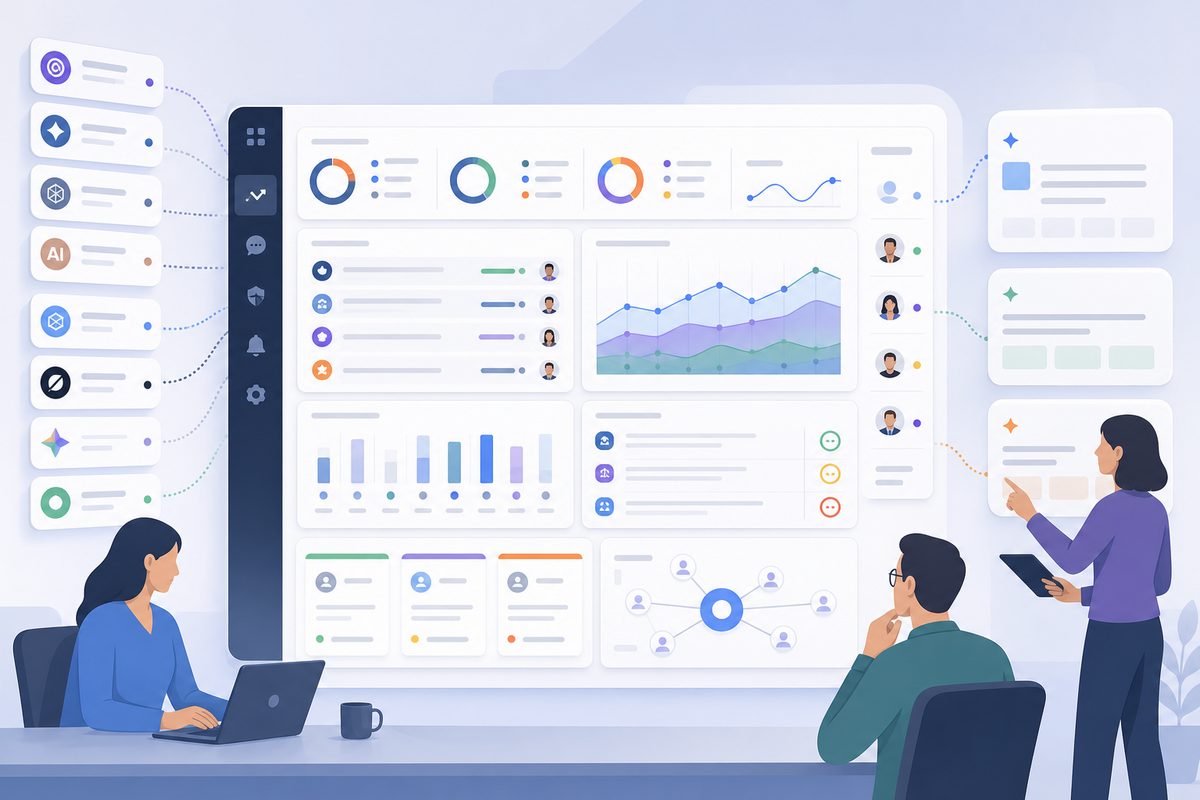
An actionable monitoring view connects each answer and source observation to an owner, intervention, and verification date.
What must an intervention brief contain?
A useful intervention brief should fit on one page:
- Observed issue: What changed, and where?
- Evidence: How many captures, platforms, markets, or time periods show it?
- Business relevance: Which buyer stage, product, or risk is affected?
- Diagnosis: What evidence is missing, inconsistent, inaccessible, or weak?
- Proposed change: What should be added, corrected, or tested?
- Owner and approver: Who controls the change?
- Verification plan: Which unchanged questions will be retested, and when?
- Limitations: What alternative explanations remain?
This format prevents teams from moving directly from one screenshot to an untested content request.
How Should GEO Measurement Be Governed?
GEO metrics require stable denominators, versioned question sets, and recorded test conditions. Generated answers can vary by platform, model, location, language, prompt wording, personalization, and time, so isolated captures should not be treated as deterministic rankings.
The analytics owner should approve these rules:
- Freeze the core question set during each comparison period.
- Version any added, removed, or rewritten questions.
- Record platform, market, language, date, and available model context.
- Separate valid answers from errors or blocked captures.
- Compare like-for-like cohorts.
- Set a recurrence threshold before declaring a persistent change.
- Preserve raw captures and cited sources.
- Mark manual classifications and periodically audit them.
- Keep experimental questions separate from executive KPI reporting.
Conventional keyword volume should not be presented as direct AI question demand. Build the query set from sales calls, support conversations, buyer objections, product research, category language, competitor comparisons, and on-site search data.
Which GEO Metrics Belong to Which Owners?
Executives need competitive position and business outcomes. Practitioners need diagnostic signals. Communications needs accuracy and reputation measures. Analytics needs stable definitions and auditable calculations.
| Metric | Definition | Primary owner | Decision supported |
|---|---|---|---|
| Brand mention rate | Valid answers mentioning the brand ÷ valid tracked answers | GEO lead | Presence across relevant questions |
| Citation rate | Valid answers citing an approved first- or third-party source ÷ valid answers | SEO and content | Source and evidence strategy |
| Recommendation rate | Answers recommending or shortlisting the brand ÷ eligible evaluation answers | Product marketing | Buyer preference |
| AI share of voice | Brand mentions ÷ all tracked competitor mentions within the same cohort | Executive sponsor and analytics | Competitive position |
| Description accuracy | Answers passing the approved factual checklist ÷ reviewed answers | PR and product marketing | Correction priorities |
| Source diversity | Number and mix of distinct cited domains | SEO and digital PR | Dependence on individual sources |
| Resolution time | Time from confirmed issue to implemented response | GEO lead | Workflow efficiency |
| AI referral outcomes | Qualified visits, conversions, or assisted outcomes attributable to identifiable AI referrers | Growth and analytics | Commercial contribution |
Every rate should display its denominator and measurement period. A change from 20% to 40% means little if it represents two answers rather than two hundred.
A useful AI visibility report separates visibility, recommendations, accuracy, citations, interventions, and outcomes instead of compressing them into one unexplained score.
How Should Work Be Prioritized?
Prioritize commercially important questions with persistent evidence and a plausible corrective action. A missing mention is not automatically urgent, and a single answer change is not automatically a trend.
Score each opportunity from one to five on:
- Commercial value: Does the question influence discovery, evaluation, or selection?
- Severity: Is the brand absent, inaccurate, unfavorably compared, or exposed to risk?
- Evidence strength: Does the pattern recur across captures, platforms, or markets?
- Reach: How many products, regions, or buyer segments are affected?
- Intervention confidence: Is there a specific evidence or technical gap the team can address?
The resulting 25-point score supports routine prioritization. It should not override urgent legal, safety, or reputation issues.
Record the rationale beside the score. Otherwise, teams may assign precise-looking numbers to subjective judgments without creating a useful decision trail.
How Should Agencies and GEO Consultants Fit In?
Agencies and contractors should extend monitoring, analysis, content, technical, or digital PR capacity. An internal executive must retain accountability for business priorities, product truth, risk decisions, and implementation access.
A strong hybrid model includes:
- One internal owner with budget and escalation authority
- One partner lead responsible for deliverables and analytical quality
- Shared access to the question taxonomy and change log
- Agreed definitions and data-export rights
- Response-time commitments for high-severity issues
- Clear ownership of content, outreach, technical changes, and approvals
- A handover plan for methods, history, and vendor access
External partners can identify that an answer relies on outdated pricing or weak category evidence. They usually cannot approve new pricing claims, reprioritize an engineering queue, or accept legal risk for the company.
Use an in-house, agency, and contractor ownership comparison to decide which capabilities require institutional knowledge and which can be rented.
What Tools Does the Team Need?
The team needs reliable capture, classification, evidence review, workflow, and reporting capabilities. Buying a platform does not determine ownership, and a single visibility score should not replace raw answer evidence.
Evaluate tools on:
- Supported answer systems, markets, and languages
- Historical answer and citation retention
- Question-set versioning
- Competitor and source tracking
- Manual review and classification controls
- Export and API access
- Role-based permissions
- Alert thresholds and workflow integration
- Data retention, privacy, and security terms
- Ability to connect interventions with later observations
A structured review of AI visibility tracking tools can help create the shortlist. Run a pilot using the company’s real questions and required markets before committing to annual procurement.
What Team-Design Mistakes Should Be Avoided?
The most damaging mistakes separate measurement from authority, confuse normal answer variation with failure, or make one department responsible for evidence it cannot control.
- Dashboard orphan: Analytics reports changes, but no team owns remediation.
- SEO island: SEO is held accountable for claims controlled by product, PR, or legal.
- Approval maze: Low-risk changes wait for executive or legal review.
- Screenshot anecdote: One favorable answer is presented as proof of performance.
- Metric reset: The query set or scoring method changes without preserving a baseline.
- Tool-first program: Software is purchased before owners and decisions are defined.
- Content-only diagnosis: Every visibility problem becomes a request for another article.
- Unstaffed matrix: Functions are named in a RACI but receive no protected capacity.
- Causality leap: An answer changes after an intervention, so the intervention is declared the cause.
- Permanent pilot: Monitoring expands while governance, measurement, and implementation remain informal.
Google’s people-first content guidance warns against creating content primarily to attract search visits. GEO work should improve the accuracy, usefulness, and accessibility of evidence for buyers—not produce thin pages for every possible prompt.
What Should the First 90 Days Include?
A 90-day rollout should establish a controlled baseline, test a small number of interventions, and then choose the permanent operating model. The goal is a repeatable connection between observed answers, accountable owners, approved changes, and follow-up measurement.
Days 1–30: Establish ownership and baseline
- Name the executive sponsor and program lead.
- Appoint functional owners and approvers.
- Select commercially relevant buyer questions.
- Define mentions, citations, recommendations, accuracy, and severity.
- Record test conditions and freeze the baseline question set.
- Capture results across the relevant platforms and markets.
- Map each issue type to an owner and escalation path.
- Measure alert-review and investigation time.
Exit criterion: The team can route every material issue without debating ownership.
Days 31–60: Test controlled interventions
- Select five to ten persistent issues with clear business relevance.
- Preserve answers, sources, and classifications before making changes.
- Write an intervention hypothesis for each issue.
- Implement approved content, PR, product, entity, or technical changes.
- Record deployment dates, costs, owners, and dependencies.
- Retest the unchanged core question set.
- Document inconclusive and negative results as well as improvements.
Exit criterion: At least one full observe-diagnose-intervene-verify cycle is documented.
Days 61–90: Formalize the model
- Calculate operational and implementation workload.
- Apply the 5D Ownership Test.
- Choose centralized, center-of-excellence, or embedded execution.
- Approve reporting and review cadences.
- Finalize severity rules and response targets.
- Assign quarterly goals to named owners.
- Publish the operating handbook and data dictionary.
- Identify the first capacity bottleneck before approving new hires.
Exit criterion: The program has an approved owner, model, scorecard, workflow, and capacity plan.
Frequently Asked Questions
Is GEO Part of SEO?
GEO overlaps substantially with SEO but is not contained entirely within it. SEO contributes technical access, content strategy, source analysis, structured data, and measurement discipline. GEO also depends on PR, product facts, independent authority, entity consistency, legal review, and brand governance.
SEO is therefore a practical operational home, particularly during the pilot stage, but it should not be the sole owner of reputation incidents, regulated claims, or product positioning.
Who Should a GEO Lead Report To?
A GEO lead should usually report through SEO, organic growth, or digital marketing, with direct access to the executive sponsor. The reporting line matters less than the lead’s ability to assign work across functions and escalate unresolved dependencies.
If the role sits in communications, it still needs formal access to analytics, product, content, and engineering.
Does a Company Need a Dedicated GEO Team?
Most companies do not need a dedicated department at launch. They need one accountable lead and named contributors with protected capacity. Dedicated headcount becomes useful when exception volume, market coverage, or coordination demand exceeds what existing owners can absorb.
Use measured workload and implementation backlog—not enthusiasm for a new channel—to justify hiring.
How Big Should a GEO Team Be?
A pilot can often operate with 0.5–1 dedicated FTE plus fractional specialists. An established program may require 1–2 dedicated operators. A multi-market enterprise may need a 2–4-person center of excellence plus regional or functional champions.
These are planning ranges. Calculate actual needs from alert triage, coordination, reporting, governance, and implementation hours.
Should PR Own Brand Mentions in ChatGPT?
PR should own the approved brand narrative and responses to materially inaccurate or harmful descriptions. It should not own every mention or the entire monitoring system.
A practical split gives PR authority over message correction while the GEO lead owns detection, evidence collection, prioritization, and verification.
Does a GEO Team Need a Dedicated Data Analyst?
A dedicated analyst is unnecessary when the program is small and an existing analytics partner can validate definitions, baselines, and reporting. Dedicated capacity becomes valuable when tracking spans many products, markets, platforms, agencies, or intervention types.
Analytics should review the measurement design even when no analyst is assigned full time.
How Often Should AI Search Visibility Be Reviewed?
Operational teams should review material exceptions weekly. Critical factual, legal, or reputation issues need same-day acknowledgment. Executives generally need a monthly view of competitive position, interventions, outcomes, and blocked work.
Review the question taxonomy, governance rules, and operating model quarterly.
Can an AI Visibility Tool Replace the Team?
No. A tool can collect answers, organize citations, identify changes, and support reporting. It cannot approve product claims, create independent authority, resolve legal tradeoffs, or make functional teams implement corrections.
Software lowers observation costs. The GEO team structure determines whether those observations become coordinated action.
The Recommended GEO Ownership Principle
The durable model is: centralize accountability, standards, and data; distribute execution to the teams that control the evidence.
Start centralized while definitions and workflows are new. Introduce a center of excellence as products, markets, dependencies, and risk increase. Embed execution only when local teams are trained and measurement can remain comparable.
A strong GEO team structure has one accountable executive, one operational lead, named functional owners, explicit decision rights, measured capacity, and a closed verification loop. It does not depend on a heroic specialist or a dashboard no one is required to act on.