The median time to citation in AI search is 13 days from the moment you publish a page or earn a mention to the first time an AI engine cites it in an answer. Reaching a stable citation — one that holds day after day — takes a median of 41 days. Those two numbers come from maxaeo tracking 1,240 newly published and newly earned brand sources across seven AI engines, and they are the realistic expectations most generative engine optimization (GEO) programs are missing.
Most teams launch an answer engine optimization push, refresh a page on Monday, and check ChatGPT on Tuesday. When nothing shows, they assume the work failed. It didn't. AI citation is a pipeline with several lags stacked on top of each other, and each one is measurable. This study times every stage so you can tell a CMO when results should land — and when to worry.
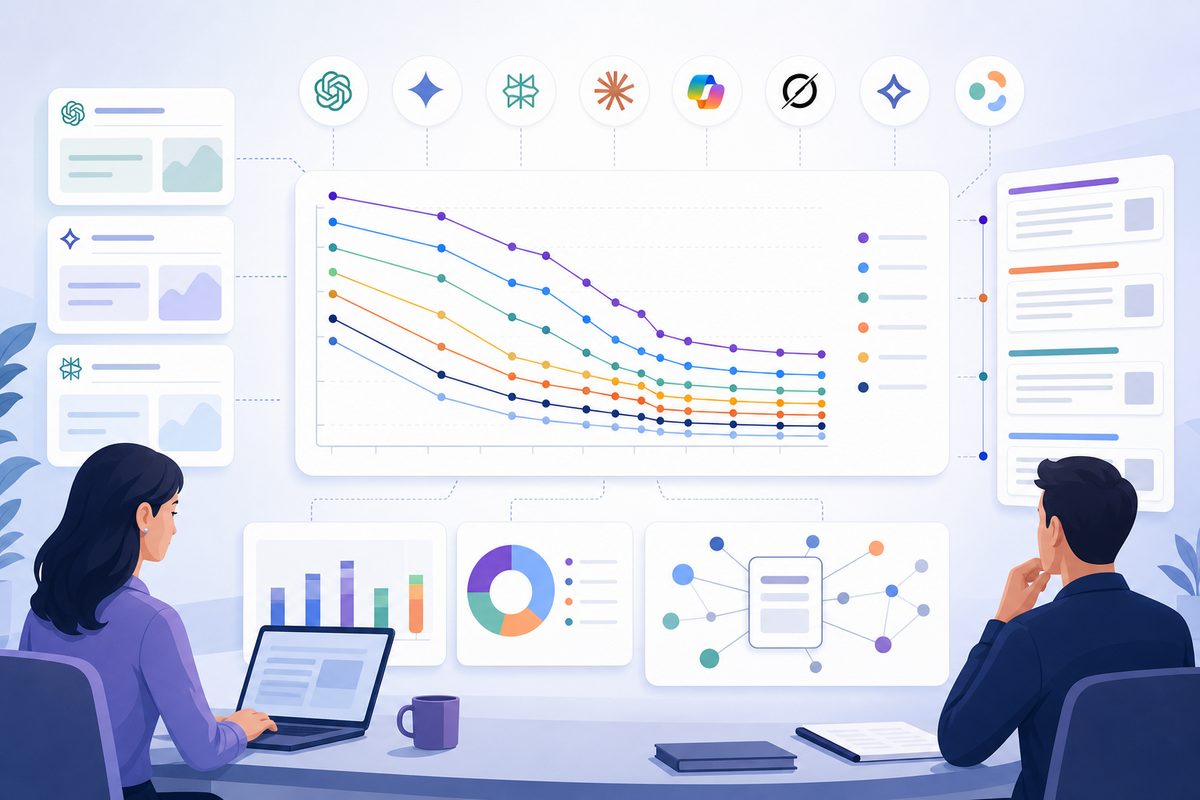
What is "time to citation" in AI search?
Time to citation in AI search is the number of days between publishing (or earning) a source and the first time an AI engine cites it in a generated answer. It measures retrieval lag, not ranking: a page can be live and indexed for weeks before any model quotes it.
There are really two clocks. The first runs from publish to your first citation. The second runs from publish to a stable citation that appears reliably instead of flickering once and vanishing. Treating them as one number is why so many teams misread their own AI search monitoring data.
The headline numbers: how long until you show up
Across all seven engines, a brand-new page on your own domain reaches its first citation in a median of 13 days. An earned off-site mention — a Reddit thread, a G2 listing, a news pickup — takes a median of 22 days. The table below breaks the lag down by engine.
| AI engine | Your own new page | Earned off-site mention |
|---|---|---|
| Perplexity | 4 days | 9 days |
| Google AI Mode | 6 days | 14 days |
| ChatGPT (web search) | 11 days | 19 days |
| Microsoft Copilot | 13 days | 22 days |
| Gemini | 16 days | 27 days |
| Google AI Overviews | 18 days | 26 days |
| Claude (web) | 22 days | 33 days |
| All engines (median) | 13 days | 22 days |
The spread is the real finding. The fastest engine cites roughly five times sooner than the slowest, so a single "time to citation" figure hides more than it reveals. Where your audience asks questions matters as much as how fast you publish.
Inside our study: what we measured and how
We tracked 1,240 sources — 740 new pages on brands' own domains and 500 earned off-site mentions — across 132 brands monitored on maxaeo between February and May 2026. Each source was checked daily against roughly 50 tracked prompts per brand on seven surfaces: ChatGPT with web search, Perplexity, Google AI Mode, Google AI Overviews, Gemini, Microsoft Copilot, and Claude with web access.
Most published timelines test one high-authority domain on one or two engines — useful, but narrow. We widened the lens to include earned media and the full engine set, then added a milestone nobody else times: the day a citation becomes durable. The full sampling rules follow our published approach to collecting trustworthy AI visibility data, so the numbers reflect repeated daily observation, not one-off spot checks.
The three milestones we timed
We did not record a single date per source. We recorded three, because they answer three different questions.
| Milestone | What it measures | Median (own content) |
|---|---|---|
| Time to index | Publish → page in Google/Bing index | 4 days |
| Time to first citation | Publish → first AI answer cites it | 13 days |
| Time to stable citation | Publish → cited 5 of 7 straight days | 41 days |
Reading the gaps is the point. Roughly 4 of the 13 days to a first citation are spent just getting indexed; the remaining nine are the engine deciding you are worth retrieving and quoting. Then a long tail — nearly a month more — separates a lucky first appearance from a citation you can count on.
Time to citation by AI engine: Perplexity is fastest, Claude is slowest
Perplexity cites new content fastest because it runs a fresh web retrieval on almost every query, so a strong new page can surface in a median of 4 days. Google AI Mode follows at 6, since it draws on Google's index, which crawls high-authority pages quickly. Claude with web access is slowest at a median of 22 days, and base models without retrieval are slower still.
This ordering corroborates outside work and extends it. Semrush's citation-speed study found Google AI Mode cited 36% of test pages within 24 hours while ChatGPT Search cited only 8% in the same window — the same fast-Google, slow-ChatGPT pattern we see. Profound has reported a 6.81-day median time-to-citation for ChatGPT and Claude combined; our longer figures reflect that we time every source from its publish or earn date, not from when it was already an established URL. Both are valid; they answer different questions.
Earned mentions vs your own pages: which gets cited faster?
Your own pages get cited faster — a median of 13 days versus 22 days for earned off-site mentions, a roughly nine-day penalty. The reason is mechanical: an earned mention has to clear two crawl cycles, not one. The host page (a Reddit thread, a G2 profile, a news article) must first be re-crawled and re-indexed, and only then can an engine retrieve and quote it.
That lag is the cost of borrowing someone else's authority, and it is usually worth paying. Earned citations from trusted third parties tend to be stickier once they land, and they shape how models describe you — the heart of digital PR for AI search. The practical takeaway: digital PR and review-site work need to start two to three weeks earlier than on-site content if you want them landing in the same answer window.
Indexing is the hidden first step
No engine can cite a page it cannot retrieve, and retrieval starts with indexing. For AI Overviews and AI Mode, this is explicit: per Google Search Central's documentation on AI features, a page must be indexed and eligible to show with a snippet before it can appear as a supporting link, and there is no separate index for AI features. The same index gates standard results and AI answers alike.
That makes time-to-index the floor under every other number. In our data, high-authority domains cleared indexing in a median of 2 days; low-authority domains took 9. Google's own crawling and indexing documentation notes that crawling can range from days to weeks. If a model has not cited you in three weeks, confirm the page is indexed and that nothing blocks the bots before blaming your content — start by diagnosing the discovery gap.
First citation isn't a finish line: the decay problem
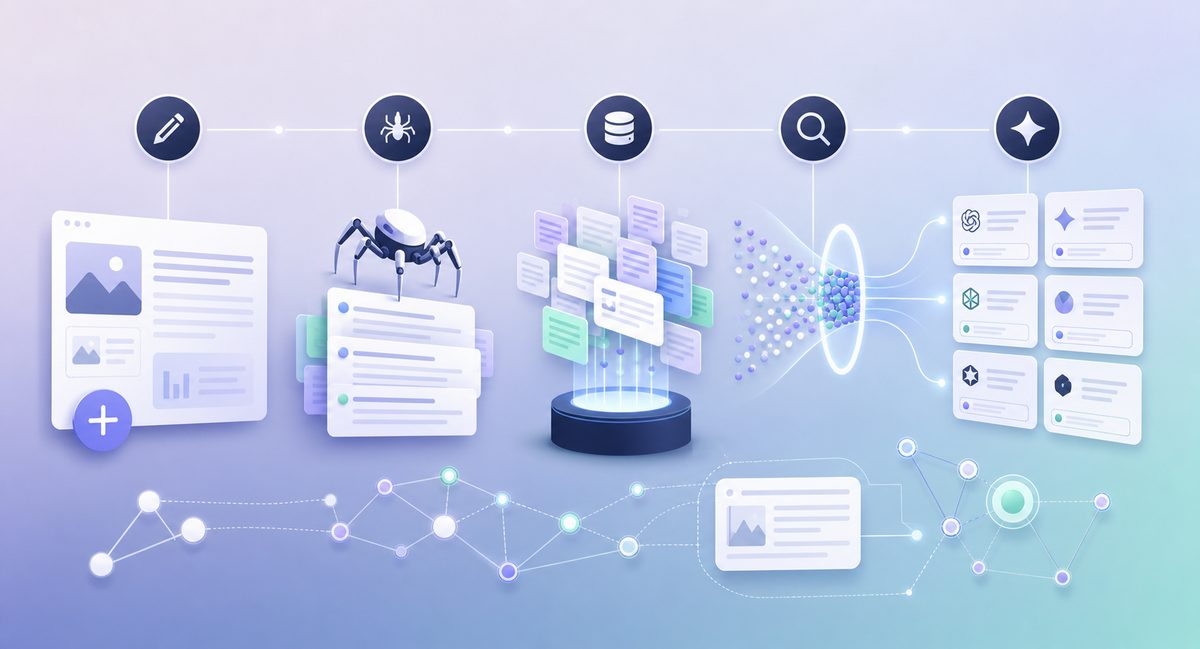
A first citation is fragile. Of every source cited at least once, 41% were not cited again the very next day — a one-and-done appearance. The survival curve below shows how fast the rest thin out.
| Days after first citation | Share still appearing |
|---|---|
| Next day | 59% |
| 7 days | 38% |
| 14 days | 29% |
| 30 days | 24% |
| 60 days | 19% |
| 90 days | 17% |
This matches outside measurement closely: Foundation's analysis of Writesonic's citation data put the typical citation shelf life at 11–15 days, with 44% of pages vanishing after a single appearance. Our 41% is the same story. The lesson is that AI answers churn constantly. A spike in citations is not a result; a citation that survives the churn is. Tracking only first appearances will make a volatile, decaying presence look like a win.
Why domain authority changes your timeline
Domain authority is the single biggest accelerant we measured. Splitting sources into thirds by domain strength, top-tertile domains reached a first citation in a median of 7 days, while bottom-tertile domains took 21 days — three times slower for the same kind of content. Authority compounds at every stage: stronger sites get crawled sooner, indexed faster, and retrieved more readily.
For a young brand, this reframes the work. You are not just optimizing a page; you are paying down an authority deficit that lengthens every clock above. That is the case for combining on-site publishing with earned mentions and entity signals, so engines encounter your brand facts from several trusted directions at once. Newer domains should plan for the long end of every range here and resist the urge to call a program dead at week two.
A realistic GEO timeline to set with your team
Translate the medians into expectations before anyone asks "is it working yet?" Here is the timeline we hand to teams, assuming the page is technically sound and indexable:
- Days 0–4 — indexing. The page enters the search index. Nothing appears in AI answers yet, and that is correct.
- Days 4–7 — fast engines. Perplexity and Google AI Mode begin citing strong new content. First wins land here.
- Days 8–18 — the broad middle. ChatGPT, Copilot, and Gemini come online. This is where the median first citation sits.
- Days 18–25 — slow engines. Google AI Overviews and Claude catch up; earned mentions start surfacing.
- Days 30–45 — stabilization. Citations that survive the churn settle into a durable pattern; expect a median of ~41 days to a stable citation.
- Months 2–3 — share of voice. Repeated, reliable citation across engines builds measurable AI share of voice, the metric worth reporting upward.
If you need a fuller pre-launch list, our GEO checklist for AI search covers the on-page work that feeds this timeline. The headline for budget conversations: meaningful AI search results take weeks, not days, and durable ones take months.
How to shorten your time to citation
You cannot beat indexing physics, but you can remove the self-inflicted delays that stretch the timeline. In priority order:
- Clear the crawl path first. Confirm the page is indexable and that robots rules, JavaScript rendering, or auth walls aren't blocking AI bots. This is the cheapest week you will ever save.
- Publish where retrieval is fast. Put time-sensitive content where Perplexity and AI Mode reach it quickly, and request indexing rather than waiting passively.
- Front-load earned media. Because off-site mentions lag by roughly nine days, start digital PR and review-site work two to three weeks before you want citations to land.
- Strengthen entity signals. Consistent brand facts across your site, Wikipedia, and trusted directories help models connect a new source to your brand faster — the groundwork for getting recommended by ChatGPT and its peers.
- Track stability, not spikes. Watch the day-over-day survival of each citation, not just the first hit, so your llm brand tracking reflects durable presence, not noise.
Do these and you compress the controllable lag. The rest is the engines' clock — and now you know what it reads.
How to track your own time to citation
To measure your own time to citation, time three milestones against a fixed start date across every engine that matters to you. The setup is simple; the discipline is daily checking.
- Log the start date. Record the exact day each page goes live or each earned mention publishes — that is day zero for every clock.
- Track prompts, not keywords. List the real questions buyers ask an AI engine; citations attach to answers, so a prompt set is your unit of measurement.
- Check daily, across engines. Query each surface every day. A weekly check cannot tell a one-and-done spike from a citation that actually holds.
- Separate first from stable. Log first index, first citation, and first durable run (cited 5 of 7 straight days) as distinct events, because each tells you something different about your AI reputation.
Frequently asked questions
How long does it take to show up in AI search?
A median of 13 days from publishing a page on your own domain to its first citation, based on maxaeo's tracking of 1,240 sources. Fast engines like Perplexity can cite strong content in about 4 days; slow ones like Claude take a median of 22. A stable, reliable citation takes a median of 41 days.
Why isn't my page cited even though it's published?
Most likely it isn't fully indexed yet, since indexing is a prerequisite for every AI engine. Publishing and indexing are different events separated by a median of 4 days — and longer on low-authority domains. Confirm indexation and crawler access before assuming the content is the problem.
Do earned mentions get cited faster than my own pages?
No. Earned off-site mentions take a median of 22 days versus 13 for your own pages, because the host page must be re-crawled and re-indexed before any engine can retrieve it. They are slower to land but often stickier once they do, so start that work earlier.
Why do my AI citations disappear after a few days?
Because AI answers churn. In our study, 41% of sources cited once were not cited again the next day, and only 17% were still appearing after 90 days. A first citation is fragile; durability is the metric that matters, which is why tracking citation survival beats celebrating a single spike.
How fast does each AI engine cite new content?
For your own new pages, median time to first citation runs Perplexity 4 days, Google AI Mode 6, ChatGPT 11, Copilot 13, Gemini 16, Google AI Overviews 18, and Claude 22. The order reflects how each engine retrieves: real-time web search is fastest, index-bound and slower-refresh surfaces lag.