
Author: maxaeo.ai|Published: 2026-08-25|Updated: 2026-08-25
Best answer engine optimization for enhancing AI visibility is not a content hack. It is a measurement-and-improvement system for how often AI engines mention, cite, and recommend your brand, and whether those answers are accurate, favorable, and competitive. For SaaS buyers, the best stack is the one that makes those signals visible every day, then turns them into actions you can ship.

Short answer: the best answer engine optimization for enhancing AI visibility combines daily monitoring, citation tracing, sentiment analysis, and competitor benchmarking, then translates those signals into content changes AI systems can actually quote.
What answer engine optimization means for AI visibility
Answer engine optimization, or AEO, is the practice of making a brand easier for AI systems to discover, trust, and recommend. In practical terms, that means improving how your brand appears in ChatGPT, Perplexity, Gemini, Claude, Copilot, Grok, and Google’s AI experiences when buyers ask purchase-intent questions.
That is why AEO overlaps with GEO and LLMO. The naming can differ, but the buyer problem is the same: how do you influence the answer, not just the click? For a plain-language comparison, see What Is the Difference Between AEO and GEO? A Practical Guide for AI Search Teams. If you need a broader conceptual model, Generative Engine Optimization GEO: A Practical AI Visibility Framework is a useful companion.
The best answer engine optimization for enhancing AI visibility starts by treating AI responses as a measurable channel. If you cannot track mention rate, recommendation position, and source mix, you are guessing.
What the best platform should measure
A useful AEO platform should show more than a snapshot. It should reveal the full path from query to answer to source. At minimum, that means mention frequency, recommendation ranking, citation domains, sentiment, and competitive share of voice across the engines that matter.
Here is the simplest test: if a tool cannot tell you where the answer came from, how often your brand appeared, and whether competitors are winning the same prompts, it is not enough for serious AI visibility work.
A buyer-ready baseline looks like this:
- Mentions: how often the brand is named in AI answers
- Ranking position: where the brand appears in recommendation lists
- Citation sources: which domains, pages, and platforms are being referenced
- Sentiment: whether the answer frames the brand positively, neutrally, or negatively
- Competitor comparison: how your visibility compares with named rivals
- Trend line: whether performance is improving or slipping day by day
- Coverage: whether the platform spans the engines your buyers actually use
That last point matters. AI search behavior is fragmented, so a platform that only watches one engine can miss important shifts in the market.
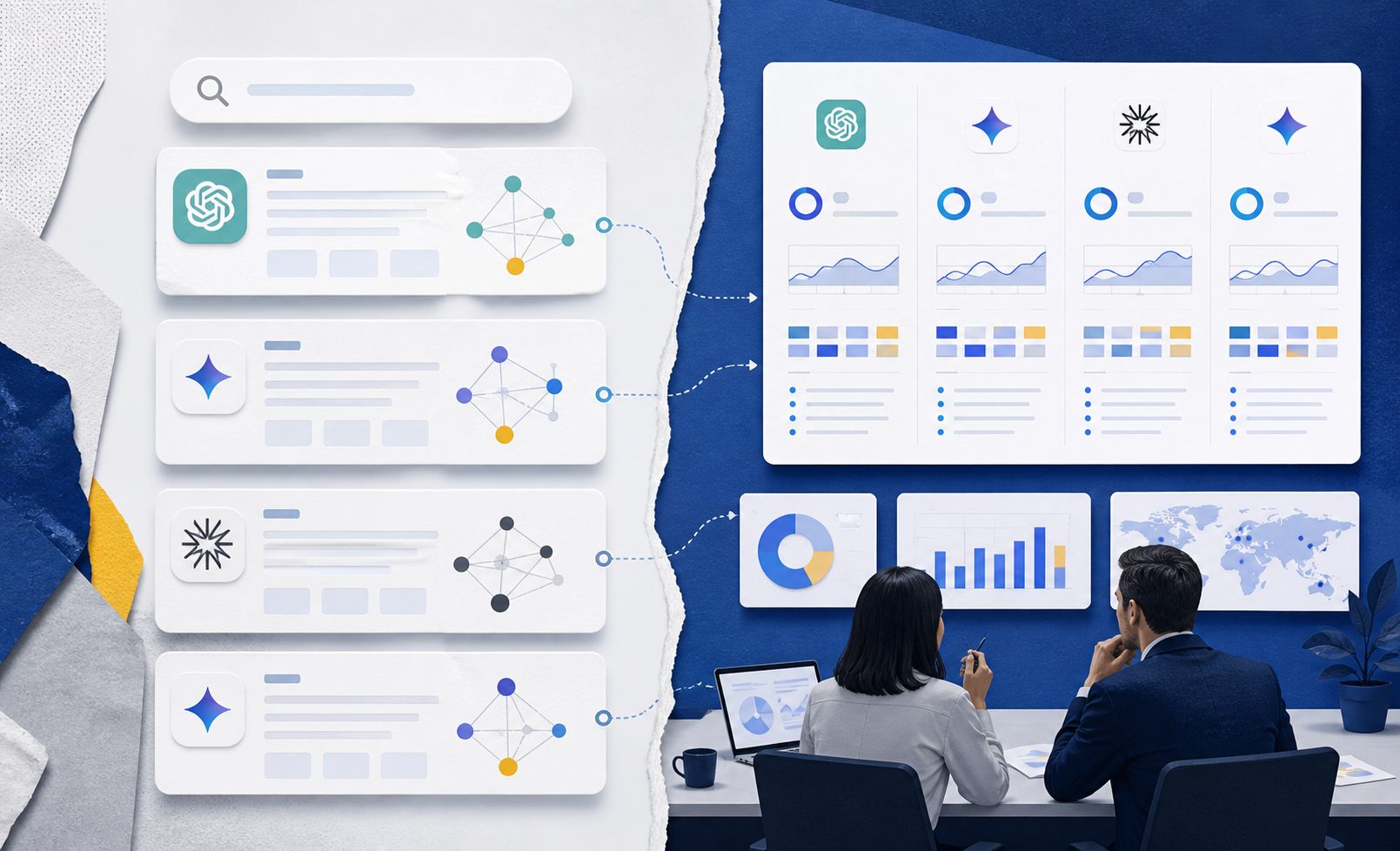
A 7-signal framework for choosing the right AEO stack
This is the most practical way to choose the best answer engine optimization for enhancing AI visibility: score every platform on the same seven signals. The framework below is designed for SaaS teams, but it works for ecommerce and DTC buyers too.
| Signal | Why it matters | What good looks like |
|---|---|---|
| 1. Engine coverage | AI visibility is multi-engine, not single-platform | Coverage across the engines your buyers use most |
| 2. Daily refresh | AI answers drift quickly | Fresh data and daily trend lines |
| 3. Source tracing | AI often inherits credibility from cited sources | Clear domain, page, and platform-level source tracking |
| 4. Competitor benchmarking | Visibility is relative | Brand-vs-competitor mention rates and recommendation positions |
| 5. Sentiment analysis | A mention is not always a win | Positive, neutral, and negative answer framing |
| 6. Actionability | Measurement alone does not improve visibility | Prompt research, optimization guidance, and exportable insights |
| 7. Setup and governance | Teams need fast adoption and safe data handling | Low-friction onboarding, private reports, and clear data controls |
A strong platform does not just say “you were mentioned.” It tells you why, where, alongside whom, and what to change next. That is the difference between vanity reporting and an operating system for AI visibility.
For a more tactical buyer view, Best Answer Engine Optimization Tools for SaaS Teams shows how tool selection changes by team size, workflow, and channel mix. If you are considering a managed approach, Best Answer Engine Optimization Services: A Buyer’s Framework for AI Search Visibility helps separate service models from software models.
How MaxAEO fits a SaaS buyer workflow
For SaaS teams that want a self-serve workflow, MaxAEO is built around brand monitoring, sentiment analysis, citation tracking, competitor intelligence, and optimization suggestions. It monitors brand visibility across 8 AI engines, including ChatGPT, Perplexity, Gemini, Claude, Copilot, Grok, Google AI Mode, and Google AI Overview, with daily updates and bilingual coverage across English and Chinese markets.
The buyer flow is intentionally simple:
- Enter a brand name or website.
- Add competitor names.
- Review mention rate, ranking, sentiment, and source data.
- Use the findings to shape AI-ready content and prompts.
MaxAEO’s free diagnostic can be generated on the website without internal documents, revenue data, or customer lists. The site also states that a first audit can be ready in about 60 seconds, while a fuller diagnostic report is available in roughly 3–5 minutes depending on the scan path. For teams that want a deeper readout, MaxAEO also offers a 30-minute demo using your own brand data.
The platform’s useful differentiators for a SaaS buyer are straightforward:
- Daily monitoring across 8 engines
- Competitor comparison for mention rate, source mix, and sentiment
- Citation tracking down to domains, articles, blogs, review pages, and technical docs
- Prompt research that can convert existing SEO keywords into AI search prompts
- Optimization suggestions based on citation funnels and performance data
- Private-by-default reports unless you choose to share them
If your team is also comparing the broader market, Best Answer Engine Optimization Tools for SaaS Teams is a good way to benchmark feature sets before committing.
How to turn visibility data into content AI can quote
Monitoring is only useful if it changes the pages and assets AI systems rely on. The highest-leverage move is to make your brand easier to cite.
A practical workflow looks like this:
- Start with buyer prompts. Use the questions prospects already ask in sales calls, support tickets, and SEO research.
- Map the sources AI already trusts. Review sites, comparison pages, documentation, and credible explainers often shape answer quality.
- Rewrite for citation readiness. Clear definitions, comparison tables, concise feature summaries, and factual claims work better than vague marketing copy.
- Match pages to intent. A “best tool” page, a “how to choose” guide, and a “comparison” page solve different prompt types.
- Watch the daily trend. If mention rate improves but sentiment falls, the problem is usually positioning, not volume.
This is where best answer engine optimization for enhancing AI visibility becomes a content system instead of a dashboard. For more on structured AI-ready workflows, see AI SEO Tools: How to Choose the Right Stack for Writing, Optimization, and Visibility.

What to look for before you buy
Before you buy any AEO platform, ask four questions:
- Can it show me raw answers, not just summaries?
- Can it trace citations to exact sources?
- Can it compare me against named competitors?
- Can it tell me what to change next?
If the answer to any of those is weak, the platform may be useful for reporting but not for improvement. That is why a good AEO stack should combine a dashboard with a workflow for action.
For teams still deciding how broad their approach should be, What Is AEO? The Definitive Guide to Answer Engine Optimization is a good starting point, while What Is the Difference Between AEO and GEO? A Practical Guide for AI Search Teams helps clarify terminology without losing the buyer objective.
Common mistakes that reduce AI visibility
Most teams do not lose AI visibility because they lack content. They lose it because their content is hard to verify.
The most common issues are:
- pages with no clear claim or definition
- comparison pages that do not state evaluation criteria
- weak source signals, such as missing documentation or proof points
- content that is updated rarely, even though AI answers shift daily
- no benchmark against competitors, so wins and losses are invisible
The fix is not to publish more. It is to publish clearer, more citeable, and more consistently monitored content.
FAQ
What is the best answer engine optimization for enhancing AI visibility?
It is the combination of measurement, source analysis, competitor benchmarking, and content improvements that increase the chance your brand is mentioned, cited, or recommended in AI answers.
How is AEO different from traditional SEO?
SEO is built mainly for search result pages. AEO is built for answer systems, where the goal is to appear inside the response itself, often with a cited source and a recommendation.
How often should AI visibility be checked?
Daily monitoring is the most useful baseline because AI answers can change quickly. Weekly checks are better than nothing, but they miss short-term shifts in citations and sentiment.
Do I need technical integration to start?
Not necessarily. MaxAEO states that you can begin with a brand name or website and generate a free scan without code or internal data access.
Can one platform handle competitor comparisons and source tracing?
Yes, if it was built for AI visibility rather than generic analytics. The platform should show mention rates, ranking positions, source domains, and comparative trends side by side.
Final take
The best answer engine optimization for enhancing AI visibility is not the tool with the most features. It is the tool that helps you see what AI engines are actually saying, why they are saying it, and how to improve the next answer.
For SaaS teams that want a direct, self-serve starting point, the fastest next step is a free audit on maxaeo.ai. Compare your brand with 2–3 competitors, review the sources behind the answers, and use the findings to shape your next round of content.