
作者:maxaeo.ai|发布日期:2025-01-15|更新日期:2025-01-15
GEO software for competitor analysis tracks how often rival brands are mentioned, ranked, and cited inside AI-generated answers — and, more importantly, which sources the AI trusted enough to quote. That citation layer is where the real competitive intelligence lives: it tells you exactly which review sites, comparison pages, Reddit threads, and docs are feeding your competitors’ visibility, so you can target the same pipeline instead of guessing.
This guide explains how that analysis works, what to measure, and a five-step workflow to turn competitor citation data into content that wins you the mention instead.
What Is GEO Competitor Analysis?
GEO competitor analysis is the practice of measuring how competing brands appear in answers from generative engines like ChatGPT, Perplexity, Gemini, and Google AI Overviews. Unlike classic SEO competitor analysis, which looks at rankings and backlinks, GEO analysis looks at three signals:
- Mention rate — how often a rival is named when buyers ask category questions ("best CRM for startups").
- Recommendation position — whether the AI lists them first, third, or not at all.
- Citation sources — the specific URLs, domains, and platforms the AI quoted when recommending them.
The third signal is the differentiator. According to Google’s guidance on AI features and your website, AI surfaces rely on crawlable, well-structured web content — which means a competitor’s AI visibility is almost always traceable to a finite set of pages you can audit, match, or beat.
Why Traditional SEO Tools Miss This Layer
Classic rank trackers assume one SERP, one ranking, one URL. AI engines break all three assumptions: answers vary by prompt phrasing, change daily, and cite sources that may not even rank in Google’s top 10.
In practice, we consistently see three blind spots when teams rely on SEO tooling alone for AI competitor research:
- Citation ≠ ranking. A niche comparison blog with modest organic traffic can be Perplexity’s favorite source for a category query.
- Prompt fragmentation. A competitor may dominate "best X for enterprise" prompts while being invisible for "X alternatives" prompts — aggregate keyword data hides this split.
- Sentiment polarity. Some brands are mentioned frequently but described as "expensive" or "complex to implement." Mention volume without sentiment reads as a win when it is actually a liability.
This is why dedicated competitor AI mention tracking has emerged as its own discipline.
The 5 Metrics That Matter in GEO Competitor Analysis
Start with the metric that answers a business question, not the one that’s easiest to chart.
| Metric | What it tells you | Business question |
|---|---|---|
| Mention rate by prompt | Where rivals win and you don’t | "Which buyer prompts am I losing?" |
| Share of voice | Your % of total category mentions | "Am I gaining or slipping overall?" |
| Average recommendation position | Whether you’re the first or fifth suggestion | "Am I the default answer?" |
| Citation source overlap | Which domains feed rival visibility | "Where do I need to be published?" |
| Sentiment trend | How AI describes each brand | "Is the narrative favorable?" |
For a deeper treatment of share-of-voice measurement specifically, see our framework on comparing AI share of voice analytics.
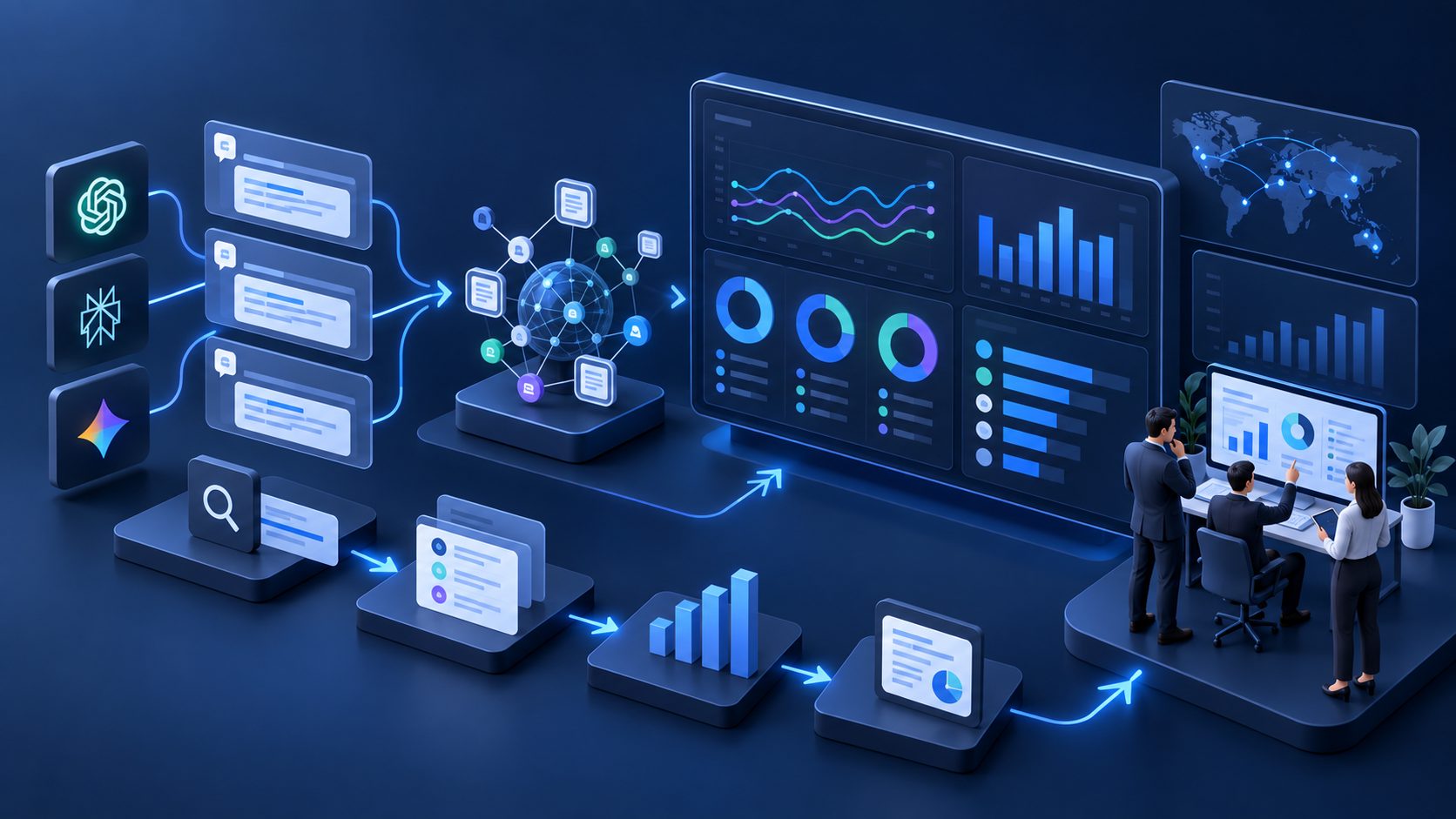
A 5-Step Workflow: From Citation Map to Content Counterattack
The short version: map rival citations, find the gaps, build better assets for those exact sources and prompts. Here is the full workflow.
Step 1 — Build your prompt set
Collect 20–50 prompts a real buyer would type: category queries ("best project management tools"), comparison queries ("Asana vs Monday"), and alternative queries ("Notion alternatives for agencies"). Good GEO software lets you convert existing SEO keywords into monitoring prompts, which is the fastest way to seed this list.
Step 2 — Run a mention-gap analysis
For every prompt, record which competitors are mentioned and where you stand. The output is a gap matrix: prompts where rivals appear and you don’t are your highest-value targets.
Step 3 — Reverse-engineer the citation sources
For each gap prompt, extract the domains and pages the AI cited when recommending the competitor. You’ll typically find a pattern: 2–4 review sites, 1–2 comparison articles, and occasionally Reddit threads or technical docs. This is your competitor’s knowledge supply chain.
Step 4 — Diagnose why those sources win
Audit the cited pages. Usually they share traits: clear comparison tables, explicit "best for X" verdicts, recent update dates, and structured, quotable sentences. These are the formats AI engines prefer to excerpt.
Step 5 — Publish targeted counter-content
Create or update assets aimed at the same citation pipeline: get listed on the review sites AI already trusts, publish a genuinely balanced comparison page, and structure key claims as standalone, citable sentences. Our AI search visibility gap analysis framework walks through prioritizing these fixes by effort and impact.
An Original Pattern: The "Citation Funnel" Concentration Effect
One pattern worth naming, drawn from cross-engine monitoring data: AI citations concentrate. Across a category prompt set, a small cluster of domains — often fewer than ten — supplies the majority of citations for all brands combined. We call this the citation funnel.
The implication for competitor analysis is strategic: you rarely need to out-publish a rival everywhere. You need presence on the handful of domains the engines already trust for your category, plus one or two proprietary assets (original benchmarks, comparison data) strong enough to enter that funnel yourself. Brands that chase volume of content instead of citation-funnel coverage tend to move mention rate slowly, if at all.

How MaxAEO Automates This Workflow
Doing steps 1–3 manually means running hundreds of prompts across engines and logging answers by hand. MaxAEO automates the measurement layer:
- Daily monitoring across 8 AI engines — ChatGPT, Gemini, Perplexity, Claude, Copilot, Grok, Google AI Mode, and Google AI Overviews — with mention rate, competitive ranking, and average recommendation position tracked per prompt.
- Competitor benchmarking — side-by-side comparison of mention frequency, ranking position, sentiment, and citation sources between your brand and rivals, with trend lines and per-engine heatmaps.
- Citation tracing — the exact domains, articles, and platforms AI answers quote, including review sites, comparison pages, docs, Reddit, and blogs, so you can map any competitor’s citation funnel directly.
- SEO-to-prompt conversion — turn existing keyword lists into monitoring prompts in one step.
Plans start with a free tier; paid plans begin at $19/month. You can generate a free AI visibility diagnostic report on maxaeo.ai in a few minutes — brand name, website, and competitors are all you need.
Frequently Asked Questions
What is the best GEO software for competitor analysis?
The best tools combine three capabilities: multi-engine daily monitoring, competitor mention-gap detection, and citation-source tracing. Tools that only report mention counts without showing why the AI cited a rival leave the most actionable layer invisible.
How is GEO competitor analysis different from SEO competitor analysis?
SEO analysis tracks rankings and backlinks on a fixed SERP. GEO analysis tracks mentions, recommendation positions, sentiment, and cited sources inside generated answers, which vary by prompt phrasing and change daily.
Can I see exactly which websites AI cites for my competitors?
Yes. Platforms like MaxAEO store raw AI answers and extract the specific domains and pages cited, letting you audit — and target — the sources feeding rival visibility.
How often should I run GEO competitor analysis?
Daily monitoring is the practical standard, because AI answers drift as models update and source content changes. Weekly or monthly snapshots routinely miss reversals in recommendation order.
How long does it take to close a competitor’s AI visibility gap?
It depends on how concentrated the citation funnel is in your category. If a handful of review sites drive most citations, getting listed and optimized there can shift mention rates within weeks; building proprietary citable assets typically takes longer.