Digital PR for AI search has one job: get your brand into the small set of publications that ChatGPT, Perplexity, Gemini and Google's AI Overviews actually retrieve when they answer buying questions in your category. Most teams still run it like classic link building — spray a press release, chase domain authority, hope. The data says that's backwards. Muck Rack's "What Is AI Reading?" study, which analyzed more than 25 million links cited by ChatGPT, Claude and Gemini across 17 industries, found that earned media drives 84% of AI citations — while paid and advertorial content accounts for just 0.3%.
This guide shows a different starting point: instead of guessing which outlets matter, you reverse-engineer your pitch list from citation frequency data — the publications AI engines already cite in your category, ranked by how often they appear. We use this method in maxaeo client engagements, and below we walk through the full playbook, a worked example from our own tracking data, and the mistakes that burn most AI-PR budgets.

What Is Digital PR for AI Search?
Digital PR for AI search is the practice of earning coverage, mentions and citations in the third-party sources that AI assistants retrieve when generating answers — so that when ChatGPT, Perplexity, Gemini or Google AI Overviews answers a buying question in your category, your brand appears in the recommendation. It sits inside the broader disciplines of generative engine optimization (GEO) and answer engine optimization (AEO).
That definition hides a real strategic shift. Traditional digital PR optimizes for links that pass authority to your domain. AI-search digital PR optimizes for citations and brand mentions inside someone else's content — because when ChatGPT answers "what's the best CRM for a 50-person sales team," it doesn't send the user to your site. It synthesizes an answer from sources it trusts, and your brand either appears in that answer or it doesn't.
| Traditional digital PR | Digital PR for AI search | |
|---|---|---|
| Primary goal | Followed links that lift domain authority and rankings | Mentions and citations inside sources AI retrieves |
| Target list built from | Domain authority, traffic, topical relevance | Citation frequency in your category's AI answers |
| Win condition | Link goes live | Brand appears in generated answers |
| Strongest assets | Campaigns, newsjacking, link bait | Original data, expert quotes, listicle updates |
| Unlinked / nofollow mentions | Weak signal | Often the highest-value placement |
| Success metrics | Links, referring domains, rankings | Mention rate, AI share of voice, citation mix |
The unlinked-mention row is the one that breaks old habits. A nofollow mention in a roundup that ChatGPT retrieves weekly is worth more for AI visibility than a followed link on a page no answer engine ever cites. One analysis by the digital PR agency Position Digital found that brands are roughly 6.5× more likely to be cited in AI answers through third-party sources than through their own domains. Your own blog can't do this job alone. Someone else has to say it.
Why AI Search Changes Who You Pitch
The short answer: AI engines cite a measurable, recurring set of sources per category and per platform — so the right pitch list is a data question, not a judgment call. Three findings from large-scale citation studies make this concrete.
First, earned media dominates — and pay-to-play barely registers. Across all editions of Muck Rack's study since July 2025, earned media has held between 82% and 89% of AI citations, with journalism alone consistently at 25–27%. Paid and advertorial content sits at 0.3%. If your AI-visibility plan is built on sponsored placements and wire distribution, you are competing for less than half a percent of the citation pool.
Second, every platform trusts different sources. Profound's analysis of AI platform citation patterns found ChatGPT concentrates on Wikipedia and a tight cluster of reference and editorial domains, while Perplexity leans heavily on community and review sources — Reddit alone made up roughly 46.7% of its top citations, alongside YouTube, G2 and other review platforms. Lantern's study of 118,000 AI answers found that only 11% of cited domains appeared on more than one platform. A pitch list built for ChatGPT will largely miss Perplexity.
Third, the head is short but the tail is long. Semrush's three-month study of 230,000+ prompts across ChatGPT, Google AI Mode and Perplexity shows a handful of giant domains (Wikipedia, YouTube, Reddit) recurring everywhere — but the bulk of citations spread across thousands of niche domains that vary by category. Those niche domains are where digital PR can actually win, and you can only find them by looking at your own category's citation data.
This is why we treat the publication list as the output of AI search monitoring, not the input to it. Our pillar guide on the source types ChatGPT, Perplexity and Gemini cite most covers the cross-category patterns; the method below finds the specific domains for your category.
How AI Engines Pick Sources — and Why It Sets Your Timeline
AI assistants assemble answers in three layers, and each layer responds to PR on a different clock. Understanding them tells you when a placement will show up and where.
- Base-model training data. What the model "knows" without searching. Brand and category co-occurrence in widely crawled sources feeds this layer, but it only updates with model releases — think months, not weeks.
- Live retrieval. Most cited answers come from here, and each platform reads from a different index: ChatGPT's search draws on Bing's index plus OpenAI's own crawler (OAI-SearchBot), AI Overviews and Gemini draw on Google's search index, and Perplexity runs its own crawler (PerplexityBot). A placement surfaces in each engine only after that engine's index picks it up — which is why the same article can appear in Perplexity weeks before ChatGPT.
- Citability re-ranking. From retrieved pages, engines favor passages with clear claims, concrete numbers, named sources and recent dates. This is why data assets and clean definitions out-earn brand puffery on the same domain.
One practical check this enables: before pitching a high-authority outlet that's absent from your citation log, read its robots.txt. Many major publishers block some or all AI crawlers — those outlets can carry great domain authority and still be near-invisible to answer engines. Your citation log already reflects this reality; a DA-sorted media list doesn't.
The Citation-Frequency Method: Reverse-Engineer Your Pitch List From AI's Own Citations
The method in one sentence: track which sources AI engines cite when answering your category's buying questions, rank those sources by citation frequency, score them for attainability, and pitch the top of that list with citable assets. Five steps:
- Build a prompt set that mirrors real buying questions (50–120 prompts).
- Log every citation across target platforms, daily, for at least four weeks.
- Rank publications by how many distinct prompts they're cited on.
- Score each target for attainability and tier the list.
- Pitch with citable assets matched to each publication's format.
Here's each step as we run it.
Step 1: Build a Prompt Set That Mirrors Real Buying Questions
Your prompt set is your "keyword list" for AI search. Cover five intent buckets: best-of prompts ("best help desk software for SaaS startups"), alternatives prompts ("Zendesk alternatives for small teams"), comparison prompts ("Intercom vs Freshdesk for ecommerce"), how-to prompts that precede purchase ("how to reduce first-response time"), and trust prompts ("is [brand] legit / worth it"). For a 120-prompt set we typically allocate roughly 30 / 25 / 25 / 20 / 20 across those buckets, weighting best-of and alternatives because they drive shortlists.
Write them the way buyers actually phrase questions, including role and constraint qualifiers ("for a 10-person team," "HIPAA-compliant," "under $50/seat"). In our experience, 50 prompts is the floor for stable patterns; 100–120 gives you reliable per-platform splits. Pull phrasing from sales calls, support tickets and community threads — not from your keyword tool's head terms.
Step 2: Log Citations Daily for at Least Four Weeks
AI answers are volatile: the same prompt can cite different sources on different days, and platforms reshuffle sources after model or index updates. A one-off screenshot audit will mislead you. Sample every prompt on every platform daily for at least four weeks, and log each cited URL, its domain, the prompt, the platform and the date.
You can do this manually with an operator and a spreadsheet — budget roughly 15–20 hours per week for 100 prompts across three platforms — or use an AI visibility tool that captures citations automatically. maxaeo runs this daily across ChatGPT, Gemini, Perplexity, Claude, Copilot, Grok, Google AI Mode and AI Overviews, which is the dataset the worked example below comes from. Either way, the output you need is the same: a citation log with enough repeated samples to separate stable sources from noise.
Step 3: Rank Publications by Citation Frequency
Aggregate the log by domain and rank by prompt coverage: the percentage of your tracked prompts where that domain appeared as a citation at least once during the window. Prompt coverage beats raw citation counts because it tells you how broadly a source influences your category, not just how often one article gets retrieved.
Then split the ranking by platform. Expect the splits to disagree — that's the Lantern finding showing up in your own data. A review site might drive a third of Perplexity citations and almost none of ChatGPT's. Flag three special rows that always surface: Wikipedia, Reddit and YouTube. They're rarely "pitchable" in the classic sense and need their own playbooks — for Reddit specifically, see our breakdown of how Reddit shapes what ChatGPT recommends.
Step 4: Score Each Target for Attainability
Citation frequency tells you where AI looks; it doesn't tell you whether you can get in. Score each ranked domain on attainability: Does it publish vendor roundups or listicles it periodically updates? Does it quote outside experts? Does it accept contributed data or commentary? Is it a competitor's own blog (exclude it — but feed it into your AI competitor analysis)?
Cross the two scores into a simple 2×2. High frequency + high attainability is your Tier 1 — usually 8–15 publications. High frequency + low attainability (Wikipedia, closed editorial) gets a long-game plan. Low frequency + high attainability is filler; pitch it only with leftover capacity. Low/low gets dropped. This is the step that kills the spray-and-pray instinct: most teams discover that two-thirds of their existing media list doesn't appear in their category's citations at all.
Step 5: Pitch the List With Citable Assets
Now run outreach top-down with assets matched to each target's format (covered next). The pitch itself changes when it's citation-informed: you're not asking for "coverage," you're offering a specific, sourced improvement to a page that AI engines demonstrably retrieve. A citation-informed pitch reads like this:
"Your 'best help desk software' guide is the source ChatGPT cites for 11 of the 30 buying prompts we track in this category — but its pricing table is eight months old. We just benchmarked first-response times and current pricing across 14 tools; happy to share the dataset if you're planning a refresh."
That email leads with the editor's win (their page's AI visibility, their stale data), not your product. One operational rule we hold clients to: re-rank the list monthly. Citation patterns shift with model and index updates, and a Tier 1 target can fade in weeks. Digital PR for AI search is a loop, not a campaign.
A Worked Example: From Tracking Data to a Ranked Pitch List
Numbers make the method concrete. Below is an anonymized example from maxaeo tracking data: one mid-market customer support software vendor, 120 prompts across the five intent buckets, sampled daily for 28 days on ChatGPT, Perplexity and Google AI Overviews — roughly 10,000 answer samples and 4,900 logged citations across 214 unique domains.
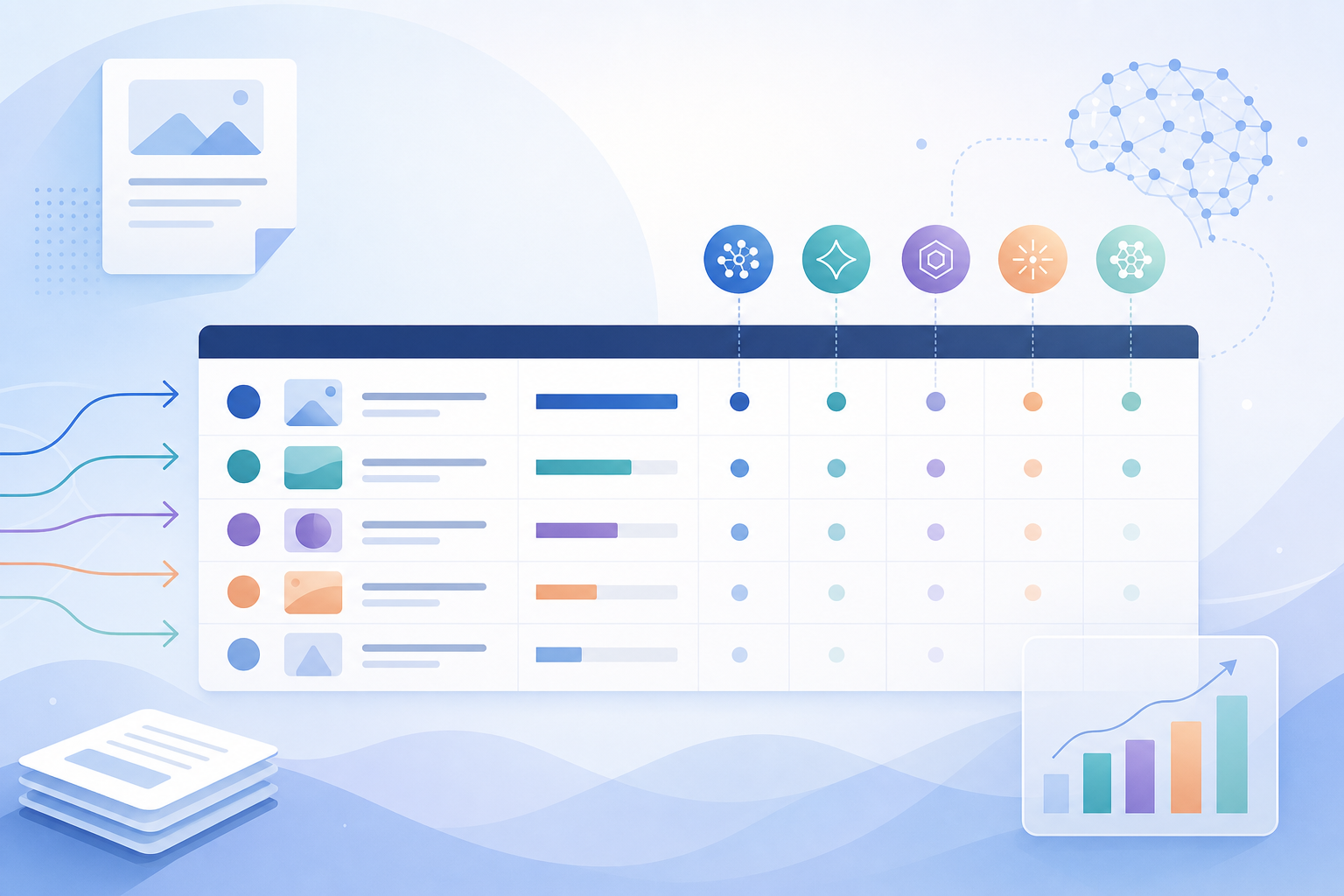
| Rank | Source (anonymized by type) | Prompt coverage | Strongest platform | Attainability | Pitch route |
|---|---|---|---|---|---|
| 1 | SaaS review platform (G2-type) category pages | 41% | Perplexity, AI Overviews | Medium | Review velocity, profile completeness |
| 2 | "Best help desk software" listicles on two SaaS blogs | 38% | ChatGPT | High | Inclusion pitch with benchmark data |
| 3 | Reddit (3 recurring subreddits) | 27% | Perplexity | Low (no pitching) | Authentic community participation |
| 4 | CX trade publication | 19% | AI Overviews, Gemini | High | Expert commentary, original data |
| 5 | Tech news site's comparison hub | 14% | ChatGPT | Medium | Contributed dataset, analyst quote |
| 6–10 | Niche blogs, YouTube reviews, a consultant's guide | 6–11% each | Mixed | Mixed | Case-by-case |
Three observations from this dataset that you won't get from generic advice. The top 10 domains accounted for 61% of all citations in this category — far more concentrated than the cross-category averages in public studies, which is exactly why category-level data beats industry-level lists. Reddit appeared in 27% of Perplexity answers but only 6% of ChatGPT answers for the same prompts, confirming the platform-split rule. And listicle-format pages drove about a third of all editorial citations, making "update an existing roundup" the highest-use single pitch type.
The outcome, reported modestly: over the eight weeks after outreach began, the client landed two listicle inclusions and one trade-publication quote from its 12 Tier 1 targets. In the following six weeks, its mention rate on tracked best-of prompts in ChatGPT rose from 14% to 31%, with AI share of voice gains concentrated exactly on the prompts those two listicles were cited for. One category, one client — not a guarantee — but the cause-and-effect chain was visible in the daily logs, which is the point of running PR this way.
What to Pitch: Four Asset Types That Earn AI Citations
The assets that earn citations are the ones that make a trusted page more quotable: original numbers, named expertise, and updated facts. Four types carry most of the weight.
Original Data and Benchmarks
Journalists cite studies; AI engines then cite the journalists — and often the study itself. Publish narrow, fresh, methodologically transparent data: "median first-response time across 400 SaaS support teams" beats a generic industry survey. State sample size and method in the asset itself; both reporters and the citability re-ranking described above favor sources with visible methodology.
Expert Commentary
Muck Rack's finding that journalism holds 25–27% of AI citations means reporter relationships still compound. Make a named expert available with fast, specific, attributable quotes. Mentions where your expert is named alongside your brand also build the entity association that drives brand mentions in ChatGPT even when no link is present.
Listicle and Roundup Updates
The unglamorous workhorse. Find the "best X" and "top alternatives" pages your tracking shows AI retrieves, and pitch the author a concrete update: new pricing, a feature comparison they're missing, benchmark data that improves the page. You're offering maintenance value to a page that's already winning citations — the easiest yes in digital PR for AI search.
Definitional and How-To Contributions
Where high-citation publications accept contributed explainers, claim the definitional ground ("what is concurrent ticket pricing?"). Answer engines disproportionately quote clean definitions and step-by-step structures, so write contributions in that shape.
Five Mistakes That Waste an AI-Search PR Budget
Each of these shows up repeatedly in audits of teams whose AI visibility hasn't moved:
- Pitching from a DA-sorted media list. In the 2×2 exercise above, roughly two-thirds of a typical legacy media list never appears in the category's citation log. Authority without retrieval is dead weight.
- Auditing once instead of sampling daily. AI answers churn day to day; a weekly or one-off snapshot will both miss real targets and "discover" noise. Daily logs over four-plus weeks are the minimum.
- Treating Wikipedia, Reddit and YouTube as pitch targets. They dominate citation tables but punish outreach-style tactics. They need notability, community participation and video strategies — separate playbooks, separate owners.
- Leading with press-release distribution. Muck Rack notes press-release visibility in AI answers is growing, but paid placement overall still holds 0.3% of citations. Wires are a support channel for announcing your data assets, not the strategy.
- Measuring with referral traffic. Placements change answers before they change sessions. If you judge AI-search PR by Google Analytics, you'll kill the program right before it shows up in mention rate.
How to Measure Whether Digital PR Is Moving AI Visibility
Measure digital PR for AI search by changes in mention rate, citation sources and share of voice on your tracked prompt set — before and after each placement, per platform. Specifically:
- Mention rate: percentage of tracked prompts where your brand appears in the answer.
- AI share of voice: your mentions relative to competitors' on the same prompts.
- Citation source mix: whether the pages you earned are now appearing as cited sources.
- Description accuracy and sentiment: whether new coverage changed how AI describes you — the AI reputation management dimension.
Expect lag, and expect it to vary by layer. In our tracking, new placements typically start appearing as citations within two to eight weeks on retrieval-based platforms — Perplexity and AI Overviews usually react fastest, ChatGPT's browsing-backed answers next — while base-model effects take months and follow model release cycles. Tag every placement with its go-live date and watch the prompt-level data, not aggregate traffic; that's what lets you defend the budget line with a chart instead of an anecdote. Our guide to the six AI visibility metrics that show whether AI recommends your brand covers benchmark ranges for each number.
Frequently Asked Questions
How is digital PR for AI search different from traditional digital PR?
The target and the success metric change. Traditional digital PR earns links to lift your domain's rankings; digital PR for AI search earns mentions and citations in the specific sources AI engines retrieve, so your brand appears inside generated answers. Unlinked mentions, review-site presence and listicle inclusions — weak signals in classic link building — are often the strongest assets, and results are measured in mention rate and AI share of voice rather than rankings.
How long does it take for a new placement to show up in AI answers?
In maxaeo tracking data, typically two to eight weeks for retrieval-based platforms (Perplexity, AI Overviews, ChatGPT with browsing), depending on how often each platform's index recrawls the publication. Influence on base-model knowledge — what a model "knows" without searching — takes months and follows model update cycles. Track daily from the placement date so you can attribute the shift.
Do unlinked brand mentions actually count for AI visibility?
Yes. Answer engines synthesize from text, not link graphs, so a clear unlinked mention in a cited source can put your brand in an answer. Links still matter for crawl discovery and for classic SEO, but co-occurrence of your brand with category terms in trusted sources is the stronger driver of whether you get recommended by ChatGPT and its peers.
Which AI platform should I prioritize?
Follow your own citation data and your buyers. As a starting heuristic: Perplexity and AI Overviews reward review platforms and community sources and react fastest to new placements; ChatGPT leans editorial and reference. Since only about 11% of cited domains overlap across platforms (Lantern), pick the one or two platforms your buyers actually use, and build per-platform target tiers rather than one blended list.
How many publications should be on the pitch list?
Fewer than you think. In categories we track, the top 10 domains often account for half or more of all citations, so a Tier 1 list of 8–15 attainable, high-frequency targets — re-ranked monthly — outperforms a 200-outlet spray list. Depth of relationship with the few sources AI trusts beats breadth across sources it ignores.
Can I run the citation-frequency method without a tool?
Yes, manually: 50+ prompts, three platforms, a daily logging spreadsheet, four weeks — roughly 15–20 hours a week of operator time. A purpose-built AI search monitoring platform automates the sampling and the share-of-voice math; that's the job maxaeo was built for. The method matters more than the tooling — but daily data is non-negotiable, because weekly snapshots miss the churn.
The teams winning AI-generated shortlists right now aren't the loudest — they're the ones who know exactly which publications their category's answers are built from, and who show up there first. Start with your citation data, and let it write your media list.
This article was created with AI assistance and reviewed by a human editor.