
To appear in Google AI Overviews, you need four things: an indexed, snippet-eligible page; organic visibility in roughly the top 20; a self-contained 40–80 word answer Google can lift verbatim; and claims corroborated by sources Google already trusts. Daily monitoring is the fifth requirement, because inclusion is re-decided continuously — there is nothing to "win" once.
That summary hides how much the game changed in twelve months. In mid-2025, Ahrefs found that 76% of AI Overview citations ranked in the top 10 for the triggering query. Its updated study of the same question, across 863,000 keywords, puts that share at 38%. Ranking still helps. It is no longer enough.
This guide isolates what actually correlates with inclusion, using the public 2025–2026 correlation studies plus what MaxAEO observes in daily AI Overview tracking run alongside ChatGPT, Gemini, Perplexity, Claude, Copilot, Grok and Google AI Mode. The side-by-side view matters: AI Overviews behave differently from every chatbot we monitor, and most teams ship fixes for the wrong platform.
What Are Google AI Overviews?
Google AI Overviews are AI-generated answers that appear above the traditional results on Google Search. Google's Gemini models assemble each one from passages extracted from indexed, snippet-eligible pages, then link those pages as citations. There is no permanent slot — inclusion is recomputed query by query, day by day.
How often overviews appear depends on whose panel you trust, and the spread is wide. BrightEdge measured AI Overviews on roughly 48% of tracked queries by February 2026, while Semrush's panel peaked near 24.6% in July 2025 and pulled back to about 15.7% by November 2025. Neither panel is wrong; trigger rates differ sharply by vertical and keyword mix. The only number that matters is the trigger rate on your queries.
One mechanic shapes everything downstream: like AI Mode, overviews use query fan-out. Google issues related sub-queries behind the scenes and assembles the answer from multiple result sets — which is why pages that also cover the adjacent follow-up questions keep showing up as citations.
Which Queries Trigger AI Overviews?
Question-formatted, informational and long-tail queries trigger AI Overviews at several times the rate of navigational or transactional ones — every public panel agrees on the direction, even where the totals differ. The 48%-versus-16% spread above is mostly keyword mix, not measurement error.
The practical consequence: before optimizing anything, split your keyword list into queries that trigger an overview and queries that don't. Trigger rate caps the upside of every tactic in this guide — a page can't be cited in an overview that never renders.
How AI Overviews Differ From ChatGPT, Perplexity and Other Chatbots
The short version: earning an AI Overview citation is a rank-and-passage game, while getting recommended by ChatGPT is mostly an entity-and-mentions game. Teams that treat "AI visibility" as one channel keep shipping the wrong fixes. Three differences drive this, and all three show up clearly when you track the same keyword set across eight platforms.
First, organic-rank dependency. AI Overviews draw candidates through Google's ranking systems, so your organic position is a real (if weakening) prior. Chatbots have no SERP to anchor to: brand mentions in ChatGPT come from training data plus its own retrieval layer, which is why a brand can dominate chatbot shortlists while staying invisible in overviews.
Second, the unit of selection. Overviews extract and synthesize specific passages from pages. Chatbots more often answer at the entity level — they recommend brands, not paragraphs. On-page passage work moves AI Overview inclusion; off-page reputation work moves chatbot recommendations.
Third, volatility. Overview presence flips on and off per query; chatbot brand answers drift more slowly, typically with model or retrieval updates.
| Dimension | Google AI Overviews | ChatGPT / Perplexity / Gemini apps |
|---|---|---|
| Source pool | Google's live index, filtered by ranking systems | Training data + each platform's retrieval layer |
| Rank dependency | Partial — 38–54% of citations rank top 10, by study | None — no organic SERP exists |
| What gets selected | Extracted passages from snippet-eligible pages | Entity-level brand associations + retrieved pages |
| Day-to-day stability | Low — presence churns per query | Higher for brand mentions; shifts with model updates |
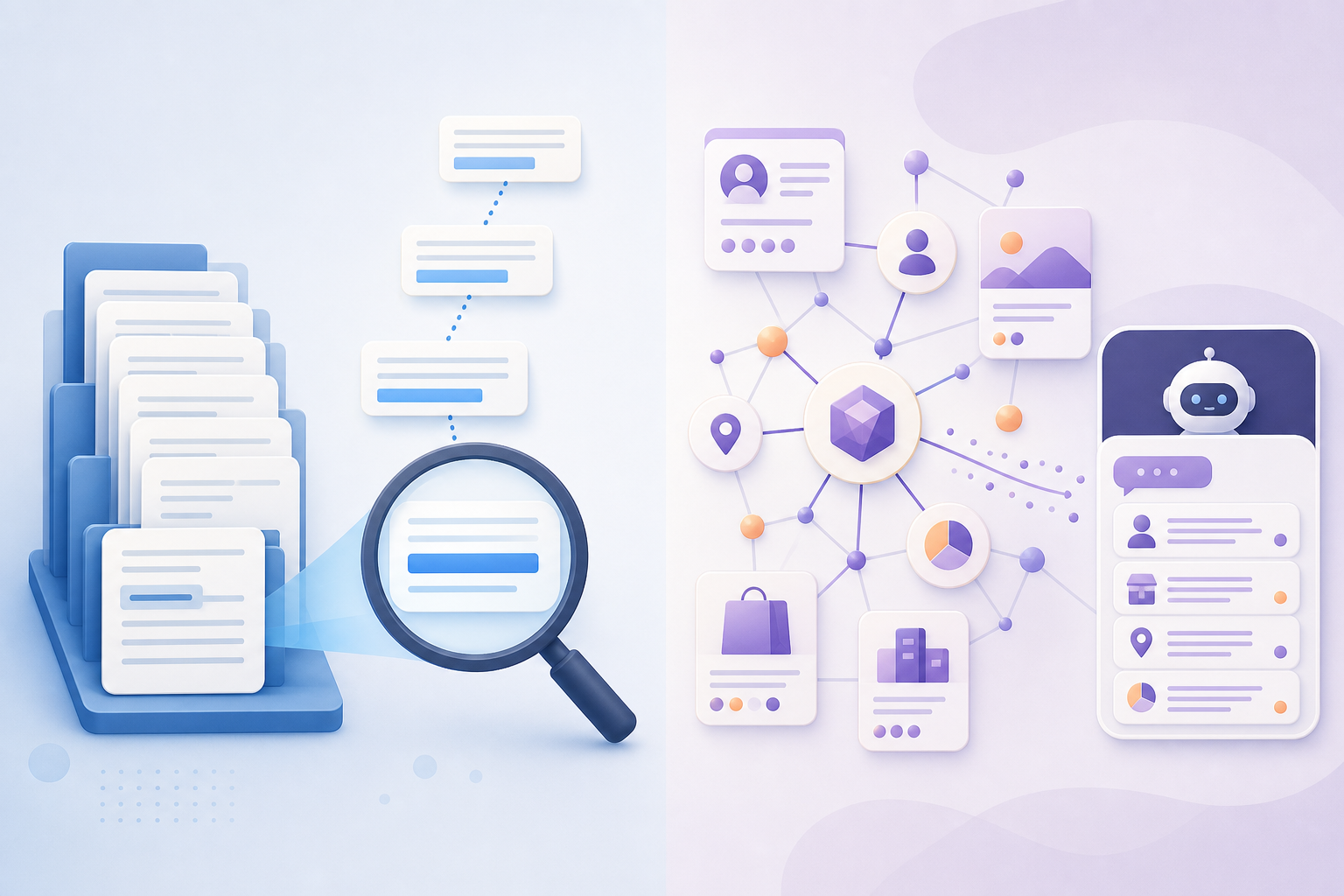
Across the B2B SaaS keyword sets MaxAEO tracks daily, the most common gap is a brand that appears in ChatGPT shortlists yet misses the equivalent AI Overview — usually because no page ranks in the top 20, or the ranking page buries its answer 600 words down. The reverse also happens, and each gap has a different fix.
What Actually Correlates With AI Overview Inclusion
Across the major 2025–2026 studies and our own tracking, four findings hold up: organic rank correlates but is weakening, passage extractability decides which ranking page gets quoted, corroborated claims beat isolated ones, and most "AI optimization" tactics show no measurable effect.
Organic rank still matters — about half as much as it used to
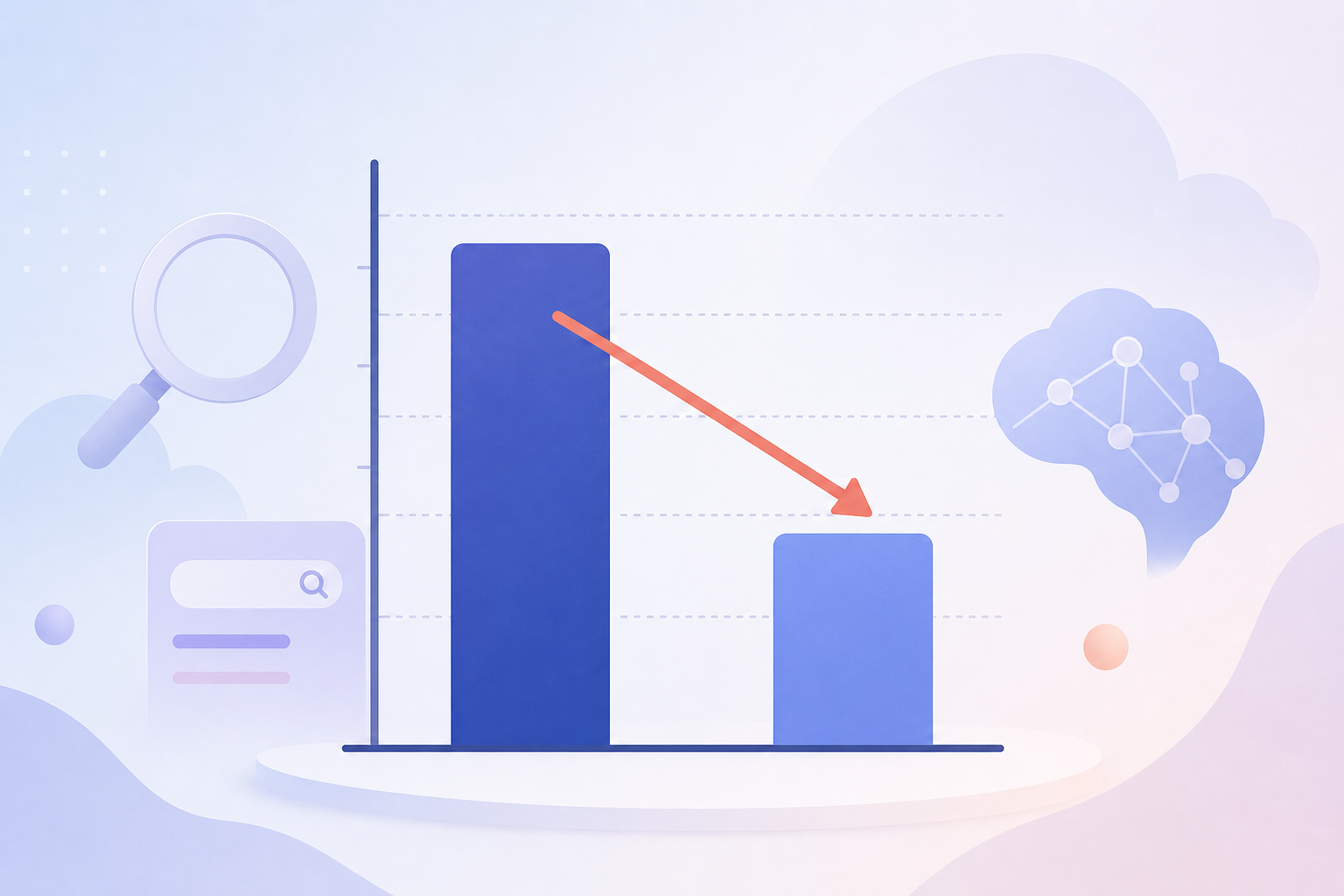
The strongest single correlate of AI Overview citation is still organic visibility, but its grip is loosening fast. Ahrefs' updated analysis of 863,000 keywords and roughly 4 million cited URLs found 38% of citations rank in the top 10, about 31% rank in positions 11–100, and about 31% rank beyond the top 100 entirely — down from a 76% top-10 share in the study's July 2025 edition.
Other panels land higher but point the same way. BrightEdge puts the organic-rank overlap at 54% after sixteen months of AI Overviews. seoClarity's overlap research found only 6% of keywords show complete overlap between citations and the top 10 (down from 19% in May 2025) — though when an overview cites a single source, that source matches a top-10 result 89% of the time.
The practical read: treat a top-20 ranking as a strong prior, not a ticket. Roughly a third to half of citation opportunities now go to pages without top-10 rankings — which is precisely where passage quality and corroboration take over.
Passage extractability decides which ranking page gets quoted
Among pages with comparable rankings, the cited one is almost always the page whose answer survives being lifted out of context. Google extracts passages, not pages. A self-contained block — question-style heading, direct answer, then supporting detail — gives Gemini something quotable; a great answer woven through five paragraphs does not.
This is where our tracking adds something the correlation studies cannot see. When a page in MaxAEO's monitored sets gains a new AI Overview citation, the winning passage is a self-contained block of roughly 40–80 words in about four out of five cases we sample — readable with zero surrounding context. The difference in shape, illustrated on the query "what is AI share of voice":
- Buried: "AI search is changing how buyers discover brands, and with it comes a new generation of metrics. Before defining them, it's worth stepping back to look at how we got here…" — the definition lands 350 words in. Nothing here can be quoted.
- Extractable: "AI share of voice is the percentage of AI-generated answers across a tracked query set that mention your brand. If ChatGPT, Gemini and AI Overviews name you in 14 of 100 tracked answers, your AI share of voice is 14%." — liftable verbatim.
This is the core craft of answer engine optimization: definitions phrased as "X is…", steps as ordered lists, comparisons as tables. It also explains the rank-citation gap — a position-14 page with one perfect extractable block regularly beats a position-3 page that takes 400 words to get to the point.
Corroboration: AI Overviews cite sources that agree
Overviews are synthesized from multiple sources, so passages that align with the consensus of other retrieved pages get cited; outlier claims get silently dropped. Query fan-out amplifies this — your page is evaluated alongside dozens of documents pulled for related sub-queries, not just the visible SERP.
Two things strengthen corroboration. The first is being present on the source types AI engines cite most — editorial publications, review platforms and community threads that repeatedly co-occur as citations, so your claims are echoed where Google is already looking. The second is entity consistency: when your site, your profiles and third-party coverage describe the company in conflicting terms, you make the synthesis step harder, and the safer move is to cite someone else.
Note what corroboration is not: a volume play. A handful of consistent, specific claims repeated across trusted surfaces beats fifty scattered mentions that disagree on what you do.
What doesn't correlate: schema, llms.txt and crawler-blocking myths
Google is unusually explicit here: "You don't need to create new machine readable files, AI text files, or markup to appear in these features. There's also no special schema.org structured data that you need to add." The official eligibility bar is simply a page that is indexed and eligible to appear with a snippet — "There are no additional technical requirements."
That single quote retires several persistent tactics:
- Special "AI schema" — structured data still helps entity disambiguation and rich results, but no schema type buys AI Overview inclusion.
- llms.txt — Google has said it ignores the file, and citation-level evidence on whether llms.txt actually works points the same way across platforms.
- Word-count targets — citation data shows passages win, not page lengths; padding a 900-word answer to 2,500 words adds nothing extractable.
- Google-Extended blocking fears — that robots token governs Gemini model training, not Google Search. Blocking it neither removes you from AI Overviews nor protects you from them; only
nosnippet,data-nosnippet,max-snippetornoindexdo, each with ordinary search costs.
How to Appear in Google AI Overviews: A 7-Step Playbook
The reliable path is to make a page eligible, visible, extractable and corroborated — then monitor it daily, because inclusion is re-decided continuously. In order:
- Confirm eligibility. Verify the page is indexed (URL Inspection in Search Console) and snippet-eligible — no
nosnippet, no restrictivemax-snippet, important content in text rather than JavaScript-rendered fragments or images. - Get inside the top 20 for the target query. Top-10 pages are heavily overrepresented among citations, and positions 11–20 still feed the candidate pool. If nothing ranks in the top 100, fix classic SEO first; no passage trick rescues an invisible page.
- Restructure the page into answer-first passages. Give each sub-question its own heading and open every section with a direct 40–80 word answer before elaborating. One page usually needs three to six such blocks, not thirty.
- Cover the fan-out. Pull People Also Ask questions and related searches for the query, then answer the four to eight adjacent sub-questions on the same page or within the same cluster — that is the document set Google retrieves from.
- Build corroboration where Google already looks. Earn mentions and AI citations on the publications and platforms that already appear alongside you in overviews; digital PR aimed at the outlets AI trusts is the most direct lever.
- Align your entity facts. Make your homepage, about page, product pages and external profiles describe the company in the same concrete terms, so synthesized answers do not have to reconcile contradictions.
- Track inclusion daily and iterate per query. Log which queries trigger an overview, whether you are cited, and which competing URLs replaced you — then fix the specific gap the data shows.
Diagnose the Gap: Rank, Passage or Corroboration?
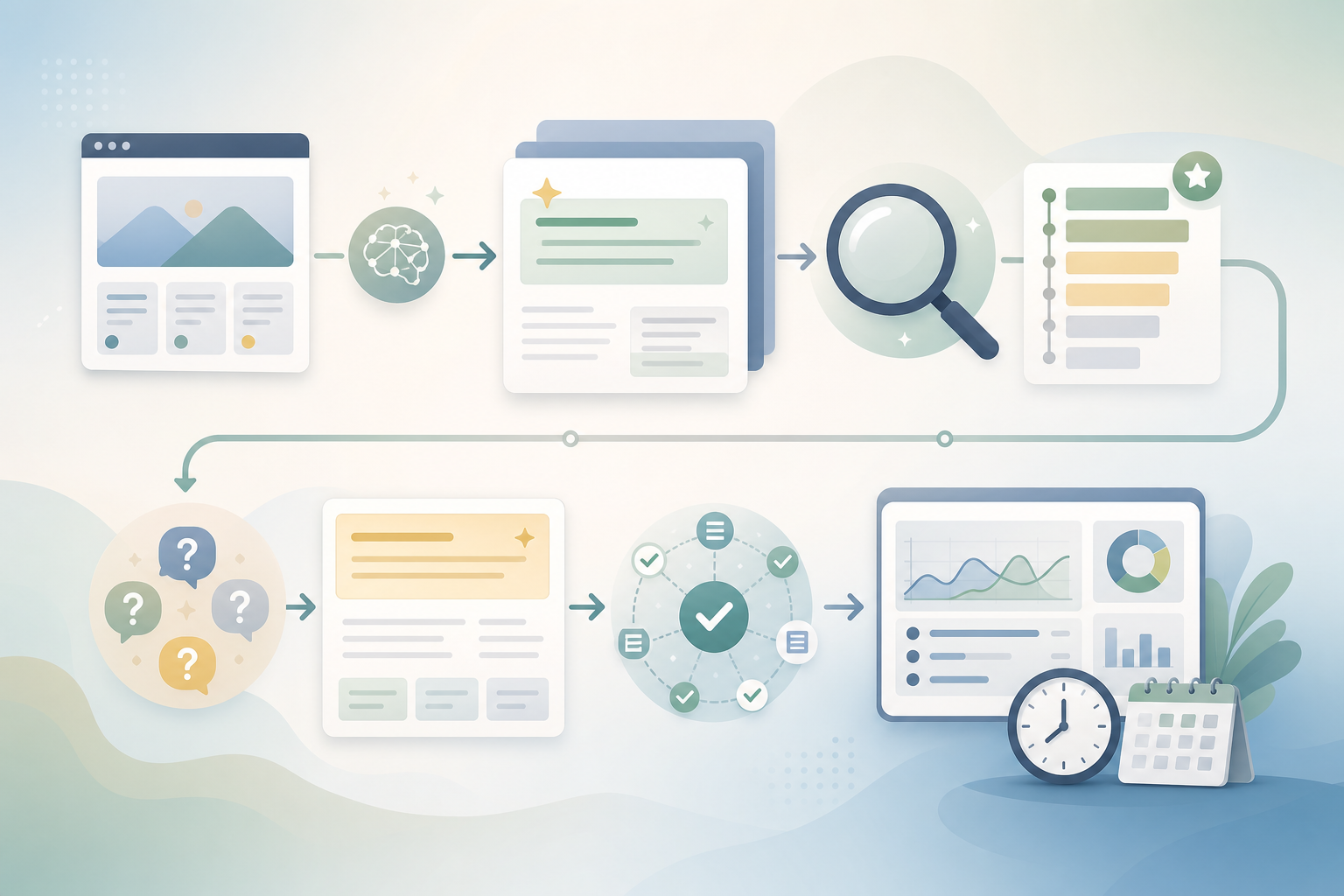
Almost every missing citation maps to one of five patterns. Match the symptom, fix that gap first:
| Symptom on a tracked query | Likely gap | First fix |
|---|---|---|
| No AI Overview triggers at all | Query selection | Target the adjacent question queries that do trigger; the head term may never show one |
| Overview triggers; you rank top 10 but aren't cited | Passage | Rewrite the relevant section into a self-contained 40–80 word answer block |
| Overview triggers; you rank 21+ or not at all | Rank | Classic SEO — links, internal linking, content depth; passages can't rescue invisibility |
| Top-20 rank, clean passages, still uncited | Corroboration | Earn mentions on domains already cited in that overview; align entity facts |
| Cited last week, gone today, ranking unchanged | Volatility | Hold steady and verify at a daily grain before changing anything |
How to Check Whether You Already Appear in AI Overviews
Google Search Console cannot isolate AI Overview performance, so checking means manual SERP spot-checks or citation-level tracking. Per Google's own documentation, AI Overview impressions, clicks and position are folded into overall Search performance with no separate filter — and every link inside an overview shares the block's single position. Your "position 1" may be an unexpanded citation nobody saw, and your traffic report cannot tell you.
For manual checks: search the exact query in an incognito session set to your target market, on both mobile and desktop, and repeat across several days — presence volatility means a single check proves almost nothing. That repetition requirement is why spot-checking does not scale past a handful of queries, and why citation-level AI search monitoring exists as a category.
Why AI Overview Visibility Is More Volatile Than Rankings
AI Overview inclusion churns far faster than organic rankings, so any measurement cadence built for rank tracking will misread it. Serpstat's year-long study of US queries through 2025 measured average daily volatility at 0.403 on a 0–1 scale — and the instability is mostly presence volatility (0.586), meaning whether an overview appears at all, versus content volatility (0.279) in which URLs are cited. In their 500-keyword daily sample, overviews appeared and disappeared repeatedly on 7% of queries, and over 70% of keywords showed noticeable volatility.
Our cross-platform tracking puts that churn in context: on identical query sets, week-over-week citation turnover in AI Overviews runs roughly twice what we observe in Perplexity's citations. A monthly report can show your page holding a stable position 4 while your overview citation appeared and vanished six times in between.
The volatility cuts both ways. Losing a citation overnight usually is not a penalty or a rank drop; it is the selection re-running. The brands that win treat inclusion as a rate to maximize, not a status to achieve.
How to Measure AI Overview Inclusion (and Prove It's Working)
Measure four numbers per tracked query set: trigger rate (how often an overview appears), citation rate (how often you are in it), AI share of voice against named competitors, and description accuracy (what the overview says about you). Together they tell you whether to fix rank, passages, corroboration — or your own messaging. The full framework lives in our guide to the six AI visibility metrics that show whether AI recommends your brand.
The business case is now quantified. Seer Interactive's analysis of 53 brands and 5.47 million queries, reported by Search Engine Land, found organic CTR on overview queries fell 61% (1.76% to 0.61%) through September 2025, then recovered to about 2.4% by February 2026 — and, critically, brands cited inside the overview earned 35% more organic clicks and 91% more paid clicks than uncited brands on the same queries. Inclusion is not a vanity metric; it is where the surviving clicks concentrate.
This is the gap MaxAEO was built for: it checks your AI Overview presence daily alongside seven other AI platforms, logs every citation gained or lost, scores your AI share of voice, and tells you which specific fix — rank, passage or corroboration — each missing query needs. For generative engine optimization budgets that have to survive a CFO review, daily LLM brand tracking is what turns "we think it's working" into a chart.
Frequently Asked Questions
Can a page appear in AI Overviews without ranking in the top 10?
Yes — in Ahrefs' latest data, 62% of AI Overview citations come from pages outside the top 10, including 31% ranking beyond the top 100. Top-ranking pages are still heavily overrepresented, but strong extractable passages and corroborated claims now win citations for pages with modest rankings, especially on long-tail, fan-out-driven queries.
Do I need schema markup or llms.txt to appear in AI Overviews?
No. Google states there is no special markup, AI text file or schema required — eligibility is an indexed, snippet-eligible page. Schema still helps entity clarity and rich results, and llms.txt remains unsupported by Google, so treat both as adjacent hygiene rather than AI Overview levers.
Does blocking Google-Extended remove my site from AI Overviews?
No. Google-Extended controls whether your content trains and grounds Gemini models; AI Overviews are a Google Search feature governed by normal indexing and snippet rules. To stay out of overviews you would need nosnippet, max-snippet or noindex — each of which also reduces your regular search presence.
Does Google Search Console show AI Overview performance separately?
No. AI Overview impressions, clicks and position are included in overall Search performance with no dedicated filter, and all links in an overview share the block's single position. To know which queries cite you — and when citations appear or disappear — you need manual spot-checks or citation-level AI search monitoring.
How long does it take to get cited in an AI Overview?
There is no review queue: inclusion is recomputed continuously, so a page can be cited within days of being indexed if it ranks and extracts well. In MaxAEO's tracking, passage restructures on already-ranking pages typically show citation changes within one to four weeks — daily monitoring is what catches the moment it happens.
Why did my AI Overview citation disappear overnight?
Usually volatility, not a penalty. Presence volatility is the dominant instability in AI Overviews — the overview itself stops triggering, or the citation pool rotates — and Serpstat measured repeated appear/disappear cycles on 7% of queries. Check whether your ranking held; if it did, the citation often returns within days.
This article was created with AI assistance and reviewed by a human editor.