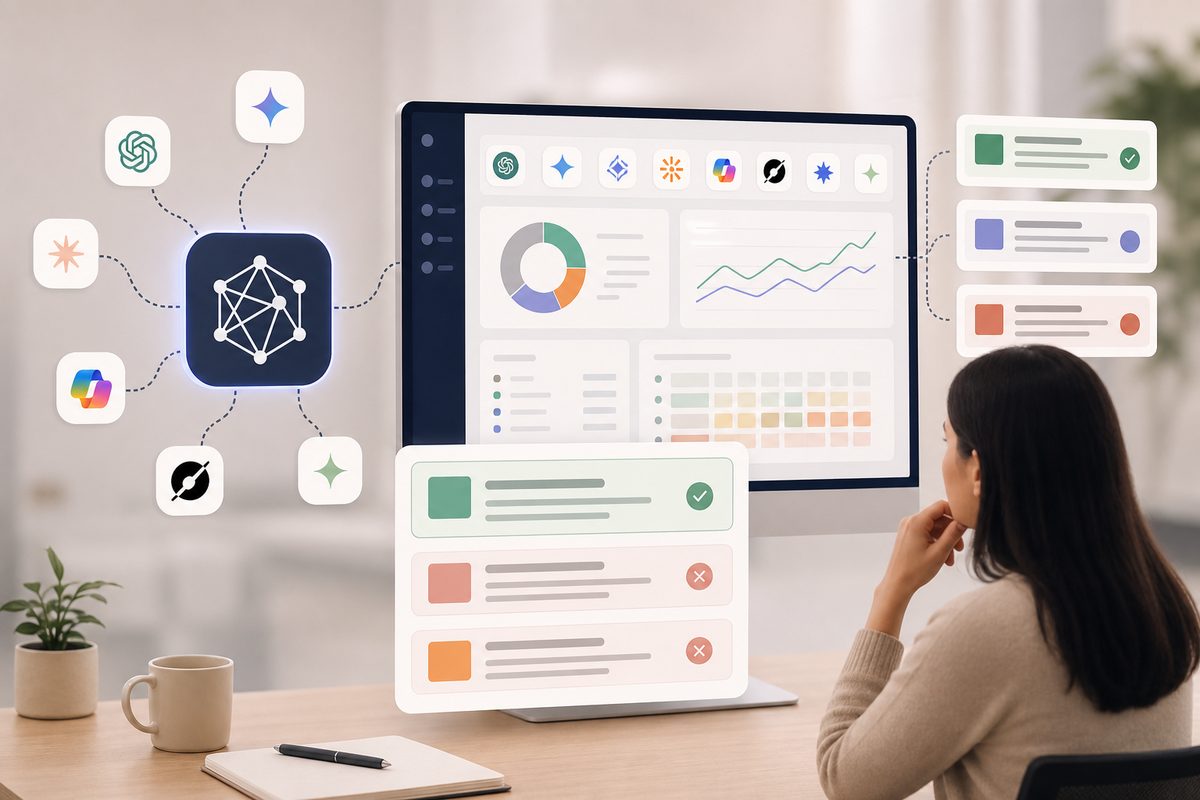
Answer First: Why Does Perplexity Cite Competitors?
Perplexity cites competitors when their source is the easiest credible evidence for the exact answer being generated. That source may be a competitor page, review profile, buyer guide, documentation page, or third-party roundup. Google rank, brand size, and homepage quality help, but prompt fit and citation-ready evidence usually decide.
The practical fix is not “publish more content.” It is to identify the exact URL Perplexity cited, determine why that source supported the answer better than yours, then close the gap with better evidence, source coverage, freshness, or technical access.
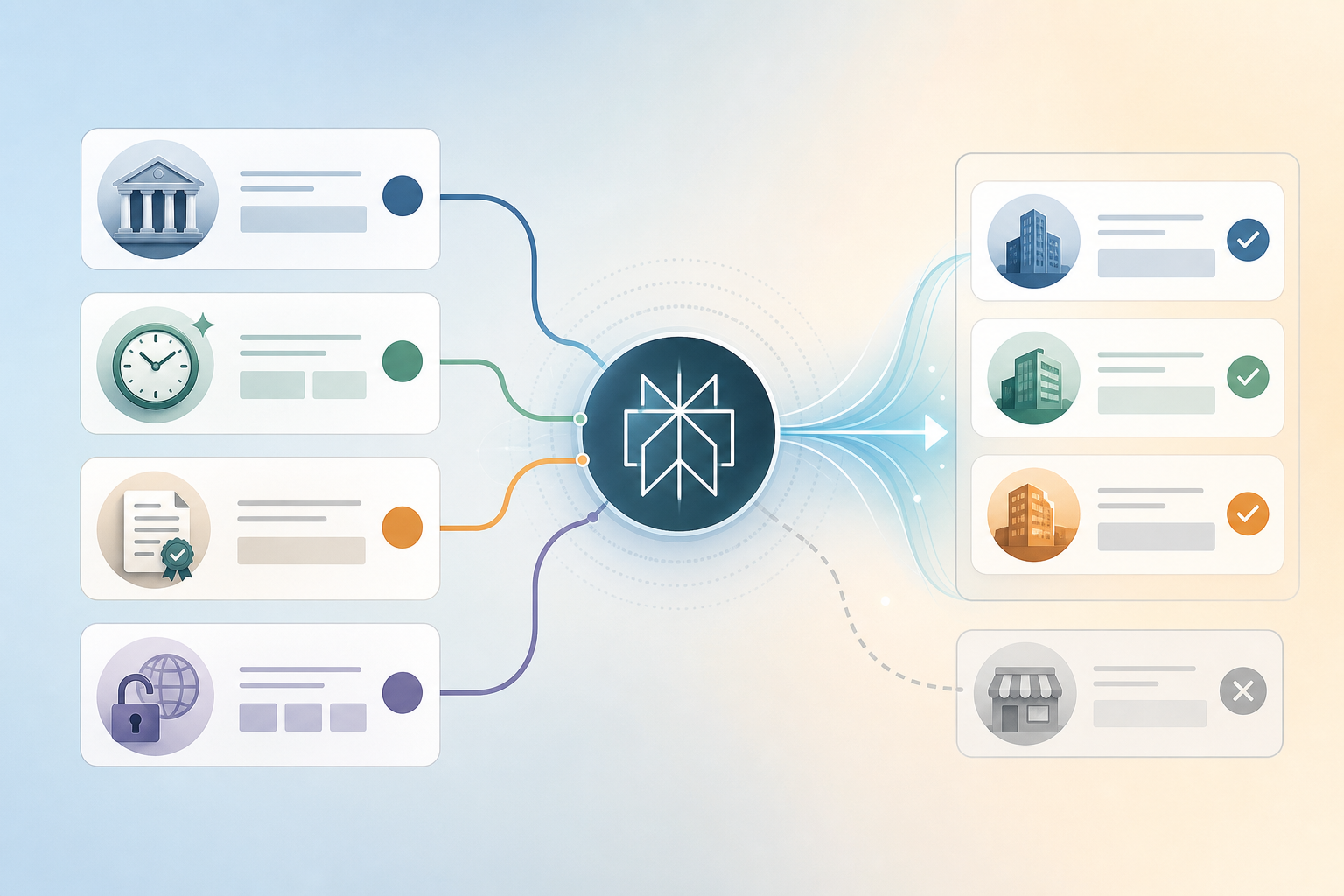
What a Perplexity Citation Actually Means
A Perplexity citation means a URL was used as supporting evidence for part of an answer. It does not always mean the cited company is better, more popular, or more authoritative overall.
Perplexity’s own Search API documentation separates raw ranked web results from generated answers: Search API returns structured results such as title, URL, snippet, date, and last updated, while Sonar returns prose answers with citations. That distinction matters because a page can be found by the system but still fail to become the cited support for an answer.
For marketers, the question is not only “Do we have a page about this topic?” It is:
Do we have the source Perplexity would choose to support this exact answer?
Citation Is Not the Same as Recommendation
A citation is evidence. A recommendation is inclusion in the answer. Your brand can be recommended without being cited, cited without being recommended, or absent while a third-party page about a competitor gets the citation.
Track these four fields separately:
| Field | What to capture | Why it matters |
|---|---|---|
| Mention | Whether your brand appears | Measures basic AI visibility |
| Rank | Where your brand appears in the list | Shows recommendation strength |
| Citation | Which URL supports the answer | Shows source authority and content gaps |
| Description | How Perplexity describes your brand | Shows positioning and accuracy issues |
A 2023 study, Evaluating Verifiability in Generative Search Engines, found that only 51.5% of generated sentences were fully supported by citations and 74.5% of citations supported the sentence they were attached to. The takeaway for SEO teams: do not treat a citation as a perfect endorsement. Audit whether the cited source actually supports the claim and whether your own source would support it better.
The Citation Gap Stack
Most teams ask “Why did Perplexity cite my competitor?” as if there is one cause. In practice, competitor citations usually come from one or more layers in the citation gap stack.
| Gap layer | What it looks like | Weak fix | Better fix |
|---|---|---|---|
| Source gap | Competitor appears in trusted third-party lists, reviews, or analyst content | Rewrite your homepage | Earn, correct, or update the third-party sources Perplexity already cites |
| Format gap | Your page is broad, promotional, or hard to quote | Add more copy | Add definitions, tables, steps, examples, and direct answer blocks |
| Proof gap | Competitor pages include screenshots, benchmarks, use cases, or customer evidence | Add stronger adjectives | Publish verifiable proof and methodology |
| Freshness gap | Competitor source has recent dates, current pricing, or updated feature coverage | Publish a generic new blog post | Refresh the page that matches the cited prompt |
| Entity gap | Perplexity cannot clearly connect your brand to the category | Add keyword mentions | Clarify category, use cases, alternatives, integrations, and ICP |
| Access gap | Crawlers or WAF rules make your content hard to retrieve | Blame the model | Fix robots.txt, rendering, WAF, canonicals, and indexability |
This is the core diagnostic: Perplexity usually cites the best available source for the prompt, not the best company.
How Perplexity Appears to Choose Sources
No outside SEO team has a complete Perplexity ranking-factor list. The defensible approach is to infer from observable behavior, official documentation, and repeated prompt testing.
Three principles are safe to use:
- The source must be retrievable. If the page is blocked, unstable, or hidden behind client-side rendering, it is unlikely to win citations.
- The passage must answer the prompt. A vague product page is less useful than a specific comparison, definition, benchmark, or checklist.
- The claim must be supportable. Perplexity needs evidence it can attach to the answer without forcing the model to infer too much.
Google’s guide to generative AI features in Search is not Perplexity documentation, but it explains a useful retrieval pattern: AI search experiences use retrieval-augmented generation and query fan-out to gather relevant, current pages before generating an answer. The operational lesson applies across answer engines: content must be discoverable, parseable, and useful at the passage level.
The Seven Most Common Reasons Perplexity Cites Competitors
1. The Competitor Has Stronger Third-Party Validation
Perplexity often cites review platforms, publisher roundups, partner directories, analyst pages, and category guides because those sources provide independent validation. Your own homepage saying “best platform” is weaker than a credible third-party source placing a competitor in a category and explaining why.
Check this by listing every cited domain across your target prompts. If most competitor citations come from third-party sites, owned content alone will not solve the problem.
Fix: build a source portfolio. Prioritize the third-party pages that already appear in Perplexity answers, then correct missing profiles, pitch original data, and earn inclusion in category-specific roundups. For a deeper playbook, see Digital PR for AI Search.
2. Their Page Matches the Prompt More Directly
Perplexity is prompt-specific. A competitor can beat you for “best AI visibility tools for agencies” even if your site ranks higher for “AI visibility platform,” because the competitor has a page that directly names agencies, use cases, pricing considerations, and alternatives.
The most citeable pages usually contain:
- A clear 40- to 60-word answer near the top.
- A comparison table.
- Use-case sections by buyer type.
- Specific “best for / not best for” language.
- Proof points that can be quoted without extra context.
Google’s helpful content guidance asks whether content provides original information, substantial analysis, and value beyond other search results. That is also a strong standard for Perplexity citation readiness.
3. Their Content Includes Comparison Coverage
Many Perplexity searches are evaluative: “best tools,” “alternatives,” “X vs Y,” “top platforms,” “which vendor is better,” and “software for [use case].” If your website avoids comparison language, Perplexity may have to rely on competitor pages or third-party lists.
Comparison coverage does not mean attacking competitors. It means answering the buyer’s real questions:
| Buyer question | Citation-ready content |
|---|---|
| Who is this for? | ICP, company size, team type, budget stage |
| What does it replace? | Manual workflows, spreadsheets, legacy tools |
| What are the alternatives? | Honest comparison and tradeoff language |
| When is it not a fit? | Disqualifiers that build trust |
| What proof supports it? | Screenshots, workflows, integrations, customer evidence |
If competitors are both mentioned and cited for comparison prompts, run an AI citation gap analysis before writing another generic category article.
4. Their Proof Is Easier to Extract
Proof points turn a page from marketing copy into a source. Perplexity can cite “Platform A tracks AI citations across engines” more confidently when the page includes screenshots, sample reports, update cadence, supported engines, and limitations.
Strong proof points include:
- Screenshots of dashboards, reports, alerts, or exports.
- Sample prompt sets and grouping logic.
- Before-and-after examples of answer changes.
- Integration names and supported data sources.
- Update frequency and data collection windows.
- Customer examples or anonymized workflows.
- Methodology notes for original research.
A 2026 preprint, From Citation Selection to Citation Absorption, analyzed 602 controlled prompts, 21,143 valid search-layer citations, and 18,151 fetched pages across ChatGPT, Google AI Overview/Gemini, and Perplexity. It found that high-influence pages tended to be longer, more structured, semantically aligned, and richer in extractable evidence such as definitions, numerical facts, comparisons, and procedural steps. Treat that as directional research, not a guaranteed Perplexity formula.
5. Their Source Is Fresher
Freshness matters when the answer depends on current products, pricing, integrations, regulation, market rankings, or recent feature changes. It matters less for evergreen definitions.
Use this rule:
If a buyer would add “as of now” to the question, freshness is part of the answer.
Freshness-sensitive prompts include:
- “best Perplexity alternatives”
- “AI visibility tools with citation tracking”
- “SOC 2 compliant API security tools”
- “GEO platforms for agencies”
- “current pricing for AI search monitoring tools”
Do not update every article equally. Refresh the pages tied to prompts where competitors are cited, especially if Perplexity is citing older sources that still frame the category.
6. Your Brand Entity Is Unclear
Perplexity may not cite you because it cannot confidently connect your brand to the category, audience, or use case in the prompt. This is common when a website uses broad positioning such as “growth intelligence platform” but buyers search for “AI visibility tool,” “LLM brand tracking,” or “answer engine optimization software.”
Entity clarity improves when your site consistently states:
| Entity signal | What to make explicit |
|---|---|
| Category | What kind of product or company you are |
| Use cases | The tasks buyers use you for |
| Audience | Teams, industries, and company stages served |
| Alternatives | What buyers compare you against |
| Integrations | Platforms, data sources, and workflows supported |
| Evidence | Reports, case examples, screenshots, and methodology |
If Perplexity describes your brand incorrectly, fix the source material first. Publish or update AI-readable brand facts using a structured approach like AI-Ready Brand Content.
7. Your Content Is Hard to Access
Technical access can quietly remove strong content from citation competition. If your main content is blocked, slow, unstable, image-only, or hidden behind scripts, Perplexity may use a weaker competitor source that is easier to fetch.
Perplexity’s crawler documentation says PerplexityBot is designed to surface and link websites in search results and recommends allowing it in robots.txt and WAF rules if you want your site to appear. It also lists Perplexity-User for user-requested fetches and provides published IP endpoints for WAF configuration.
Check these items before changing content strategy:
robots.txtdoes not block PerplexityBot if AI search visibility is a goal.- WAF rules allow verified Perplexity bot traffic where appropriate.
- Main content appears in server-rendered HTML or is reliably renderable.
- Canonicals point to the intended URL.
- Important pages are indexable and not blocked by
noindex. - Tables, proof points, and pricing notes are not image-only.
- Pages return stable 200 status codes.
- Internal links make the source page easy to discover.
Technical fixes will not make a weak page worth citing. But a strong page with poor access is still a citation risk.
A Practical Perplexity Citation Audit
A Perplexity citation audit should use repeated prompts, not one-off screenshots. Generative answers vary. One answer can mislead a team into fixing the wrong source.
Use this workflow:
- Build the prompt set. Include category, comparison, alternative, use-case, pain-point, and “best tool for” prompts.
- Run prompts repeatedly. Daily tracking over at least two weeks is more useful than a single manual check.
- Capture the answer fields. Record brand mentions, rank order, citation URLs, source titles, descriptions, and sentiment.
- Group cited URLs by source type. Separate owned pages, competitor pages, third-party lists, reviews, community threads, documentation, and media.
- Identify the cited passage. Note the exact claim, table, list, or proof point the answer appears to rely on.
- Compare your nearest source. Do not compare against your whole website. Compare against the one URL that should have won.
- Score the gap. Use the model below to decide whether the fix is content, proof, PR, technical SEO, or positioning.
- Re-test after changes. Watch prompt patterns over days and weeks before declaring success.
Citation Gap Score: A 100-Point Model
This score is not a secret ranking formula. It is a prioritization model that helps teams decide which competitor citation is worth chasing first.
| Factor | Weight | Score question |
|---|---|---|
| Prompt fit | 25 | Does your page directly answer the prompt better than the cited source? |
| Source authority | 20 | Would a neutral evaluator trust your source over the cited source? |
| Extractability | 20 | Can one passage be quoted without surrounding explanation? |
| Proof density | 15 | Are claims supported by data, screenshots, examples, or methodology? |
| Freshness | 10 | Is the page visibly current for this topic? |
| Entity clarity | 5 | Is your category, audience, and use case explicit? |
| Technical access | 5 | Can the page be fetched and parsed reliably? |
Score the cited competitor source and your nearest source. If the competitor wins by more than 20 points, a small copy edit is unlikely to close the gap. You need a better source, stronger proof, fresher content, or more third-party validation.
Worked Example: A B2B SaaS Category Prompt
Suppose a team tracks this prompt in Perplexity:
“Best AI search monitoring tools for B2B SaaS teams.”
Across repeated prompt runs, Competitor A appears more often, ranks higher, and receives more citations. Your brand appears occasionally but is rarely cited.
A citation audit might reveal this pattern:
| Evidence | Competitor A | Your brand |
|---|---|---|
| Cited source | Fresh “AI visibility tools” buyer guide | Generic product page |
| Comparison coverage | Names alternatives and tradeoffs | Names no alternatives |
| Proof | Screenshots, exports, prompt examples | Feature claims |
| Third-party support | Included in agency roundups | Limited category mentions |
| Entity clarity | “AI search monitoring for SaaS” | Broad “brand intelligence” language |
| Technical access | Crawlable article and docs | Key screenshots behind scripts |
The right fix is not “write more GEO content.” The right fix is:
- Create a citation-ready buyer guide for the exact category prompt.
- Add screenshots, sample reports, and prompt-tracking workflows.
- Update product pages with clear category language and supported engines.
- Earn or correct third-party category mentions.
- Monitor the same prompt set for mention, rank, citation, and description changes.
That is a defensible answer to why does Perplexity cite competitors because it ties the fix to observed citation behavior.
What to Fix First
Fix the gap closest to the cited evidence. If Perplexity cites a competitor’s review profile, improve third-party source coverage. If it cites a comparison page, build a better comparison asset. If it cites an outdated article, publish fresher evidence and make sure the page can be fetched.
| If Perplexity cites… | First fix | Second fix |
|---|---|---|
| A third-party list | Correct your profile and earn inclusion | Publish a supporting buyer guide |
| A competitor comparison page | Create a fair comparison asset | Add proof, screenshots, and tradeoffs |
| A review platform | Improve category presence and customer evidence | Add review snippets or case examples on owned pages |
| A news or PR article | Pitch original data | Publish the methodology on your site |
| A docs page | Add technical depth | Improve internal links to docs and integration pages |
| A stale article | Publish a fresher source | Strengthen crawl access and internal promotion |
| A community thread | Address the objection directly | Add proof and language from real buyer questions |
Teams often waste months rewriting owned pages while the actual citation source is off-site. That is why AI search optimization now includes content, technical SEO, digital PR, third-party profile hygiene, and measurement.
How to Measure Progress
Progress is not just more traffic. Many answer-engine interactions happen before a click. Measure visibility inside the answer.
Track these KPIs:
- AI share of voice: Your share of recommendations across a fixed prompt set.
- Citation share: The share of cited URLs owned by you or favorable third-party sources.
- Source quality: Whether citations come from trusted, relevant, current pages.
- Rank within answers: Where your brand appears in shortlists.
- Description accuracy: Whether Perplexity describes your category, features, and fit correctly.
- Competitor displacement: Prompts where your brand replaces or joins a competitor.
- Fix-to-change lag: Days between update, crawl, and repeated answer change.
For larger teams, an AI visibility tool with citation tracking can replace manual screenshots with repeatable prompt monitoring, citation extraction, and trend reporting across engines.
Common Questions
Why does Perplexity cite competitors when my page ranks higher on Google?
Perplexity may cite competitors because the cited page is more useful for the generated answer. Google ranking can help discovery, but citation selection also depends on prompt fit, passage clarity, source authority, freshness, proof, and technical access. A higher-ranking page can still be too broad or too promotional to support the answer.
Can I force Perplexity to cite my website?
No. You cannot force organic Perplexity citations. You can improve the odds by making your content crawlable, specific, current, well-sourced, and easy to extract. You can also strengthen the third-party sources Perplexity already uses for category answers.
Should I allow or block PerplexityBot?
It depends on your business goal. If AI search visibility matters, allowing legitimate Perplexity crawler access can help public content become retrievable. If content protection is more important, blocking may be reasonable. Document the tradeoff before treating missing citations as a content problem.
How long does it take to change Perplexity citations?
There is no guaranteed timeline. Perplexity’s crawler documentation says robots.txt setting changes may take up to 24 hours to reflect, but answer changes depend on crawl timing, source quality, prompt volatility, and whether your updated page becomes better evidence than the competitor source. Measure repeated prompts over days and weeks.
Why does Perplexity cite a review site instead of my own page?
A review site may be more useful for comparison or validation prompts because it contains category labels, alternatives, ratings, customer language, and independent context. If review sites keep winning citations, improve your third-party profiles and publish owned content that answers the same buyer question with stronger proof.
What is the fastest way to reduce competitor citations?
Find the source type that is beating you most often, then fix that source gap first. For category prompts, the fastest path is often third-party inclusion, comparison coverage, and proof. For branded prompts, it is usually clearer brand facts, updated descriptions, and crawlable pages.
The Bottom Line
The best answer to why does Perplexity cite competitors is usually not “they have better SEO.” It is more specific: they have a better source for that prompt.
They may have a fresher comparison page, stronger third-party validation, clearer proof, better entity alignment, easier crawler access, or a passage that matches the answer more directly than yours.
To win more Perplexity citations, track prompts repeatedly, map every competitor citation to a source type, score the gap, fix the closest cause, and re-test. That turns answer engine optimization from a vague content project into a measurable workflow.