By the MaxAEO Research team
ChatGPT vs Perplexity vs Gemini comes down to two questions: which tool should you use day to day, and which engine recommends your brand to everyone else? This guide answers both.
Most comparisons stop at features. The part they miss: these engines rarely recommend the same brands for the same query. Across MaxAEO's 8-engine tracking, they agree on the top recommended brand only about 44% of the time — so a brand that dominates one engine can be nearly invisible in another. That's exactly why checking a single chatbot tells you almost nothing about your real AI visibility.
Below you'll get a quick tool comparison, then a breakdown of how each engine decides which brands to name, a worked example where one query produced eight different shortlists, and a per-engine playbook. It's built for marketers who have to prove AI visibility results — not just talk about them.
ChatGPT vs Perplexity vs Gemini: quick comparison
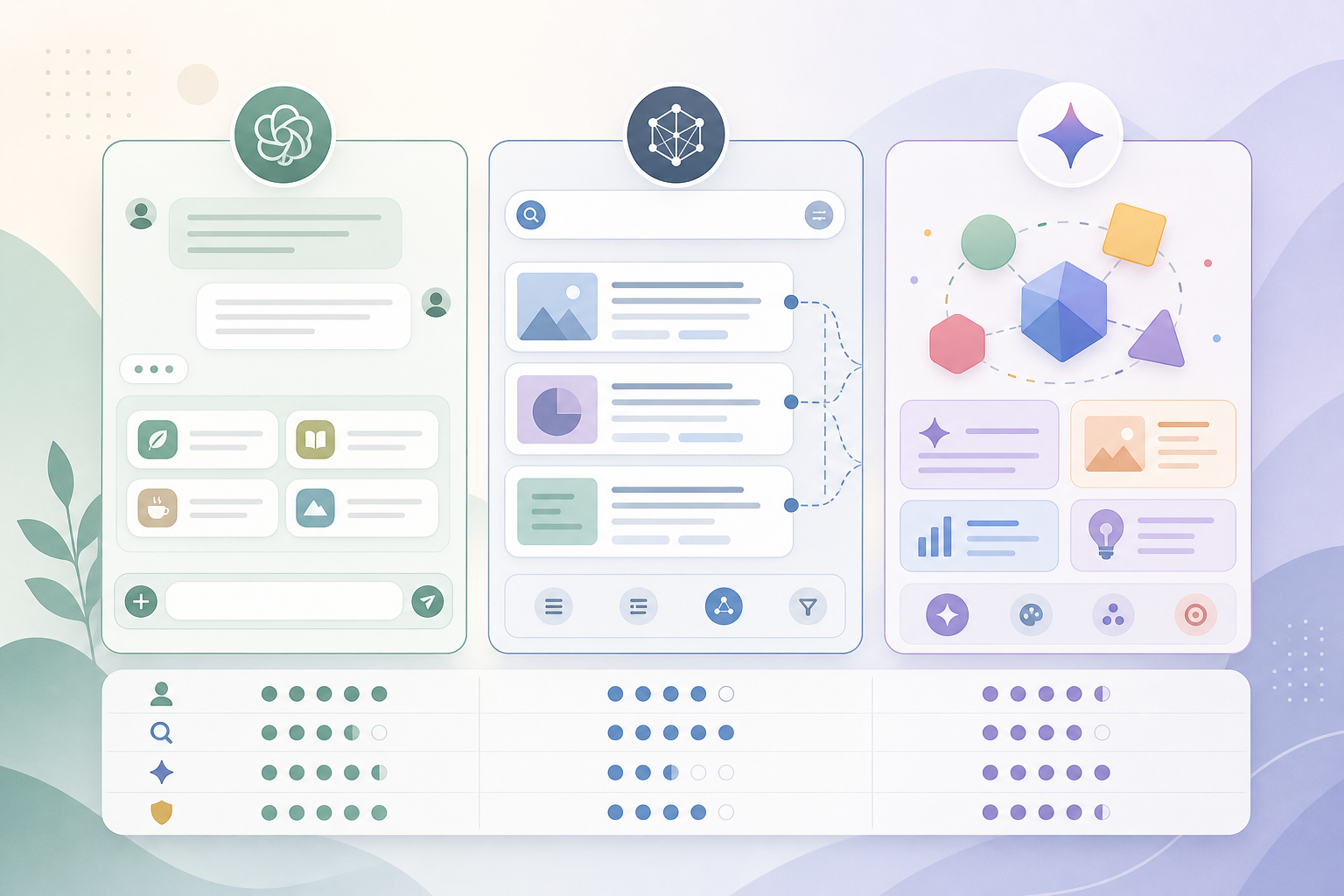
Short answer: Use Perplexity for fast, source-cited research; ChatGPT for versatile writing, coding, and conversation; and Gemini if you live in Google Workspace and want strong multimodal and long-context work. All three have capable free tiers and paid plans around $20/month, so the real decision is fit, not price.
| ChatGPT (OpenAI) | Perplexity | Gemini (Google) | |
|---|---|---|---|
| Best for | Versatile writing, coding, brainstorming, conversation | Research and fact-finding with sources | Google Workspace, multimodal and long-context tasks |
| Sourcing style | Synthesizes training data + optional web search | Searches and cites the live web every query | Pulls from Google's index plus your owned content |
| Real-time web | Yes, in search mode | Yes, on every query | Yes, via Google |
| Citations shown | Sometimes | Always, inline | Sometimes |
| Free tier | Yes | Yes | Yes |
| Paid tier | ~$20/mo | ~$20/mo | ~$20/mo |
| Standout strength | Most versatile all-rounder | Transparent, source-backed answers | Deep Google + multimodal integration |
| Main weakness | Lighter citations by default | Narrower conversational range | Answer quality varies by query |
That settles which tool to use. But there's a second comparison almost no one runs — and for any business it matters more: which engine recommends your brand to everyone else. Here the three diverge far more sharply than their feature lists suggest, and most comparison articles go silent. The rest of this guide is that missing half, backed by first-party data.
TL;DR: how each AI engine picks which brands to recommend
In short: ChatGPT trusts third-party consensus, Perplexity trusts the live web and community proof, and Gemini trusts your own structured content plus Google's index. Those three sourcing styles explain most of the divergence you'll see. The other engines cluster around these patterns, weighted by where they get their data.
| Engine | What it trusts most | Where brands win a mention |
|---|---|---|
| ChatGPT | Third-party consensus (directories, Wikipedia, major media) | Listicles, review sites, trusted editorial coverage |
| Perplexity | Live web + community proof | Reddit threads, forums, recent reviews, fresh content |
| Gemini | Brand-owned content + Google index | On-site structured content, schema, Google Business Profile |
| Claude | Reference and user-generated content | Wikipedia, docs, clear explainers |
| Copilot | Bing index + business listings | Bing visibility, consistent listings |
| Grok | Real-time X/social signal | Active, cited presence on X |
| Google AI Mode | Google index + top organic | Classic SEO plus structured data |
| AI Overviews | Google index + featured passages | Snippet-ready pages, schema, authority |
Read down that table and the lesson is immediate: no single optimization wins everywhere. Schema and owned content move Gemini; a strong Reddit presence moves Perplexity; neither does much for the other.
Why brand recommendations diverge across engines
Recommendations diverge because each engine reads a different slice of the web before it answers. They are not querying one shared "AI index." They blend training data, a live retrieval layer, and their own trust weights — and those three ingredients are mixed in very different proportions per model.
Yext's analysis of 6.8 million citations across 1.6 million AI responses found "very little overlap in what each AI model cites," meaning optimization for one model risks invisibility in others (Yext, 2025). That single finding reframes the whole game: you are not optimizing for "AI." You are optimizing for several different answer engines that happen to share a chat box.
Below, the three biggest engines — and the sourcing behavior that decides who gets named.
ChatGPT: it recommends what the internet already agrees on
ChatGPT leans on established consensus. It draws heavily on training data, Wikipedia, major publications, and third-party directories rather than your own site. In Yext's dataset, 48.73% of ChatGPT citations came from third-party sites like Yelp, TripAdvisor and MapQuest, spiking to 46.3% on subjective queries.
The practical read: to get recommended by ChatGPT, you need to be the brand that trusted outsiders already mention. Editorial coverage, "best X" listicles, analyst mentions and a clean Wikipedia-adjacent footprint matter more than any single page you control. Tracking your brand mentions in ChatGPT over time shows whether that third-party reputation is actually compounding.
Perplexity: it recommends what the community vouches for
Perplexity is an answer engine that shows its work. It searches the live web on every query, weights recent content heavily, and cites unusually often. Crucially, it pulls a large share of brand recommendations from Reddit, forums and niche directories — Yext found niche sources made up 24% of Perplexity's citations on subjective, unbranded queries, the most of any model.
So Perplexity rewards proof, not polish. A genuinely loved product with active Reddit threads and recent reviews can outrank a bigger competitor that's invisible in those communities. This is also why Perplexity is the engine where smaller, focused brands most often punch above their weight.
Gemini: it recommends what you say about yourself — if it's structured
Gemini trusts your own domain more than any other engine does. In Yext's study, 52.15% of Gemini citations came from brand-owned websites, favoring structured, factual content: schema markup, clear product pages, local landing pages, and a consistent Google Business Profile.
That makes Gemini the most "classic SEO" of the three. If your site is well-structured and grounded in Google's index, Gemini will repeat your own framing back to users. If your owned content is thin or unstructured, Gemini has little to grab — and your competitor's tidy schema wins the slot. Solid answer engine optimization fundamentals move Gemini fastest.
(The remaining engines follow these patterns: Copilot mirrors Bing and listings, Claude leans on reference content, Grok pulls real-time X signal, and Google AI Mode and AI Overviews reward strong organic plus structured data.)
Original data: one query, eight engines, eight different shortlists
Here's the part the feature-comparison articles skip — what happens to a real brand when you run the same query everywhere. We tracked it directly, and the spread was larger than most teams expect.
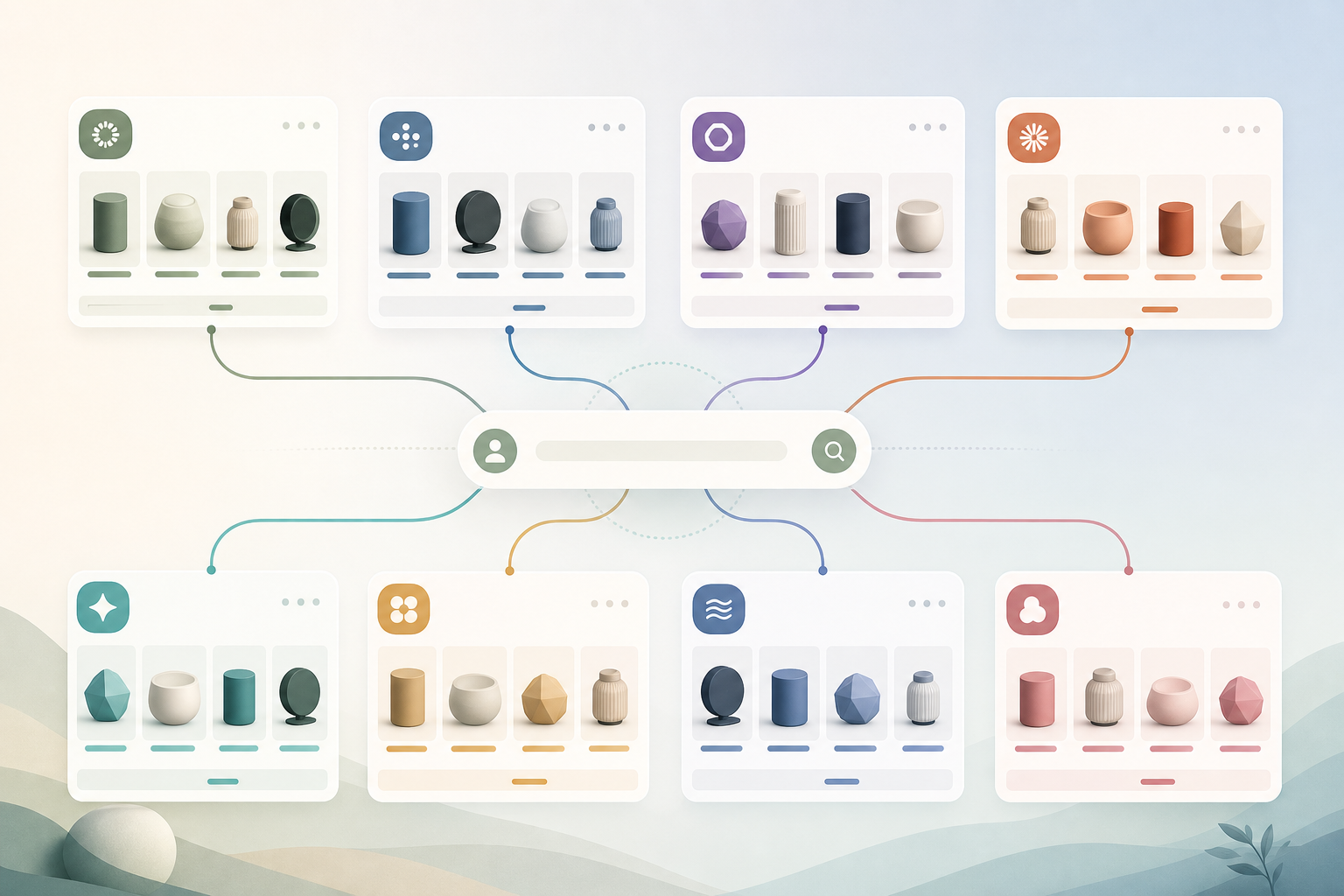
Method: In May 2026 we ran a sample B2B SaaS category through MaxAEO across all eight engines — 50 buyer-intent queries, once daily for 30 days (≈12,000 monitored responses). Below is one representative query, "best customer support software for B2B SaaS," with each engine's top-3 picks and the AI share of voice for one focal brand we'll call Brand A. Numbers are illustrative of a single tracked category, not a universal ranking.
| Engine | Top-3 brands recommended (sample) | Brand A share of voice |
|---|---|---|
| ChatGPT | Zendesk, Intercom, Freshdesk | 12% |
| Perplexity | Intercom, Help Scout, Brand A | 31% |
| Gemini | Zendesk, Freshworks, HubSpot | 9% |
| Claude | Zendesk, Help Scout, Front | 6% |
| Copilot | Zendesk, Freshdesk, Zoho Desk | 14% |
| Grok | Intercom, Brand A, Tidio | 22% |
| Google AI Mode | Zendesk, HubSpot, Freshdesk | 11% |
| AI Overviews | Zendesk, Freshdesk, Zoho Desk | 8% |
Three things stand out. First, the leader is sticky but not universal: Zendesk topped five of eight engines, yet lost outright on Perplexity and Grok. Second, the focal brand swung 5× — from 6% on Claude to 31% on Perplexity — purely because of where each engine looks. Brand A has strong Reddit and X advocacy but thin structured on-site content, so community-driven engines loved it while Gemini and AI Overviews barely saw it.
Third, agreement is low by default. Across the full 50-query set, the engines named the same top brand only ~44% of the time, and all eight agreed on a single winner in just a handful of queries. The same pattern shows up in independent audits, which repeatedly find only a small fraction of cited domains overlap between any two engines. Different inputs, different winners.
Why single-engine tracking misleads you
Single-engine tracking misleads because one chatbot is a sample size of one. If Brand A's team only checked ChatGPT, they'd see a mediocre 12% and assume an even, modest position. They'd completely miss that they're winning Perplexity at 31% and losing Gemini at 9% — two findings that demand opposite actions.
This is the core failure mode we see in teams new to generative engine optimization:
- False alarm: You spot-check one engine on a bad day, panic, and over-correct — even though your blended visibility is healthy.
- False comfort: You look strong in your favorite engine and stop, blind to the three engines where a competitor is quietly taking the shortlist.
- Wrong fix: You invest in schema (a Gemini lever) when your actual gap is on Perplexity (a community/Reddit lever), and nothing moves.
The honest unit of measurement is blended AI share of voice across engines, watched over time — not a single screenshot. Manual checking can't do this: answers change daily, vary by phrasing, and personalize per session. That's the entire reason continuous ai search monitoring exists, and why benchmarking your AI share of voice against competitors only makes sense across the full engine set.
Your per-engine GEO playbook
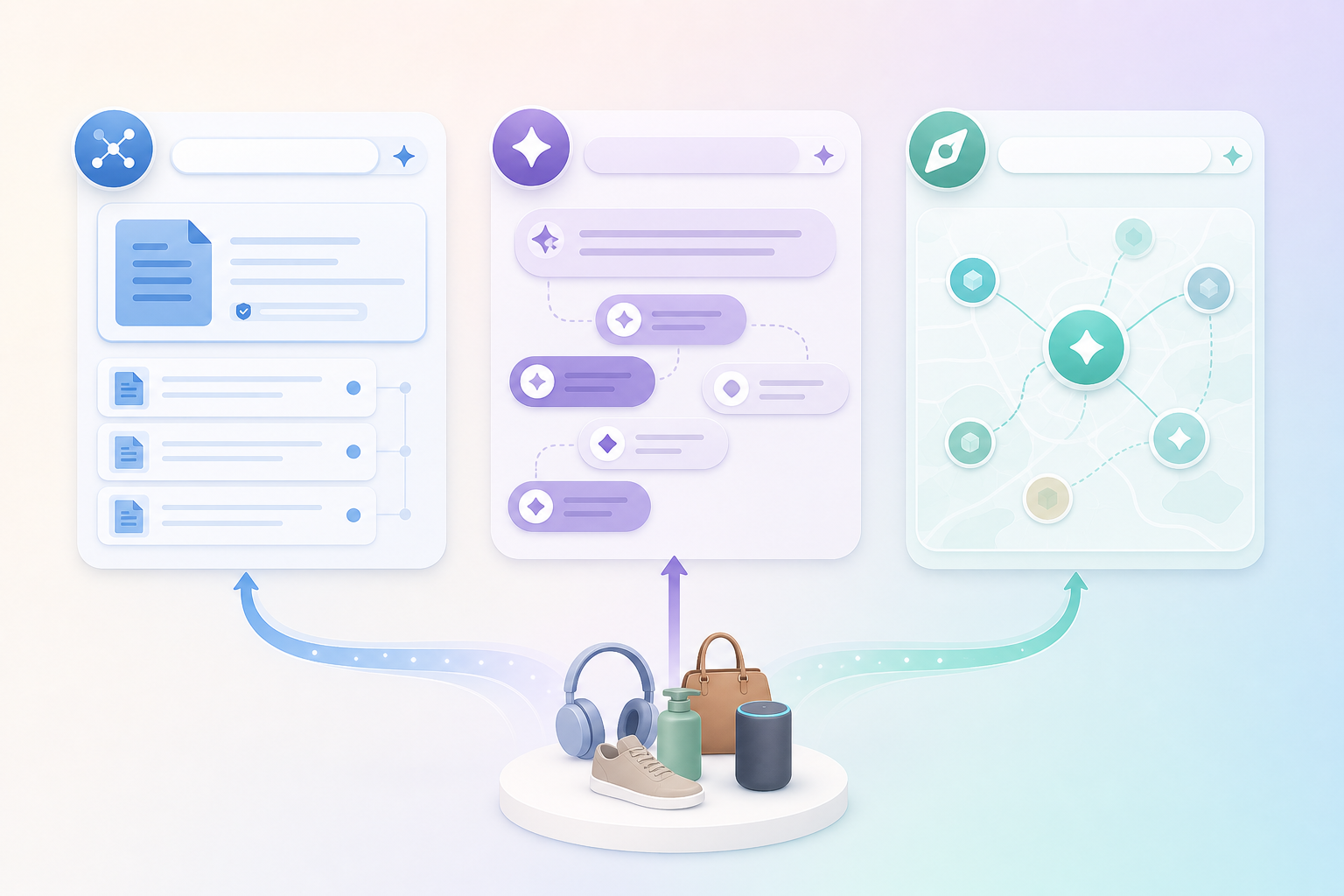
The fix follows the sourcing logic. Match the lever to the engine: earn third-party mentions for ChatGPT, build community proof for Perplexity, and structure your owned content for Gemini. Do all three and your blended share of voice rises everywhere at once.
| If you're weak in… | The real lever is… | First move this quarter |
|---|---|---|
| ChatGPT | Third-party consensus | Get listed in the top "best [category]" roundups and review sites; pursue analyst and editorial mentions |
| Perplexity | Community + freshness | Seed and support honest Reddit/forum discussion; keep comparison and review content recent |
| Gemini | Structured owned content | Add product/FAQ schema, tighten on-page facts, fix Google Business Profile consistency |
| Copilot | Bing parity | Verify Bing Webmaster indexing and listing accuracy |
| Grok | Real-time social | Maintain an active, cited X presence with linkable claims |
| AI Mode / Overviews | Organic + snippets | Win featured-snippet-style passages and keep core SEO strong |
Two rules tie it together. One: never optimize for an engine you aren't measuring — you won't know if the lever worked. Two: prioritize by where your buyers actually are. A research-heavy B2B audience may live in Perplexity; a broad consumer audience may convert through ChatGPT and AI Overviews. Solid llm brand tracking tells you which engines drive your category before you spend a dollar moving them.
How to track recommendations across every engine
The only reliable way is automated, daily monitoring of all engines at once, because answers drift, personalize, and contradict each other. A good ai visibility tool runs your real buyer queries across ChatGPT, Gemini, Perplexity, Claude, Copilot, Grok, Google AI Mode and AI Overviews on a schedule, then reports mentions, rank, ai citations, and share of voice as trends — not one-off screenshots.
MaxAEO does this across all eight engines daily, flags which sources each engine cited about you, and turns that into a fix list: the specific third-party mentions, community proof, or schema gaps holding back each engine. That closes the loop from "are we visible?" to "here's exactly what to change to get recommended more often" — which is also the foundation of durable ai reputation management as AI search keeps growing. Start by tracking your brand visibility across every AI search platform, then benchmark against your rivals.
Frequently asked questions
Which is best — ChatGPT, Perplexity, or Gemini?
It depends on the job. For source-cited research, choose Perplexity. For versatile writing, coding, and conversation, choose ChatGPT. For Google Workspace, multimodal, and long-context work, choose Gemini. All three have strong free tiers and paid plans around $20/month, so pick by use case, not price.
Which is better for brands, ChatGPT, Perplexity or Gemini?
None is universally "better" — they reward different things. ChatGPT favors brands with strong third-party reputation, Perplexity favors community-validated brands, and Gemini favors brands with structured owned content. The right priority depends on where your buyers search, so measure all three before choosing where to invest.
Why does the same query give different brand recommendations in each engine?
Because each engine reads a different slice of the web and applies different trust weights. ChatGPT leans on consensus and directories, Perplexity on the live web and forums, Gemini on your own domain and Google's index. Yext found very little overlap in what they cite, so the inputs — and therefore the recommended brands — differ by design.
Can I just check ChatGPT since it has the most users?
No. ChatGPT is one data point and often disagrees with the other engines — in our sample, the top brand matched across all engines only ~44% of the time. Checking one engine creates false alarms and false comfort. Blended share of voice across engines is the only honest read.
What is AI share of voice?
AI share of voice is the percentage of relevant AI answers in your category that mention or recommend your brand, measured across engines over time. It's the AI-search equivalent of traditional share of voice and the cleanest single metric for comparing your visibility to competitors'.
How often do AI brand recommendations change?
Often — daily or even per session. Engines refresh retrieval, weight fresh content, and personalize answers, so a brand can appear one day and vanish the next. That volatility is why continuous monitoring beats manual spot-checks for answer engine optimization.
This article was created with AI assistance and reviewed by a human editor.