
AI assistant sponsored results are paid placements that appear inside or near conversational AI experiences, usually labeled as ads, sponsored links, sponsored cards, or paid follow-up prompts. As of August 20, 2026, they sit beside a harder problem: brands still need to earn unpaid mentions, citations, and recommendations in the assistant’s answer.
That distinction matters. In classic search, paid and organic results occupy familiar real estate. In AI assistants, the user may ask one question, refine it three times, compare vendors, request a shortlist, and ask the assistant to decide. A paid unit can create exposure, but the assistant’s organic answer can still frame the category, define the buying criteria, and name competitors before the ad is considered.
What are AI assistant sponsored results?
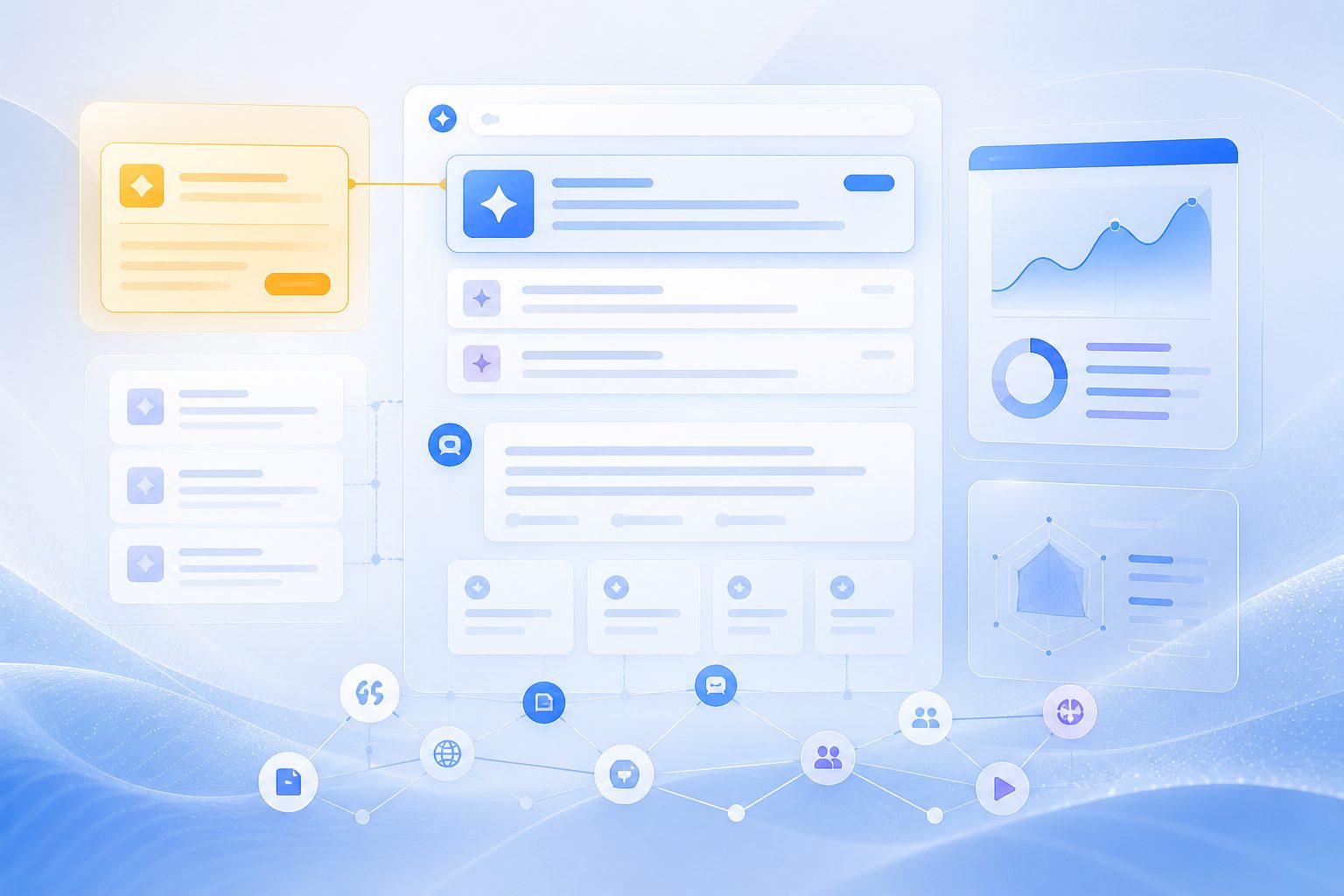
AI assistant sponsored results are paid placements shown within conversational search, AI answer engines, shopping assistants, or AI-powered discovery flows. They are typically separated from the assistant’s generated answer and labeled so users can distinguish advertising from the answer itself.
The format varies by platform. OpenAI’s ChatGPT advertising materials describe ads as clearly identified and separate from responses, while its Ads Manager positioning focuses on reaching users as they compare options and make decisions through conversation. Google has also stated that AI-era ad formats in Search continue to be labeled as “Sponsored,” and Google’s search ad updates show ads appearing around AI-powered search experiences.
The important shift is not only the label. It is the context. Sponsored placements can be matched to a multi-turn conversation, not just a keyword. That means advertisers must think in terms of buyer prompts, category intent, comparison moments, trust signals, and post-click verification, not only bids and ad copy.
How sponsored AI placements differ from traditional search ads
Traditional search ads respond to a query; sponsored AI placements respond to an evolving conversation. The assistant may infer use case, budget, role, constraints, and alternatives before deciding which brands to mention or which ad is relevant.
| Dimension | Traditional search ads | AI assistant sponsored placements |
|---|---|---|
| User input | Mostly one query | Multi-turn conversation |
| Targeting signal | Keyword, audience, location, product feed | Context, intent, history, task, commerce readiness |
| Organic neighbor | Blue links and snippets | Generated answer, shortlist, citations, follow-up prompts |
| Brand risk | Low context distortion | Assistant may summarize, compare, or misclassify the brand |
| Measurement gap | Clicks, conversions, impression share | Paid exposure plus unpaid mention rate, citation source, sentiment, recommendation position |
This creates a two-layer visibility problem. A brand can buy a sponsored placement but still lose the organic recommendation. Conversely, a brand can be cited organically and not appear in the paid unit. Mature teams will measure both.
For a broader framework on earned AI visibility, see MaxAEO’s guide to Generative Engine Optimization, which explains how brands can structure content for AI retrieval and citation.
Where sponsored results are appearing across AI assistants
Sponsored results are appearing in several AI discovery surfaces: chat answers, AI search results, shopping conversations, product cards, follow-up prompts, and sponsored links. Each surface has different implications for brand visibility.
OpenAI’s advertising site presents ChatGPT ads as placements that reach users while they explore options, compare alternatives, and make decisions. OpenAI’s May 5, 2026 announcement also introduced broader buying access, CPC bidding, and measurement development for ChatGPT ads.
Google’s AI search advertising updates show a different model: existing Search and Shopping ad infrastructure is being extended into AI-powered results. Google says new Gemini-built formats will remain clearly labeled as “Sponsored,” and its Search Central and ads ecosystem continue to separate paid labeling from organic ranking systems.
Microsoft Copilot adds another pattern. Microsoft Support states that sponsored links in Copilot shopping experiences are identified clearly. Microsoft Advertising has also discussed the separation between organic and sponsored content in Copilot-style experiences.
Amazon’s Alexa and Rufus shopping experiences point toward commerce-led conversational advertising. Amazon Ads has described Sponsored Products and Sponsored Brands prompts that open product-related conversations with Alexa for Shopping.
The practical takeaway: there is no single “AI ads” format. Brands need a platform-by-platform view of paid placement, organic mention, cited source, and assistant wording.
The hidden influence problem: paid visibility does not equal recommended status
A sponsored result can create awareness, but it does not automatically make the assistant recommend the brand. The assistant’s answer may still rank competitors higher, cite third-party pages, or describe the advertiser with weak or outdated positioning.
This is the most common blind spot in AI search advertising. Paid teams often optimize for impression, click, and conversion. SEO teams optimize for citations and visibility. But in conversational discovery, both outcomes appear in the same decision environment.
A user might see an ad for a project management tool while the assistant’s answer says three competing tools are “best for enterprise workflows.” In that moment, the ad pays for presence, while the answer shapes trust. If the brand is not also visible in the generated recommendation layer, the ad may be forced to overcome the assistant’s framing.
MaxAEO’s article on paid recommendations in AI search explores this paid-versus-earned tension in more detail. The core point is simple: in AI answers, the most valuable unit is often not the ad itself, but the assistant’s reason for naming or excluding a brand.
A practical measurement framework for sponsored AI visibility
Brands should measure sponsored AI visibility across four layers: ad appearance, answer inclusion, citation support, and recommendation quality. Measuring only clicks misses the conversational context that shaped the user’s decision.
Use this scorecard for each priority prompt cluster:
-
Paid presence
- Did a sponsored unit appear?
- Was the brand shown?
- Was it labeled clearly?
- Did it appear before or after the answer?
-
Organic answer inclusion
- Was the brand mentioned in the generated answer?
- Was it recommended, neutrally listed, or excluded?
- What was the average recommendation position?
-
Citation and source quality
- Which domains supported the answer?
- Were citations from review sites, comparison pages, documentation, Reddit, blogs, or vendor pages?
- Did the cited sources contain accurate and current positioning?
-
Sentiment and factual accuracy
- Did the assistant describe the brand positively, neutrally, or negatively?
- Did it mention outdated features, pricing assumptions, wrong company fit, or missing differentiators?
- Did competitors receive stronger category language?
This is where AI visibility monitoring becomes operational. MaxAEO monitors brand visibility across ChatGPT, Perplexity, Gemini, DeepSeek, Claude, Copilot, Grok, Google AI Mode, and Google AI Overview, tracking mentions, citations, recommendations, sentiment, and competitive comparisons. Teams can also generate a free AI visibility diagnostic report directly on maxaeo.ai.
The “paid-earned gap” model for prioritizing action
The paid-earned gap is the difference between where a brand pays to appear and where the assistant organically places it in the answer. This gap helps teams decide whether the next action should be advertising, content, PR, review strategy, or source correction.
Use the matrix below:
| Scenario | What it means | Best next action |
|---|---|---|
| Paid present, organic absent | You are buying attention but not earning recommendation trust | Build answer-ready comparison pages, third-party mentions, and stronger citation sources |
| Paid present, organic negative | Ads may amplify a weak or incorrect AI narrative | Fix factual errors, update positioning, monitor sentiment daily |
| Organic present, no paid unit | You have earned trust but may miss transactional capture | Test paid placement only on high-intent prompts |
| Organic and paid both present | Strongest coverage, but messaging must be consistent | Align ad copy with assistant-cited differentiators |
| Neither present | Category invisibility | Start with prompt research, source mapping, and competitor benchmarks |
This model is useful because it prevents channel teams from arguing over attribution too early. Before asking whether the ad converted, ask whether the assistant’s answer supported or contradicted the paid message.

How brands can prepare before scaling AI assistant ads
Before scaling AI assistant ads, brands should audit how AI engines already describe them. If the unpaid answer is inaccurate, weak, or competitor-heavy, paid spend may increase exposure without improving trust.
A practical preparation workflow:
-
Build a prompt set from real buyer intent.
Convert SEO keywords, sales questions, demo objections, category comparisons, and product evaluation tasks into natural prompts. For SaaS, examples include “best tools for SOC 2 evidence collection,” “compare X vs Y for a small compliance team,” or “what should I use instead of spreadsheets for revenue forecasting?” -
Run the same prompts across multiple AI engines.
ChatGPT, Gemini, Perplexity, Copilot, Claude, and Google AI experiences can produce different shortlists. A single-platform test is not enough. -
Record exact answers and cited sources.
Screenshots are useful, but structured logs are better. Track mention rate, rank, sentiment, and citation domains. -
Classify prompts by purchase stage.
Separate educational, comparison, alternative, pricing, implementation, and “best tool” prompts. Sponsored results are most valuable when the user is close to action. -
Fix source-level problems before increasing spend.
If AI engines cite outdated listicles or incorrect third-party pages, publish clearer content and pursue better source coverage. MaxAEO’s guide to Answer Engine Optimization explains how to make pages easier for AI systems to cite. -
Align ad claims with answer evidence.
If your ad says “best for enterprise teams” but the assistant describes you as “best for startups,” the user sees friction. The fix may be positioning, content, or source diversity—not a higher bid.
What content earns support around sponsored AI placements?
The content that supports sponsored AI placements is specific, comparative, sourceable, and easy for assistants to summarize. AI engines need clear evidence to justify why a brand belongs in a recommendation set.
Strong assets include:
- Category pages that define the use case and buyer fit.
- Competitor comparison pages with fair, specific distinctions.
- Integration and security documentation.
- Pricing explanation pages that avoid vague claims.
- Case-study-style narratives without unsupported exaggeration.
- Third-party reviews and independent mentions.
- Fresh product documentation with dates and version clarity.
- FAQ blocks that answer real buyer prompts directly.
Avoid generic “best solution” copy. AI assistants tend to reward concrete claims: supported platforms, workflow fit, deployment constraints, integrations, limitations, and proof points. The more specific the content, the easier it is for an assistant to cite accurately.
For teams working on AI shopping and product discovery, MaxAEO’s guide on AI shopping assistant optimization offers a related playbook for being understood and recommended in commerce-driven assistant flows.
Risks brands should monitor as AI ads mature
The main risks are disclosure confusion, recommendation bias, inaccurate summaries, competitor adjacency, and overdependence on paid placement. These risks are manageable only if teams monitor actual assistant outputs, not just campaign dashboards.
Academic research has started examining how sponsored content can affect conversational recommendations. A 2026 paper on ads in AI chatbots found that sponsorship cues can create hidden risks when assistants are subtly incentivized to favor paid options. Another 2026 study reported that asking for a neutral comparison table reduced sponsored recommendation effects in tested models, showing how user behavior can change outcomes.
These findings do not mean brands should avoid AI assistant advertising. They mean the channel needs a different governance model. Legal, brand, SEO, paid media, and product marketing teams should agree on what claims can be made, which prompts matter, and how to respond when an assistant misstates facts.
OpenAI’s ad policies also prohibit deceptive claims, false endorsements, and ad assets that imitate ChatGPT’s interface. That kind of policy environment reinforces a broader principle: trust is not a cosmetic layer in AI search. It is the product experience.
KPI dashboard: what to report weekly
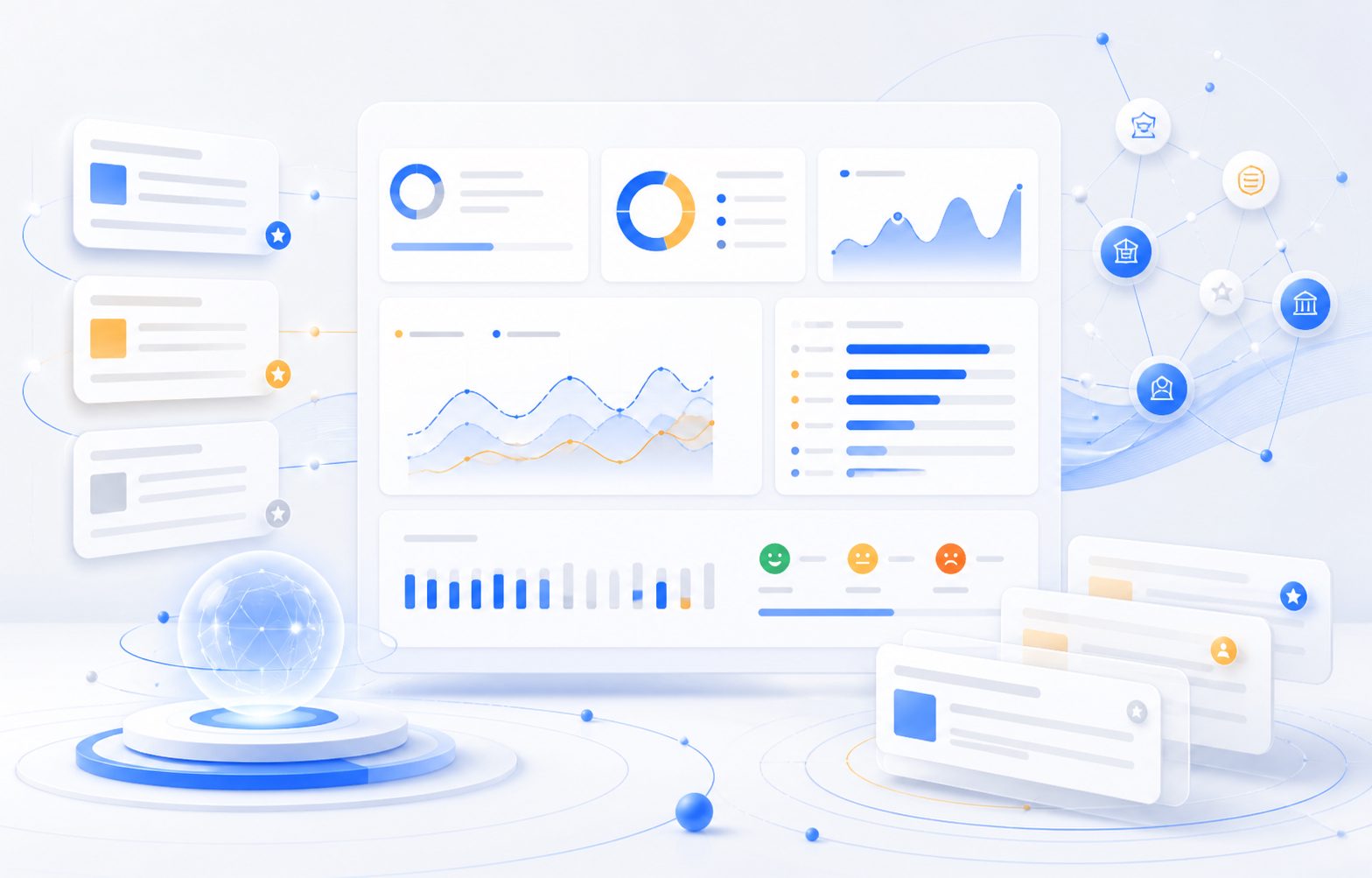
A useful AI assistant visibility dashboard combines paid media KPIs with earned answer KPIs. The goal is to show whether paid exposure, organic recommendation, and citation authority are moving in the same direction.
Recommended weekly fields:
| KPI | Why it matters |
|---|---|
| Sponsored appearance rate | Shows where paid units are available or triggered |
| Brand mention rate | Shows whether the assistant includes the brand organically |
| Share of voice vs competitors | Reveals who dominates answer space |
| Average recommendation position | Measures shortlist strength, not just presence |
| Citation source mix | Shows which domains shape the answer |
| Sentiment trend | Tracks whether the assistant frames the brand positively |
| Factual accuracy issues | Identifies claims that need correction |
| Paid-earned gap | Shows whether ads and organic recommendations reinforce each other |
| Prompt-level conversion path | Connects conversation intent to business outcomes |
MaxAEO supports competitor benchmarking across AI answers, including mention frequency, ranking position, sentiment, and citation sources. It also stores raw AI answers for traceability, which helps teams connect metrics back to the exact sentence a buyer may have seen.
Common questions
Are AI assistant sponsored results the same as AI Overviews ads?
No. AI Overviews ads are one form of AI-era advertising inside Google Search. AI assistant sponsored results is a broader term that can include ChatGPT ads, Copilot sponsored links, AI shopping assistant prompts, sponsored follow-up questions, and other conversational ad formats.
Can a brand pay to be recommended by an AI assistant?
A brand can buy sponsored placements where a platform offers them, but that is not the same as earning an organic recommendation in the assistant’s generated answer. Paid units should be measured separately from unpaid mentions, citations, and recommendation position.
What should SaaS companies do first?
Start with prompt research and baseline monitoring. Identify the buyer prompts where your category is discussed, then measure whether your brand appears, how it is described, which competitors are recommended, and which sources are cited.
How often should AI visibility be checked?
Daily monitoring is useful because AI answers can change as models, retrieval systems, indexes, and cited sources change. MaxAEO runs monitored prompts daily and provides trend updates across supported AI engines.
Do sponsored AI placements replace SEO or GEO?
No. They add another layer. SEO, AEO, and GEO help a brand become understandable and citeable; sponsored placements help capture paid attention in specific assistant contexts. The strongest strategy connects both.
The strategic takeaway
AI assistant sponsored results should be treated as a visibility layer, not a replacement for earned AI authority. The winning question is not “Can we buy placement?” It is “When a buyer asks an assistant for help, does the entire answer environment make our brand more credible?”
For SaaS teams, the practical path is clear: map buyer prompts, monitor multiple engines, compare competitors, inspect cited sources, fix inaccurate positioning, and test paid placements only where the assistant’s organic framing supports the campaign. That approach turns AI advertising from an isolated media buy into a measurable part of AI search strategy.