
As generative AI platforms transition from pure utility tools to transactional search interfaces, conversational monetization has become inevitable. For growth marketers, enterprise brands, and media buyers, understanding ChatGPT advertising placements is no longer a speculative exercise—it is an operational necessity.
With hundreds of millions of weekly active users querying large language models (LLMs) for commercial recommendations, software comparisons, and purchasing advice, the intersection of conversational AI and paid media will reshape digital acquisition channels. This guide analyzes how ad placements in ChatGPT and conversational answer engines function, contrasts paid placements with organic AI citations, and outlines a practical strategy for brands to capture high-intent AI traffic.
What Are ChatGPT Advertising Placements?
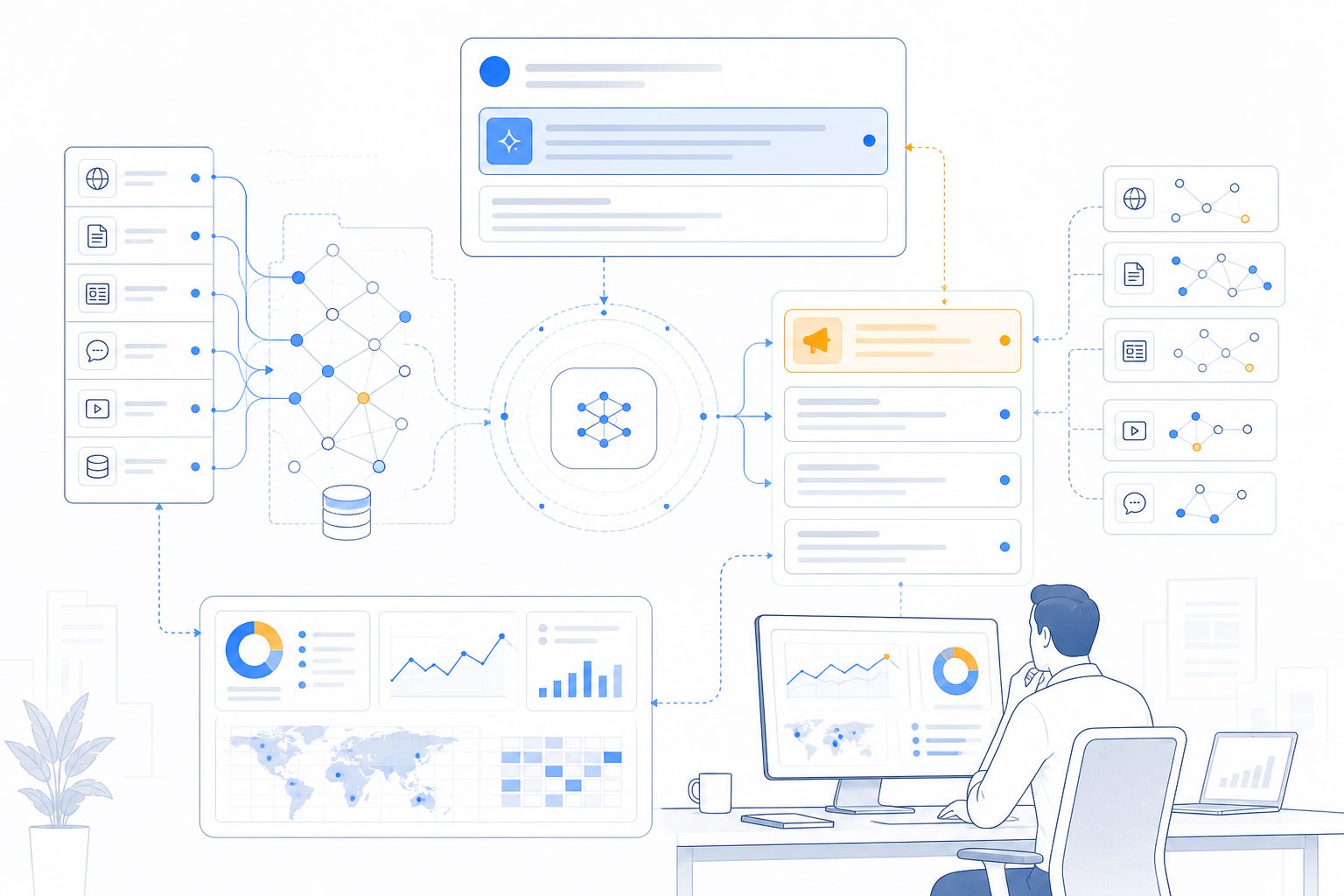
ChatGPT advertising placements refer to paid commercial formats integrated directly into OpenAI’s conversational interface, search results, and agentic workflows. These placements allow brands to surface contextually relevant products, sponsored links, or recommended solutions alongside or within generative AI answers based on real-time user intent.
Unlike traditional search engine results pages (SERPs) that separate paid ads from organic links into rigid top-of-page slots, conversational AI placements operate through dynamic contextual matching. When a user asks an LLM for software recommendations, travel itineraries, or consumer products, advertising engines inject sponsored assets into the conversation based on the semantic vector of the prompt, the real-time context of the chat session, and retrieval-augmented generation (RAG) parameters.
+-------------------------------------------------------------+
|                      User Prompt                            |
|     "What is the best CRM software for a 50-person team?"   |
+------------------------------+------------------------------+
                               |
                               v
+-------------------------------------------------------------+
|                  Conversational AI Pipeline                 |
|  - Semantic Intent Classification                           |
|  - Retrieval-Augmented Generation (RAG)                     |
|  - Contextual Commercial Signal Matching                    |
+------------------------------+------------------------------+
                               |
            +------------------+------------------+
            |                                     |
            v                                     v
+-----------------------+             +-----------------------+
|  Organic Citations    |             | Sponsored Placements  |
|  - High semantic trust|             | - Contextual cards    |
|  - Earned authority   |             | - Sponsored follow-ups|
|  - Deep web sources   |             | - Merchant checkout   |
+-----------------------+             +-----------------------+
4 Emerging Formats of ChatGPT and AI Search Ad Placements
Commercial experimentation across conversational engines (including OpenAI, Perplexity, and Google Gemini) reveals four distinct placement formats that redefine paid search.
1. Contextual Sponsored Citations and Source Links
Conversational search interfaces rely heavily on cited sources to substantiate factual claims. In sponsored citation placements, an advertising engine inserts a verified brand link within the footnote or citation pill of an answer when a query triggers a commercial retrieval threshold.
Rather than modifying the factual neutrality of the model’s prose, this format guarantees that the advertiser’s landing page is presented as an authoritative reference point for further exploration.
2. Interactive Product Cards and Native Carousels
When a query exhibits explicit purchase intent (such as "Show me ergonomic chairs under $500"), the interface renders rich media product cards directly beneath the generated synthesis.
These cards feature high-resolution imagery, real-time pricing, stock availability, and direct-to-merchant links. This format mirrors structured shopping ads in traditional search but benefits from conversational refinement—users can ask follow-up questions to filter by specific dimensions, materials, or warranty terms.
3. Sponsored Follow-Up Prompts
Conversational engines frequently suggest 2–4 related follow-up queries at the conclusion of an answer. Sponsored follow-up placements allow advertisers to bid on structured follow-up questions (e.g., "Compare Tool A against Tool B’s enterprise security features").
When a user clicks the suggested prompt, the model triggers a dedicated evaluation that directly highlights the advertiser’s key value propositions and feature matrix.
4. Agentic In-Chat Transactions (Direct Checkout)
As AI assistants gain autonomous tool-use capabilities, advertising placements extend into zero-click transactional flows. Instead of routing the buyer off-platform, the conversational agent accesses API endpoints to configure the order, apply promotional codes, and complete the transaction natively via integrated digital wallets.
Paid Placements vs. Organic AI Citations: Key Differences
Brands evaluating AI visibility must differentiate between paid advertising placements and organic generative visibility (earned citations). While paid placements offer immediate placement certainty, organic inclusion carries distinct advantages in consumer trust and compound ROI.
| Dimension | ChatGPT Paid Ad Placements | Organic AI Citations (GEO) |
|---|---|---|
| Trigger Mechanism | Keyword/semantic bid auction + commercial intent signals | High semantic authority, clean knowledge graphs, and RAG retrieval matching |
| Trust Factor | Lower (perceived as sponsored promotion) | High (perceived as an objective model recommendation) |
| Placement Longevity | Temporary (ends when media spend ceases) | Compounding (retained in vector indexes and reference databases) |
| Cost Model | CPC, CPM, or Cost-Per-Action (CPA) | Content production, technical structuring, and brand authority building |
| Control Over Copy | High (controlled via ad copy, feeds, and assets) | Low (synthesized dynamically by the LLM) |
| Measurement Metric | Click-through rate (CTR), ROAS, CPA | AI Share of Voice (SoV), citation frequency, sentiment score |
Understanding how AI retrieval works is critical here: organic citations cannot simply be bought through ad auctions. Models retrieve, rerank, and synthesize organic content based on informational density, clear entities, and third-party validation across digital ecosystems.

How AI Engines Evaluate Ad Relevance and Integrity
LLMs require rigorous retrieval guardrails to prevent low-quality advertising from degrading user experience. The mechanics governing AI ad delivery focus heavily on query-intent alignment and semantic proximity.
       +-----------------------------------------+
       |           User Search Session           |
       +--------------------+--------------------+
                            |
                            v
       +-----------------------------------------+
       |   Intent Classifier: Commercial Score   |
       |       (Is monetization appropriate?)    |
       +--------------------+--------------------+
                            |
             +--------------+--------------+
             |                             |
      Score < 0.60                  Score >= 0.60
             |                             |
             v                             v
+-------------------------+   +-------------------------+
| Pure Informational RAG  |   | Hybrid Retrieval Engine |
| No sponsored assets     |   | Vector Auction + RAG    |
+-------------------------+   +------------+------------+
                                           |
                                           v
                              +-------------------------+
                              | Contextual Ad Injection |
                              | Native source rendering |
                              +-------------------------+
1. Semantic Intent Thresholds
Conversational engines do not serve ads for purely academic, factual, or sensitive queries. An intent classification layer analyzes the conversational context. Only queries exceeding a defined commercial threshold (e.g., product research, vendor selection, commercial software workflows) trigger the ad retrieval pipeline.
2. Vector-Based Contextual Matching
Traditional ads rely on exact or broad keyword matching. In contrast, AI ad engines convert the entire conversation history into an embedding vector, matching it against the advertiser’s indexed product catalog and value propositions. This ensures that the surfaced solution aligns precisely with the user’s specific constraints (e.g., budget limits, tech stack compatibility, team size).
3. Answer-Context Coherence
To protect the utility of the assistant, injected ads must not contradict the surrounding generated text. If an LLM determines that a specific vendor lacks enterprise-tier compliance, a sponsored card for that vendor will either be suppressed or visually segregated to prevent user confusion.
A Strategic Playbook for Navigating AI Ad Placements and GEO
To maintain competitive market share across conversational search channels, marketing leaders should deploy a dual-track strategy: preparing paid media feeds for AI programmatic channels while systematically building organic generative authority.
+-------------------------------------------------------------------+
|               Dual-Track AI Visibility Strategy                   |
+---------------------------------+---------------------------------+
                                  |
        +-------------------------+-------------------------+
        |                                                   |
        v                                                   v
+-------------------------------+   +-------------------------------+
|     Track 1: Paid Media       |   |     Track 2: Organic GEO      |
|  - Structured product feeds   |   |  - Entity-first documentation |
|  - High-intent conversational |   |  - Third-party citation hubs  |
|    copy assets                |   |  - Continuous AI SoV tracking |
|  - Multi-engine ad budgets    |   |  - Prompt sentiment analysis  |
+-------------------------------+   +-------------------------------+
Step 1: Structure Your Brand Data for Machine Readability
Whether an AI engine pulls your brand via an ad feed or an organic web crawl, it requires unambiguous entity data. Ensure your website utilizes clean schema markup (Product, Organization, SoftwareApplication), transparent pricing structures, and clearly defined technical specifications.
Step 2: Track Brand Share of Voice Across AI Engines
You cannot optimize what you do not measure. Monitor how frequently your brand appears when users ask generative engines for recommendations in your category. Using an AI search visibility monitoring platform like maxaeo.ai allows you to track mentions, citations, and product recommendations across ChatGPT, Perplexity, Gemini, DeepSeek, and other leading engines with daily data updates.
Step 3: Align Paid Search Budgets with Organic Blindspots
Identify high-value commercial prompts where competitors dominate organic citations and your brand is absent. These specific conversational blindspots represent your highest-priority targets for paid ChatGPT advertising placements and sponsored query auctions. To see where you stand, generate a free AI visibility diagnostic report on maxaeo.ai to baseline your current conversational footprint.
Step 4: Build Comprehensive Conversational Landing Pages
When conversational ads route users to external destinations, traditional static landing pages often result in high bounce rates. Create interactive, context-aware landing pages that mirror the depth of the user’s initial prompt, complete with direct comparison tables, self-guided demo environments, and transparent feature matrices. For broader framework guidance, consult our blueprint on building an AI search strategy.
The Long-Term Impact of Conversational Ads on Digital Marketing
The emergence of ChatGPT advertising placements marks the next evolution of search marketing. As conversational platforms capture an increasing share of upstream product discovery, the historical separation between search engine marketing (SEM) and search engine optimization (SEO) will blur.
Winning brands will not rely solely on paid auction budgets or organic optimization in isolation. Instead, they will run unified visibility programs: auditing their ChatGPT share of voice, optimizing product feeds for programmatic RAG retrieval, and securing earned citations across the primary digital sources that LLMs trust.
Frequently Asked Questions
Can you buy ads inside ChatGPT right now?
OpenAI has systematically tested sponsored formats, merchant integration partnerships, and contextual search citation links. As monetization infrastructure scales across conversational search tools, brands can leverage native conversational ad networks, retail media partnerships, and generative search ad programs across leading AI providers.
How do ChatGPT advertising placements differ from Google Ads?
Google Ads primarily trigger on explicit keyword strings entered into a search box, directing traffic off-platform via ranked blue links. ChatGPT ad placements trigger based on natural language conversational context, semantic vector matching, and interactive dialogue, often integrating native follow-ups and conversational product filtering.
Will paid ads replace organic answers in ChatGPT?
No. Generative engines depend on user trust in their objective synthesis capabilities. Paid placements are designed as clearly labeled complementary elements (such as source attribution cards, sponsored carousels, or follow-up prompts) rather than silent replacements for organic RAG synthesis.
How do I track whether ChatGPT is recommending my competitors?
Brands can use specialized AI visibility monitoring tools to benchmark prompt outcomes. MaxAEO tracks brand mentions, citation sources, and competitor recommendation rates across ChatGPT, Perplexity, Gemini, and DeepSeek, providing daily analytics on your AI share of voice and sentiment.