Business directories for AI search are the structured databases — Crunchbase, G2, Wikidata, Capterra, LinkedIn and vertical catalogs — that ChatGPT, Perplexity, Gemini and Google's AI answers read to confirm who a company is and decide whether to recommend it. Getting listed accurately in the right ones, and keeping those records current, is now one of the highest-use moves in answer engine optimization. Most guides stop at "keep your NAP consistent." That is table stakes. This piece goes further: which databases actually feed AI answers, why an engine reaches for a directory in the first place, a tiering framework we use when auditing brands, and the maintenance discipline that keeps you cited instead of quietly dropped.
The stakes are simple. When a buyer asks an assistant "what are the best tools for X," the model assembles a shortlist from the sources it trusts. If your entity is thin, contradicted, or stale across those sources, you are not on the list — and you never see the query.
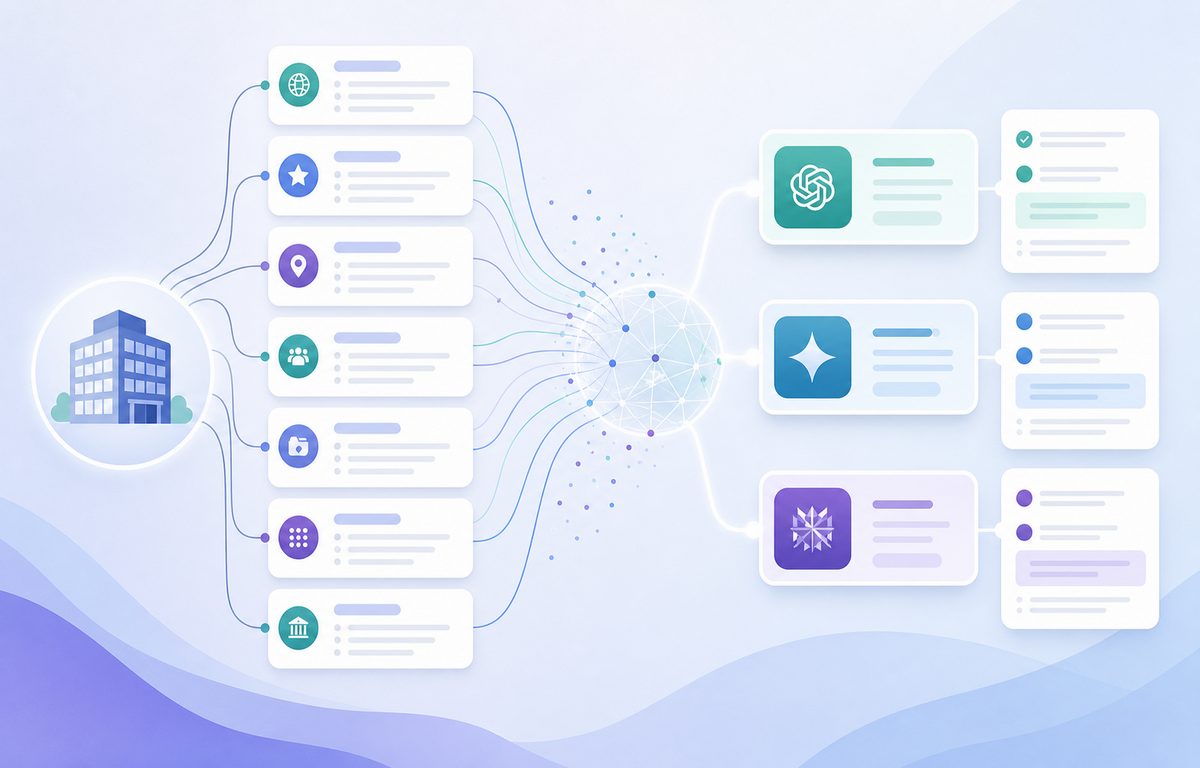
What are business directories for AI search?
Business directories for AI search are third-party, structured data sources that describe companies in a machine-readable, consistent format — name, category, description, founding date, funding, location, reviews and links — which large language models use as ground truth when answering questions about brands. They differ from a marketing website in one decisive way: they are independent. An AI engine treats a claim you make about yourself with less confidence than the same claim confirmed by an outside catalog.
Think of them as the reference layer of the web. Your site says what you want to be true; directories say what the market records as true. When the two agree, models cite you more readily. When they disagree, the model hedges — or picks a competitor whose facts line up cleanly.
Which directories do AI engines actually pull from?
No engine publishes its retrieval list, but citation studies converge on a stable set: review grids (G2, Capterra, Trustpilot, Clutch), entity databases (Wikidata, Crunchbase, LinkedIn), community platforms (Reddit) and encyclopedic sources (Wikipedia). Analyses of large citation datasets — including Peec AI's study of roughly 30 million cited sources across ChatGPT, Google AI Mode, Gemini, Perplexity and AI Overviews — repeatedly put Reddit, YouTube and LinkedIn near the top, with Wikipedia, G2 and Yelp also among the most-cited domains.
Two findings matter more than the ranking itself:
- The distribution is long-tailed. Even the single most-cited domain rarely accounts for more than a low-single-digit share of citations; the rest is spread across thousands of domains. There is no one directory to "win" — presence across several is what builds confidence.
- Platforms disagree. Review grids like G2 weigh more heavily in some engines than others, and Wikipedia is cited heavily by some assistants yet lightly by Google's AI answers. Where your buyers ask changes which directory earns you the citation.
The practical read: treat directory presence as a portfolio, not a single bet.
The three jobs a directory does for an AI answer
Directories are not interchangeable because AI engines use them for three different jobs: entity resolution, attribute extraction and shortlist generation. Knowing which job a listing serves tells you what to optimize there — and stops you from pouring effort into a profile that will never move a recommendation.
- Entity resolution (who are you?). The model needs to be sure "Acme" the analytics tool is not "Acme" the plumbing franchise. Wikidata, Crunchbase and LinkedIn disambiguate the entity and link its aliases. Get this wrong and every downstream citation is unstable.
- Attribute extraction (what's true about you?). Once resolved, the model pulls facts: category, headquarters, founders, funding, pricing model, integrations. Crunchbase, Wikidata and your Organization schema feed this layer.
- Shortlist generation (should I recommend you?). When the query is "best X," the model leans on category catalogs and review grids — G2, Capterra, Trustpilot, Clutch — because they already rank and cluster competitors.
Most brands over-invest in job 3 and neglect job 1. If the entity isn't resolved, no amount of five-star reviews reliably converts into a recommendation, because the model can't be confident the reviews describe you.
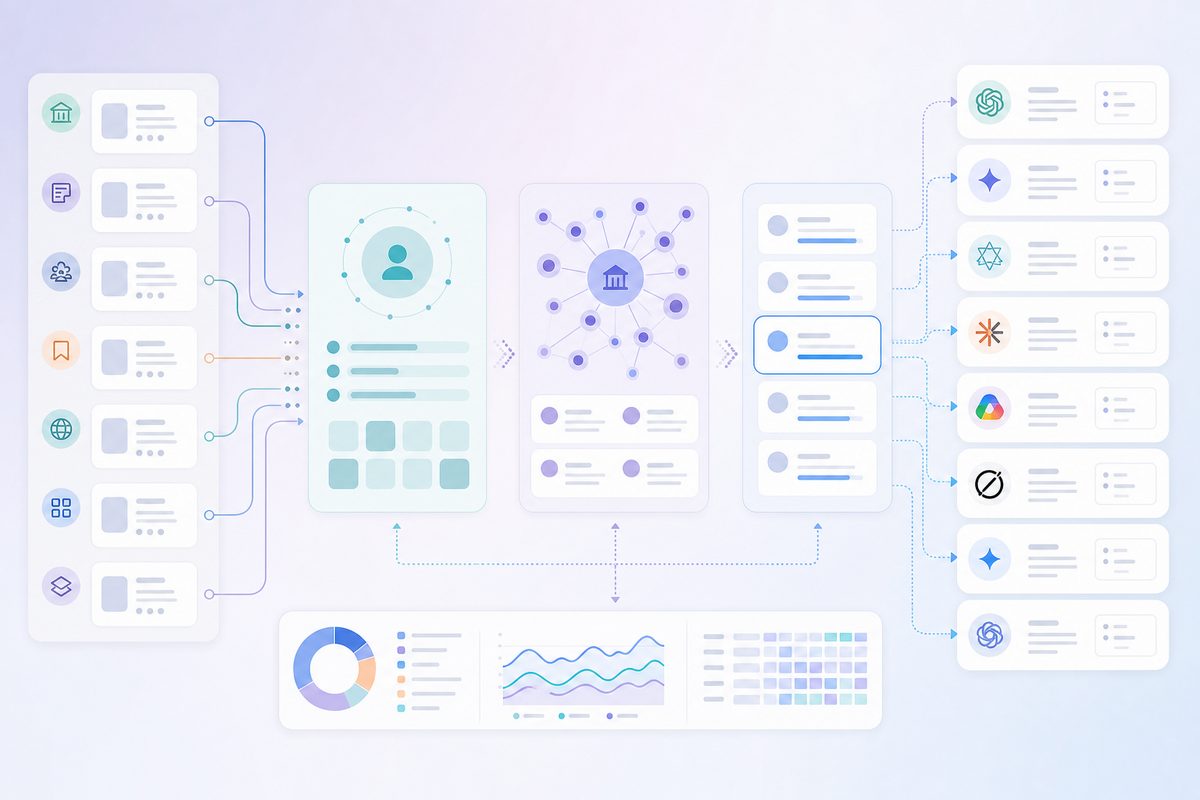
Mapping the major directories to those three jobs gives the working stack most B2B brands should build against:
| Directory | What it is | Primary AEO job | Priority |
|---|---|---|---|
| Wikidata | Open, machine-readable knowledge graph | Entity resolution | Tier 1 |
| Crunchbase | Company, funding and leadership database | Entity + attributes | Tier 1 |
| Verified company profile | Entity confirmation | Tier 1 | |
| G2, Capterra | B2B software review grids | Shortlist generation | Tier 2 |
| Trustpilot | Cross-industry reviews | Trust signal | Tier 2 |
| Clutch | Services and agency reviews | Shortlist (services) | Tier 2 |
| Vertical / niche directories | Industry-specific catalogs | Niche shortlist | Tier 3 |
Tier 1: Entity anchors (Wikidata, Crunchbase, LinkedIn)
Tier 1 sources define your company as a distinct, verifiable entity — the foundation everything else rests on. Wikidata provides machine-readable properties (founding date, industry, country, founder, official website, external identifiers) that flow directly into the knowledge graphs AI systems consult. Crunchbase adds funding, leadership and category in a structure models parse cleanly. LinkedIn confirms employees, headquarters and activity.
Start here, in this order:
- Wikidata. Easier to create than a Wikipedia article and often more directly useful for machines. Add a well-referenced item with the core properties and an official-website statement.
- Crunchbase. Claim the profile, write the description in plain language (lead with what you do and who you serve), and keep funding and headcount current.
- LinkedIn Company Page. Match the exact legal name, category and one-line description you use everywhere else.
Then connect them. Add sameAs links in your Organization schema pointing at each Tier 1 profile so engines can stitch the identity together. Schema helps resolution but does not manufacture trust on its own — we cover those limits in what Organization schema can and cannot clarify for AI search.
Tier 2: Category catalogs and review grids (G2, Capterra, Trustpilot, Clutch)
Tier 2 sources are where shortlist generation happens — the catalogs that already sort your market into categories and rankings, which is exactly the structure an AI reaches for when a buyer asks "what are the best tools for X." For B2B software, G2 and Capterra carry outsized weight; for services, Clutch; for cross-industry trust signals, Trustpilot.
Three things move the needle here:
- Correct category placement. Being filed under the wrong category is worse than being absent — you surface when the model shouldn't recommend you and miss the queries you'd win.
- Review volume and recency. A cluster of reviews from three years ago reads as a stalled product. Steady, recent reviews signal an active, safe recommendation.
- Consistent positioning language. The one-liner buyers and reviewers repeat becomes the phrasing the model echoes. Analyst grids amplify this — see how analyst reports and industry grids like the G2 Grid become AI citation fuel.
Category roundups and "best of" listicles sit adjacent to this tier and are frequently quoted verbatim; our playbook on getting into the "best [category] tools" roundups AI quotes pairs directly with a strong G2 presence.
Tier 3: Niche and vertical directories
Tier 3 covers the specialist catalogs for your industry — vertical marketplaces, association member lists, integration directories and category-specific databases — which punch above their traffic because they carry topical authority the big platforms lack. A model answering a narrow question ("HIPAA-compliant scheduling tools for clinics") often surfaces a vertical directory precisely because it's specific.
These are easy to underestimate. They rarely appear in aggregate "top domains" charts because each one is small — but in the long tail, where the majority of citations live, they are where niche recommendations are decided.
Prioritize Tier 3 sources that are:
- Genuinely used by your buyers (not link farms). If humans don't cite it, models are less likely to.
- Structured, with clear category and description fields rather than a wall of unformatted text.
- Editorially maintained, so listings stay accurate and the source keeps its authority.
One caution: skip low-quality directory-blasting services. Scattering identical listings across hundreds of scraped catalogs adds noise, not confidence, and can dilute the consistency you're trying to build.
How to get accurately listed: a step-by-step order
The efficient sequence is: lock your canonical facts, anchor the entity, then build category presence — resolution before reviews. Doing it in this order prevents the common failure where great reviews never convert because the underlying entity is ambiguous.
- Write a canonical fact sheet. One source of truth: exact legal name, one-line description, category, HQ, founding year, funding, key people, official URL. Every listing must match this word for word.
- Create or complete Wikidata, referencing each fact to a public source.
- Claim and complete Crunchbase and LinkedIn, matching the fact sheet exactly.
- Add Organization schema with
sameAslinks to all Tier 1 profiles. - Claim G2/Capterra (or Clutch), set the correct category, and start a steady review cadence.
- Identify 3–5 Tier 3 vertical directories your buyers actually use, and list accurately there.
- Record every profile URL in a tracking sheet so you can audit and update them later.
The whole point of the fact sheet is agreement. Conflicting descriptions across the web make a model less confident about citing you — consistency is the single strongest lever in this workflow, and it's free.
Why listings decay — and the maintenance cadence that keeps you cited
Directory listings decay the moment your company changes and the record doesn't — a renamed product, a new funding round, a pivot, an acquisition — and stale records actively confuse AI answers. This is the gap almost no guide addresses: getting listed is a project; staying accurately listed is a discipline.
Common decay patterns:
- Old positioning. The listing still describes the product you sold in 2023, so the model recommends you for the wrong use case.
- Ghost funding and headcount. Outdated Crunchbase figures make you look smaller or less funded than you are.
- Merged or acquired confusion. After an acquisition, two entities blur and the model attributes your capabilities to the wrong company.
A workable cadence:
| Trigger | Update within | Sources to check |
|---|---|---|
| Major launch, rebrand, pivot | 1 week | Wikidata, Crunchbase, LinkedIn, G2, website schema |
| Funding, leadership change | 2 weeks | Crunchbase, LinkedIn, Wikidata |
| Routine hygiene | Quarterly | All Tier 1–3 profiles vs. the canonical fact sheet |
Treat the fact sheet as a living document and reconcile every listing against it on a schedule. Decay is invisible until an AI answer gets you wrong in front of a buyer — by then you're reacting, not preventing.
A worked example: resolving a contradicted entity
Here is a composite example that mirrors a pattern we see repeatedly: a brand with strong reviews that still wasn't getting recommended, because its entity was contradicted across sources. The numbers are illustrative; the mechanism is what shows up in tracking data.
A mid-market SaaS company had 200+ positive G2 reviews yet appeared in almost none of the "best tools for [category]" answers tracked across ChatGPT and Perplexity. Three sources disagreed: Crunchbase listed an old product name, Wikidata had no item at all, and the site's Organization schema used a different legal entity than LinkedIn.
The fix followed the resolution-first order above:
- Created a referenced Wikidata item and linked the official site.
- Corrected Crunchbase to the current name and description.
- Aligned schema
sameAsacross the site, LinkedIn and Crunchbase.
Over the following weeks, mentions in AI shortlists for the category climbed from near-zero to a regular presence — the reviews had always been there; the model finally trusted they described the same company. No new content, no backlinks. Just agreement. Company stage shapes how fast this moves, as we detail in AI search visibility from zero citations to category leader.
How to measure whether directory work moves your AI citations
Pair directory work with AI search monitoring that tracks how often — and how accurately — each engine mentions and recommends you. Directory edits are inputs; your presence in real answers is the output, and the two have to be measured together.
Track three things:
- Share of the shortlist. For your target "best X" prompts, what percentage of AI answers include you? This share of voice is the truest scorecard for directory ROI.
- Fact accuracy. When engines describe you, do they use your current category, positioning and facts? Drift here points straight back to a stale listing.
- Which sources get cited. Knowing which directory an engine quoted tells you where to reinforce and where you're thin.
A purpose-built AI visibility monitor closes this loop: it watches how ChatGPT, Gemini, Perplexity, Claude, Copilot and Google's AI answers mention, rank and describe you, then points to the specific listing to fix next. The goal is a defensible line from "we corrected Crunchbase and Wikidata" to "we now get recommended for our category." Assistant behavior differs by engine — how Claude searches the web and picks sources is a useful model for the assistant many teams use at work.

Common mistakes that keep you out of AI answers
The recurring failures are inconsistency, reviews-before-resolution and set-and-forget listings. Each quietly suppresses citations even when the individual profiles look fine.
- Inconsistent facts. Different names, categories or descriptions across profiles — the number-one confidence killer.
- Chasing reviews before the entity is resolved. Volume can't compensate for an ambiguous identity.
- Directory spam. Bulk listings on scraped, low-quality catalogs add noise and erode consistency.
- Ignoring platform differences. Optimizing only for one engine when your buyers ask elsewhere.
- No maintenance. Treating listings as one-time setup, then letting them decay through your next pivot or raise.
Avoiding these five is most of the work. None require budget — they require discipline and a single source of truth.
Frequently asked questions
Do AI search engines really use business directories, or just websites?
Both — and directories carry extra weight because they're independent. Citation analyses of tens of millions of AI answers consistently surface directories and review grids (G2, Yelp, Crunchbase-style databases, Wikidata) alongside brand websites. The model trusts an outside record more than your own claim about yourself.
Which business directory should a B2B SaaS company prioritize first?
Start with entity anchors — Wikidata, Crunchbase and LinkedIn — before review grids. Resolve who you are first; then G2 and Capterra reviews reliably convert into shortlist recommendations. Reviews on an unresolved entity often don't move AI citations.
Does a Crunchbase or Wikidata listing directly get me cited by ChatGPT?
Not directly or instantly. These listings feed the knowledge graph and confirm your facts, which raises the model's confidence to mention you. Citations follow when multiple independent sources agree — think of it as removing a blocker, not flipping a switch.
How often should I update my directory listings?
Update Tier 1 sources within one to two weeks of any material change (rebrand, funding, leadership) and run a full quarterly reconciliation against your canonical fact sheet. Stale records are a leading cause of AI answers describing you inaccurately.
Can directory listings hurt my AI visibility?
Yes — inconsistent facts across profiles and bulk listings on low-quality catalogs both reduce confidence. Contradiction is worse than absence. Prioritize a handful of authoritative, accurate, consistent listings over broad, noisy coverage.
Getting listed in the databases AI pulls from isn't a growth hack — it's the reference layer your recommendations are built on. Anchor the entity first, earn category presence second, and keep every record honest and current. Then watch the answers to confirm it's working.